
More from the episode
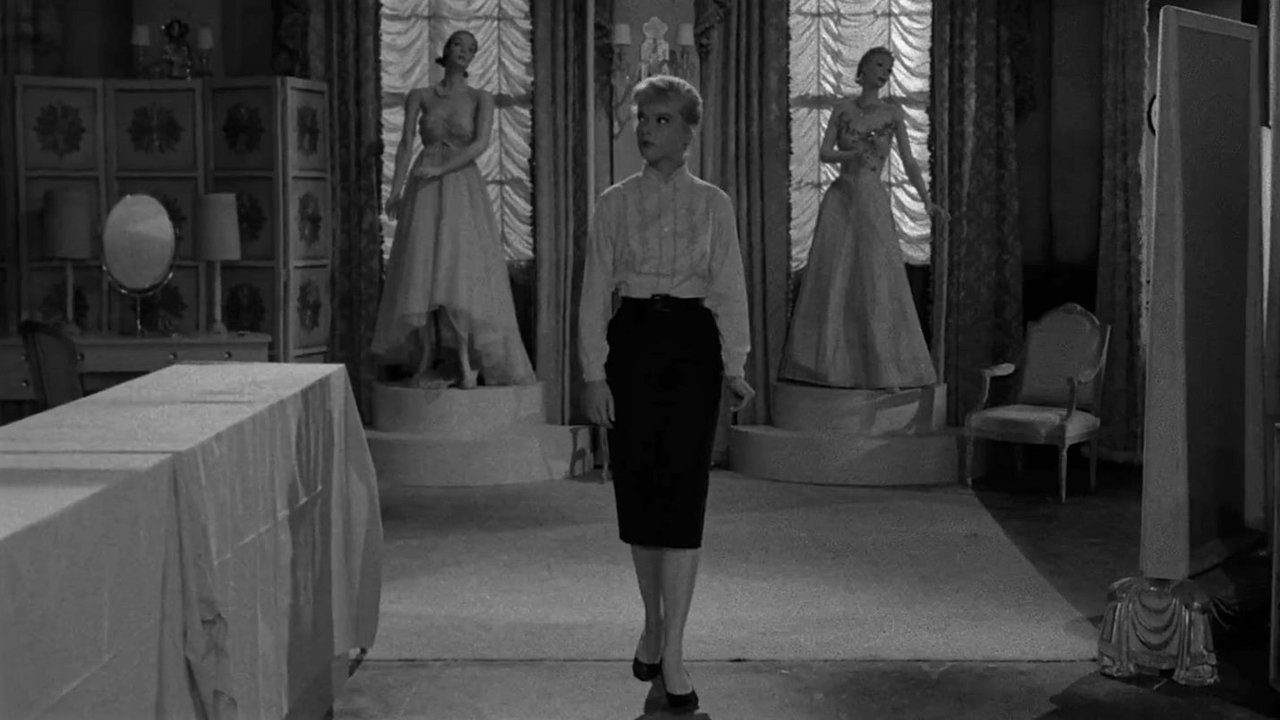
The story in 5 beats
- The express elevator
Marsha White wants a gold thimble for her mother. A service elevator opens just for her, and the operator takes her to a ninth floor.
- Are you happy?
The empty floor sells one item: the exact thimble she wanted. The saleswoman uses Marsha's name unprompted, then asks if she's happy.
- There is no ninth floor
The thimble turns out to be dented. In Complaints, the supervisor and manager say the store has only eight floors, and Marsha has no receipt.
Locked inSpoiler · tap to reveal
Sent to lie down, Marsha wakes up locked in the closed store. Voices call her name, and the mannequins around her seem to move.
One month out of the yearSpoiler · tap to reveal
Back on the ninth floor, the mannequins gather and help her remember what she is. The next morning her own figure stands on the sales floor.
Why it still matters
Most Twilight Zone episodes start with something going wrong in the world. This one starts with a woman running an errand and something being slightly off about it. Marsha White wants a gold thimble as a gift for her mother. A service elevator opens for her alone, a saleswoman knows her name before she gives it, and everyone downstairs tells her the floor she visited isn't there. Serling's opening narration promises she'll find the thimble and something else besides, and the episode takes its time delivering it.
Heyes and cinematographer George T. Clemens make the store itself feel like a character. There are high-mounted shots of Marsha running through the empty aisles, and a close-up of her calling for help from behind a frosted glass door. Anne Francis has to play fear, stubbornness and something harder to name, often in the same scene.
Serling's closing narration, one of his best, is aimed straight at whoever is watching.
Who the mannequins were waiting for
On the ninth floor the mannequins climb down from their pedestals and gather around Marsha. The saleswoman coaxes her to remember, and she does. Marsha is a mannequin herself. The store's mannequins take turns living among humans for a month, and she enjoyed her turn so much that she forgot what she was. The saleswoman is next in line.
The ending is gentle on the surface, but the sadness underneath is what stays with you. Marsha apologizes, is forgiven, and the saleswoman goes off on her vacation. Then Marsha and the elevator operator, who is also a mannequin, freeze back into place. The next morning Mr. Armbruster passes her figure on the floor and walks on. Serling's closing narration turns the question on the audience and asks who the people are that we nod to on the street.
Behind the scenes
- William J. Tuttle cast the head of Francis's mannequin double from her own face.
- The department store set was converted from a large newspaper office set used for something else.
- Anne Francis returned to the series for a second role in "Jess-Belle" in 1963.
The thread
A department store after closing time was a ready-made setting for fantasy.
Came before
Shares DNA with
Remade and revisited
DNA strand
Memory & Identity
Marsha isn't being tricked by anyone. She's forgotten who she is, and the episode lets you piece that together as she does. It works because every odd detail in the first half, from the name to the thimble to the question about being happy, turns out to have a plain explanation.
Every great sci-fi story is built from a handful of strands like this one. Each strand page explains how it works and traces it across shows, books and films.
If this one stayed with you
Where to go next, and why.
Watch · Severance
"The After Hours" (Severance, S2)
If you want to see the afterlife of this episode, the Severance installment takes its title from it. Both worry about who you are when you're not who you think you are.
Read · Short story
"Evening Primrose" — John Collier
A short story that also puts a department store after closing time at the center. It's more sardonic and less sad.
Watch · The Twilight Zone
"Living Doll"
If you liked the idea of something made that turns out to have a will of its own, this later episode plays with a much less friendly version of it.
Sources
- “The After Hours,” Wikipedia
- “List of The Twilight Zone episodes,” Wikipedia
- “The After Hours (Severance),” Wikipedia
- “The Twilight Zone (franchise),” Wikipedia
- “Anne Francis,” Wikipedia
- “The Twilight Zone: Season 1, Episode Thirty-Four "The After Hours",” Great Books Guy, 2021
- “The Twilight Zone Vortex: "The After Hours",” The Twilight Zone Vortex, 2012
- “Twilight Zone episode review — 1.34 — The After Hours,” Medium
- “The After Hours (Wikidata),” Wikidata
- “One Twilight Zone Episode Harnessed The Same Horror As Five Nights At Freddy's,” SlashFilm
- “Twilight Zone: The After Hours (graphic novel review),” Read About Comics
- “Living Doll (The Twilight Zone),” Wikipedia mirror