The story in 5 beats
- A birthday message
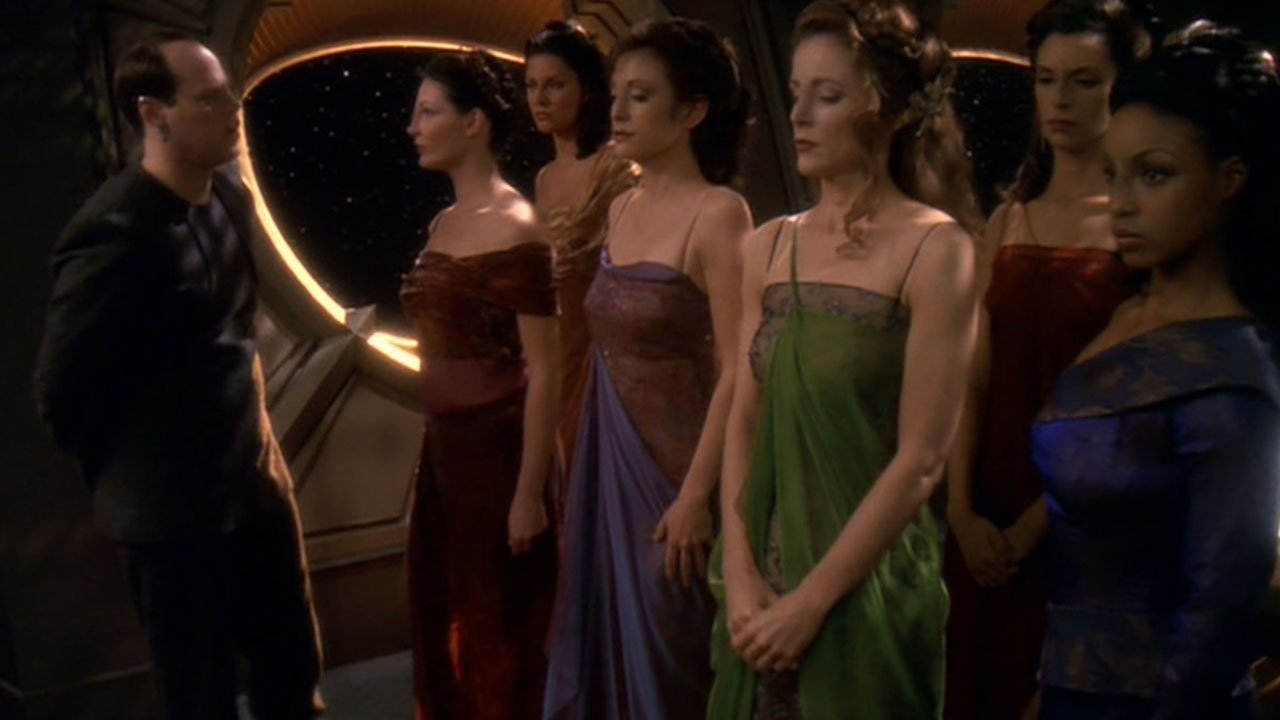
On the day her late mother would have turned 60, Kira hears from Dukat. He says he knew Meru, and that Kira doesn't know the truth about her.
- Luma Rahl
Sisko lets Kira use the Orb of Time. It drops her in the refugee center where her family once lived, and she befriends her own mother under the name Luma Rahl.
- Terok Nor
Cardassian soldiers take Meru and "Luma" from the camp to Terok Nor, the station that will one day be Deep Space Nine.
Two sidesSpoiler · tap to reveal
Meru is drawn into Dukat's life. Kira, thrown into the station's Bajoran section, falls in with the resistance and helps plan a bomb for Dukat's quarters.
A letter from homeSpoiler · tap to reveal
Kira hears a message from her father, Taban, and has to decide what to do about the bomb.
Why it still matters
Kira Nerys grew up believing her mother, Kira Meru, was a hero who died in a refugee camp during the Cardassian occupation. The man telling her otherwise is Gul Dukat, who ran the occupation, and Kira isn't about to take his word for anything, so the whole trip is her checking his version against her own.
The title is Beimler's, lifted from Percy Bysshe Shelley's Prometheus Unbound (1820): "To forgive wrongs darker than death or night." Behr told StarTrek.com in 2011 it was probably his favorite title "because it proved a point." The line is about forgiveness, which tells you roughly what kind of question Kira will be left holding.
Still her mother
Dukat wasn't lying. On Terok Nor, Meru is dazzled by food and comfort after years in the camp, and Dukat singles her out until she becomes his mistress. The next time Kira sees her, Meru praises him. Kira reminds her what Dukat has done to Bajor and to their own family; Meru answers that he has promised food and medicine for her husband and children. Kira calls her a collaborator, and with Halb, a resistance man, she smuggles a bomb into Dukat's quarters, knowing Meru may die in the blast.
Then Kira hears a message from Taban to his wife. He thanks her: because of what she is doing, the family has been let out of the camp, sent home and given extra food. Kira understands that she survived her childhood because of her mother's choice. She warns Dukat and Meru, and they get out just before the bomb goes off. Back in the present, she learns Meru lived another seven years as Dukat's mistress and died in a Cardassian hospital. She's still outraged at what Meru did, and she settles on this: "no matter what she did, she was still my mother."
Challenge the DNA
Was Kira right to warn Meru and Dukat?
Or skip ahead to our reading
She learns her family lived because of what Meru did, and she can't go through with it. She's still outraged. But Meru was still her mother.
Behind the scenes
- Leslie Hope, who plays Kira Meru, later played Teri Bauer in the first season of 24.
- In a 2017 article in Psychoanalysis, Culture & Society, David Seitz called it the last of a "Kira parental grief trilogy" with "Second Skin" and "Ties of Blood and Water," arguing that Kira learns to live with ambivalence without forgiving Meru or forgetting the occupation.
- Sherry Ginn, in the 2022 essay collection To Boldly Stay, linked it to Erik Erikson's first stage of development, trust and mistrust: Kira's trust in her childhood is shaken, then justified by what her mother did to keep her alive.
- SyFy included it in its 2018 binge-watching guide to Kira.
The thread
Kira's other family stories, and earlier trips back to Terok Nor under Dukat.
Came before
Shares DNA with
DNA strand
Memory & Identity
Kira has built a good part of herself on the story of her mother's death in the camps. This episode sends her back to check that story against the record, with the man she hates most holding the other version. It's about what happens to who you are when the family history you were handed turns out to be incomplete.
Every great sci-fi story is built from a handful of strands like this one. Each strand page explains how it works and traces it across shows, books and films.
If this one stayed with you
Where to go next, and why.
Read · Novel
Kindred by Octavia E. Butler
A woman from 1976 keeps getting pulled back to a slave plantation in Maryland, where she has to keep an ancestor alive. Butler takes the same question about survival and compromise much further.
Watch · Star Trek: DS9 S1
"Duet" (1993)
Kira faces a Cardassian accused of occupation crimes. The best early look at what the occupation did to her and how she carries it.
Read · Verse drama
Prometheus Unbound by Percy Bysshe Shelley
Shelley's closing speech, about forgiving wrongs and defying power, is short enough to read in a minute.
Your next episode
Three directions to go from here, all on Sci-Fi DNA.

More of this feeling
The Visitor
Star Trek: Deep Space Nine
Jake spends a lifetime trying to get his father back, and it is the show's most tender hour about what a child owes a parent.
Same question, different answer
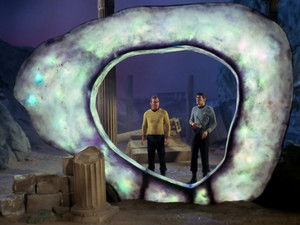
The City on the Edge of Forever
Star Trek
An accident throws McCoy into 1930s New York and changes history, and Kirk and Spock follow him to find out what in the past has to stay as it was.
Something completely different
Inquisition
Star Trek: Deep Space Nine
The next episode turns from Kira's past to Bashir's present, as a Starfleet investigator arrives on the station with pointed questions about his loyalty.
Sources
- “Wrongs Darker Than Death or Night,” Wikipedia
- “Ira Steven Behr Remembers DS9, Part 2,” StarTrek.com, 2011
- Keith R. A. DeCandido, “Star Trek: Deep Space Nine Rewatch: "Wrongs Darker than Death or Night",” Tor.com, 2014
- “Leslie Hope,” Wikipedia
- David K. Seitz, “Second Skin, White Masks: Postcolonial Reparation in Star Trek: Deep Space Nine,” Psychoanalysis, Culture & Society, 2017