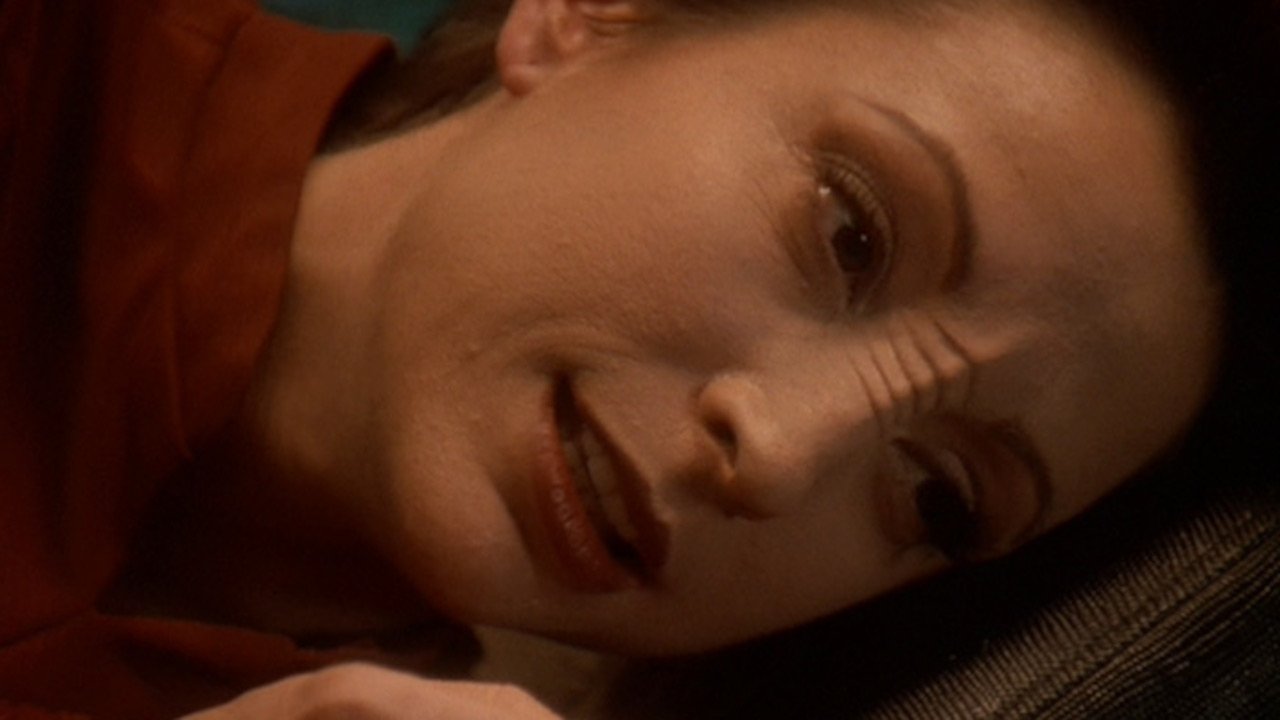
The story in 5 beats
- "That's one"
Latha Mabrin, who fought beside Kira in the resistance, is murdered. Then Kira gets a message: his picture and a garbled voice saying, "That's one."
- The count goes up
Fala dies when her transport to the station is sabotaged. "That's two." Then a picture of Mobara arrives: "That's three." Kira realizes the voice is her own, altered.
- Furel and Lupaza
Two more old comrades turn up offering to hunt the killer down their way. Kira wants it done by the law, and lets them stay with her in the O'Briens' quarters.
The listSpoiler · tap to reveal
An explosion in the O'Briens' quarters kills Furel and Lupaza. Kira takes Odo's list of suspects and goes after the killer alone.
Face to faceSpoiler · tap to reveal
Silaran Prin, a Cardassian maimed in a resistance bombing, straps her down. He'll spare the baby and kill her. She fakes the sedative and kills him first.
Why it still matters
Deep Space Nine never pretended Kira's years in the resistance were clean, but for four seasons it mostly kept them in the backstory. Here they come back for her. Her old comrades start dying one at a time, each death followed by a message in a scrambled voice counting them off, and the hunt drags Kira back through what her cell did during the occupation.
It was the first Star Trek story by Bryan Fuller, who pitched it as a riff on Agatha Christie's And Then There Were None. Ronald D. Moore wrote the teleplay. Fuller went on to Voyager's writing staff, and in 2016 he was briefly the showrunner of Star Trek: Discovery, so this is where a long Trek career starts. Nana Visitor carries it; even Zack Handlen at The A.V. Club, who found the plot familiar, called her "her usual excellent self."
It's a hard one to love. Keith DeCandido's Tor.com rewatch gave it a 5 out of 10. But Screen Rant put it on its list of the darkest episodes in all of Star Trek, and it's easy to see why: it ends on an argument neither side wins.
Who's counting
The killer is Silaran Prin, a Cardassian civilian who was disfigured in a resistance bombing and has spent the years since deciding whom to blame. When Kira finds his house, he catches her and explains himself. He kills only the guilty, he says, while her cell killed anyone who happened to be nearby. Kira doesn't give an inch. The Cardassians occupied her planet, and a civilian living there was helping the occupation, so he was a target. He tells her he'll save the O'Briens' baby, then kill her, and gets ready to operate.
The herbs Kira has been taking for the pregnancy make most sedatives useless on her, so she begs for one, pretends to go under, and attacks him when he comes close. When the crew arrives, Prin is dead and all Kira wants is to go home. Nobody apologizes and nobody wins the argument. Screen Rant's point about the episode is that it doesn't excuse Kira's war, and it doesn't put Prin's revenge on higher ground either.
Challenge the DNA
Was the killer right that some Bajorans were guilty?
Or skip ahead to our reading
He's a murderer, and he has a point. The episode lets Kira hear it. She doesn't come out unchanged.
Behind the scenes
- It was Bryan Fuller's first Star Trek story, and his original pitch was a riff on Agatha Christie's And Then There Were None. Ronald D. Moore wrote the teleplay from his story.
- Fuller wrote one more season 5 episode, "Empok Nor," then joined the writing staff of Star Trek: Voyager, rising to co-producer by its final season. In 2016 he was briefly showrunner of Star Trek: Discovery; he set up its story arc and mythology but left before it aired.
- Kira is pregnant because Nana Visitor was. Her real pregnancy was written into the show from season 4's "Body Parts," and she gave birth to her son during production of "The Assignment," earlier this season, while Kira stayed pregnant on screen.
- William Lucking and Diane Salinger first played Furel and Lupaza in season 3's "Shakaar."
- Zack Handlen of The A.V. Club called Visitor "her usual excellent self" but felt the script "feels like something we've seen before." Keith R. A. DeCandido's Tor.com rewatch gave it 5 out of 10.
- Screen Rant put it on its 2017 list of the 15 darkest Star Trek episodes, for going past Gene Roddenberry's hopeful future into violence on both sides of the occupation. Syfy Wire's ranking of every Fuller Trek episode put it seventh, and SyFy included it in a 2018 binge guide to Kira.
The thread
The mystery novel Fuller started from, the earlier episode that introduced Kira's old cell, and other stories about the violence of an occupation.
Came before
Shares DNA with
DNA strand
Us vs. Them
Most us-versus-them stories ask you to pick a side. This one keeps Kira's resistance years in full view while someone hunts the people she fought beside, and it never hands anyone a clean conscience.
Every great sci-fi story is built from a handful of strands like this one. Each strand page explains how it works and traces it across shows, books and films.
If this one stayed with you
Where to go next, and why.
Watch · Star Trek: DS9 S1
"Duet" (1993)
Kira faces a Cardassian over what happened at a Bajoran labor camp. Another hard look at the guilt the occupation left on both sides.
Watch · Star Trek: DS9 S2
"Necessary Evil" (1993)
Odo reopens a murder from the Cardassian years, and the flashbacks show the station, and Kira, during the occupation.
Watch · Film
The Battle of Algiers (1966)
Gillo Pontecorvo's film about the Algerian war of independence shows an insurgency's bombings and their victims from both sides of the street, the same moral ground this episode walks.
Read · Novel
And Then There Were None — Agatha Christie
Ten people with something on their conscience, picked off one by one. Fuller's pitch started here, and you can see the bones of it in the countdown.
Watch · TV series
Hannibal (2013)
Bryan Fuller's own series, years later, and a much longer look at a methodical killer.
Your next episode
Three directions to go from here, all on Sci-Fi DNA.

More of this feeling
Duet
Star Trek: Deep Space Nine
The Occupation's victims, and who is guilty.
Same question, different answer
Deaths-Head Revisited
The Twilight Zone
Who gets to judge the crimes of the past?
Something completely different
The Begotten
Star Trek: Deep Space Nine
Odo and a baby changeling.
Sources
- “The Darkness and the Light (Star Trek: Deep Space Nine),” Wikipedia
- “List of Star Trek: Deep Space Nine episodes,” Wikipedia
- “Bryan Fuller,” Wikipedia
- “Nana Visitor,” Wikipedia
- “Shakaar (Star Trek: Deep Space Nine),” Wikipedia
- “Star Trek: Deep Space Nine Rewatch: "The Darkness and the Light" (Keith R. A. DeCandido, 2014),” Tor.com
- “Star Trek: Deep Space Nine: "The Darkness And The Light"/"The Begotten" (Zack Handlen),” The A.V. Club
- “The 15 Darkest Episodes Of Star Trek, Ranked (Edward Cambro, 2017),” Screen Rant