More from the episode

The story in 5 beats
- A cave in a dream
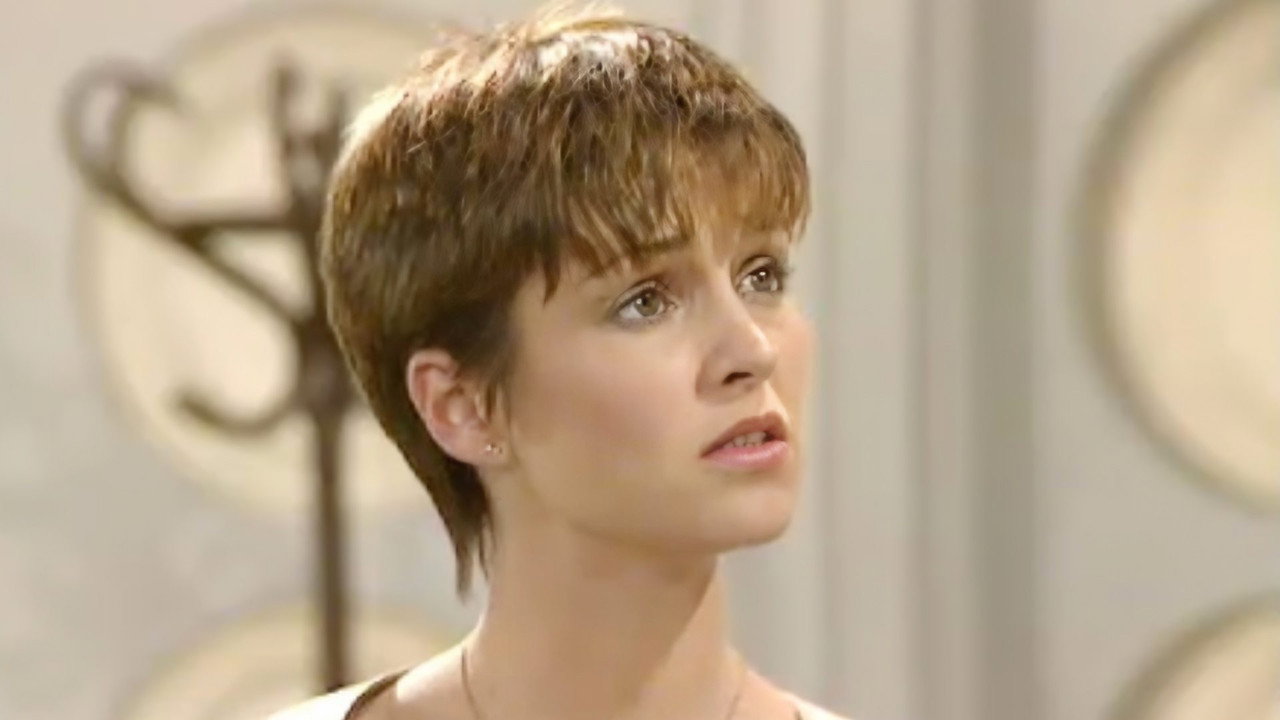
Tegan has a nightmare about a cave whose mouth is shaped like a snake, and the TARDIS lands on Manussa, a planet she has never seen.
- Five hundred years of victory
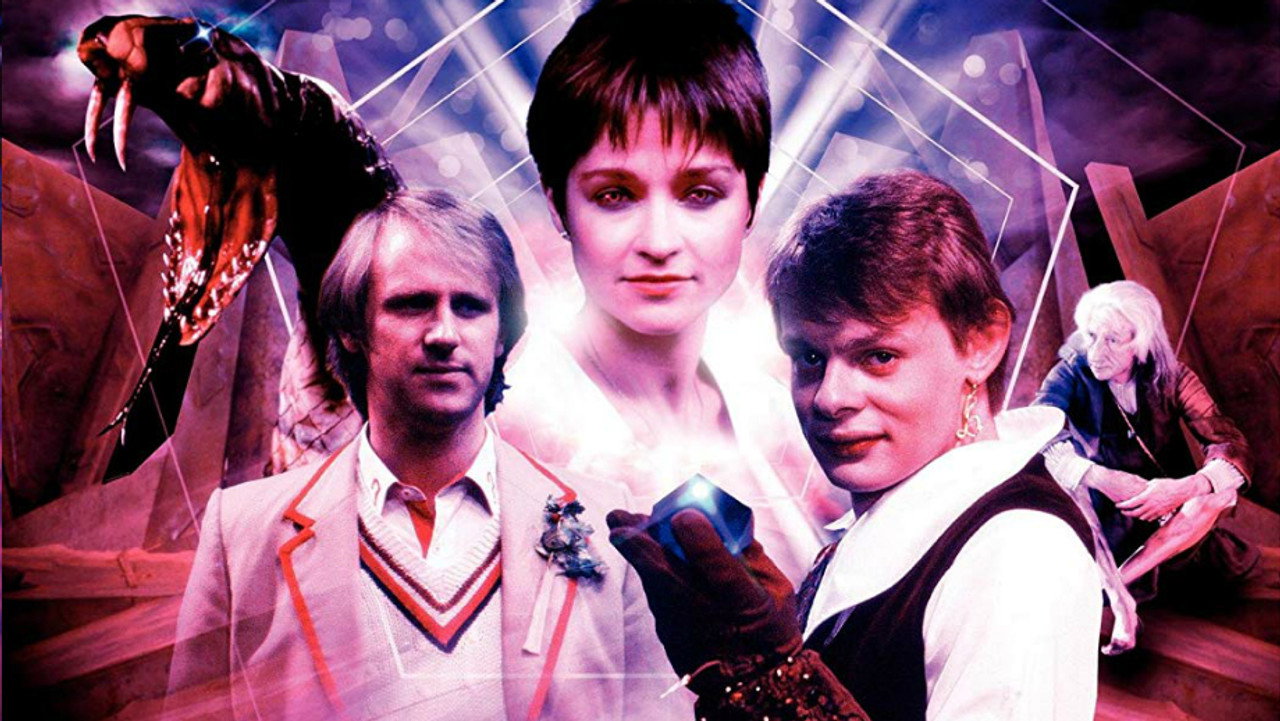
Manussa is celebrating the Mara's banishment. With the Federator away, his son Lon is to play his ancestor in the ceremony, with his mother Tanha and the archaeologist Ambril beside him.
- The Little Mind's Eye
The deputy curator, Chela, gives the Doctor a small crystal used by the snakedancers. He works out that it, and the Great Mind's Eye, can turn thought into matter.
Finding DojjenSpoiler · tap to reveal
The Doctor seeks out Dojjen, Ambril's predecessor, who lives outside the city. A snake bite opens his mind, and Dojjen tells him how the Mara can be beaten.
The ceremonySpoiler · tap to reveal
Lon sets the Great Mind's Eye in its place, the Mara takes shape as a vast snake, and the Doctor refuses to look at it.
Why it still matters
Kinda, from Peter Davison's first year, was one of the most openly symbolic stories the show ever made, and Snakedance is its sequel, written by the same man. Christopher Bailey came back because script editor Eric Saward wanted the Mara to return and wanted to do more with Tegan, and the story fit the anniversary season's habit of bringing something back from the show's past. This time the setting is a city on Manussa, five hundred years after the Mara's defeat, with a festival, a fairground puppeteer and a museum of the Mara's history.
It is a story about ritual. The Manussans mark the Mara's banishment with a ceremony that re-enacts it, the archaeologist Ambril doesn't believe the old prophecy that the Mara will return, and a mystical cult, the snakedancers, uses its own crystals to keep it away. The scholars Andrew Crome and James F. McGrath, in Religion and Doctor Who, point out that the ceremony meant to keep the Mara away could just as easily call it back, and that the Doctor ends up borrowing from mysticism more than from science.
Opinion splits on how well it works. Mark Braxton of Radio Times called it "a firm fan favourite" but "a limp sequel to Kinda," while praising Janet Fielding and Fiona Cumming's direction of the "surreal possession scenes." Paul Mount of Starburst picked it as the best of the season, "a highly literate and intelligent script." Mark Campbell, who gave it seven out of ten, thought "Martin Clunes and Colette O'Neill are the best things in it." Clunes, years before Men Behaving Badly and Doc Martin, plays Lon, the Federator's son, in one of his first television roles.
The still point
Dojjen's lesson is that the Mara can only be defeated by finding a still point in the mind. Lon plays his part in the ceremony and places the crystal, the Mara grows into a giant snake in the cave, and Tegan's face appears inside its mouth. The Doctor, holding the Little Mind's Eye and the stillness he found with Dojjen, simply won't look at it or acknowledge it. The manifestation breaks, its slaves are freed, the snake dies and rots, and the Doctor comforts a shaken Tegan, sure that the Mara is finally gone.
Graham Sleight, in The Doctor's Monsters, points out that the Mara works through language, talking people into things, while the answer to it is silence, which he calls a radical message for the show. David Layton, in The Humanism of Doctor Who, reads the hint that the Mara was made by people as a message that evil comes out of humanity itself.
Challenge the DNA
Is Snakedance better than Kinda?
Or skip ahead to our reading
They're two halves of a pair, and each does something the other doesn't. Snakedance is easier to follow and gives Tegan more to do. Kinda takes bigger risks. Watch both.
Behind the scenes
- Kinda's success led to the sequel. Script editor Eric Saward wanted the Mara back and wanted to develop Tegan through its return.
- Kinda's Mara had been a rushed prop that producer John Nathan-Turner disliked. For Snakedance a new mechanical one was built, worked by hydraulics and air pumps, and colour separation overlay made it appear to grow out of a smaller snake prop.
- Industrial action and studio shortages meant much of the set had to be recycled from other BBC productions. The set from 1982's A Song for Europe, broadcast that March, became the Federator's rooms.
- Lon was one of Martin Clunes's first television roles, nearly a decade before Men Behaving Badly. Brian Miller, who plays Dugdale, was Elisabeth Sladen's husband. Production papers released with the 2023 Blu-ray set show Sylvia Syms was offered Tanha before Colette O'Neil took it.
- Fiona Cumming had directed Davison's first story, Castrovalva, and directed Enlightenment later in the same season.
- The four parts drew 6.7, 7.7, 6.6 and 7.4 million viewers. Terrance Dicks wrote the Target novelisation.
The thread
Possession, festivals and a demon named after the tempter of the Buddha.
Came before
Shares DNA with
DNA strand
Dreams & Nightmares
The Mara lives in dreams. It reaches Tegan through her sleep, steers the TARDIS through her nightmare, and needs a mind to pass through before it can be anything at all. The whole story is a fight over who controls the inside of someone's head.
Every great sci-fi story is built from a handful of strands like this one. Each strand page explains how it works and traces it across shows, books and films.
If this one stayed with you
Where to go next, and why.
Watch · Doctor Who
"Kinda"
The first Mara story. Snakedance leans on what happened to Tegan there, and the two make a pair.
Watch · TNG S7
"Masks"
Another story where a dead civilisation's myth becomes the problem, and the hero has to work inside it.
Read · Criticism
The Doctor's Monsters — Graham Sleight
Sleight writes about the Mara and why its two stories are more complex than most Doctor Who monster tales.
Read · Criticism
Religion and Doctor Who — Andrew Crome and James F. McGrath
A book on faith in the series that looks at how a ritual meant to banish the Mara could summon it instead.
Your next episode
Three directions to go from here, all on Sci-Fi DNA.
More of this feeling
Kinda
Doctor Who
The Mara's first story, in a jungle paradise.
Same question, different answer
Frame of Mind
Star Trek: The Next Generation
When your own mind isn't a safe place.

Something completely different
Mawdryn Undead
Doctor Who
A boys' school, a strange new pupil and a deal with a dark power.