
More from the episode
The story in 5 beats
- The bear
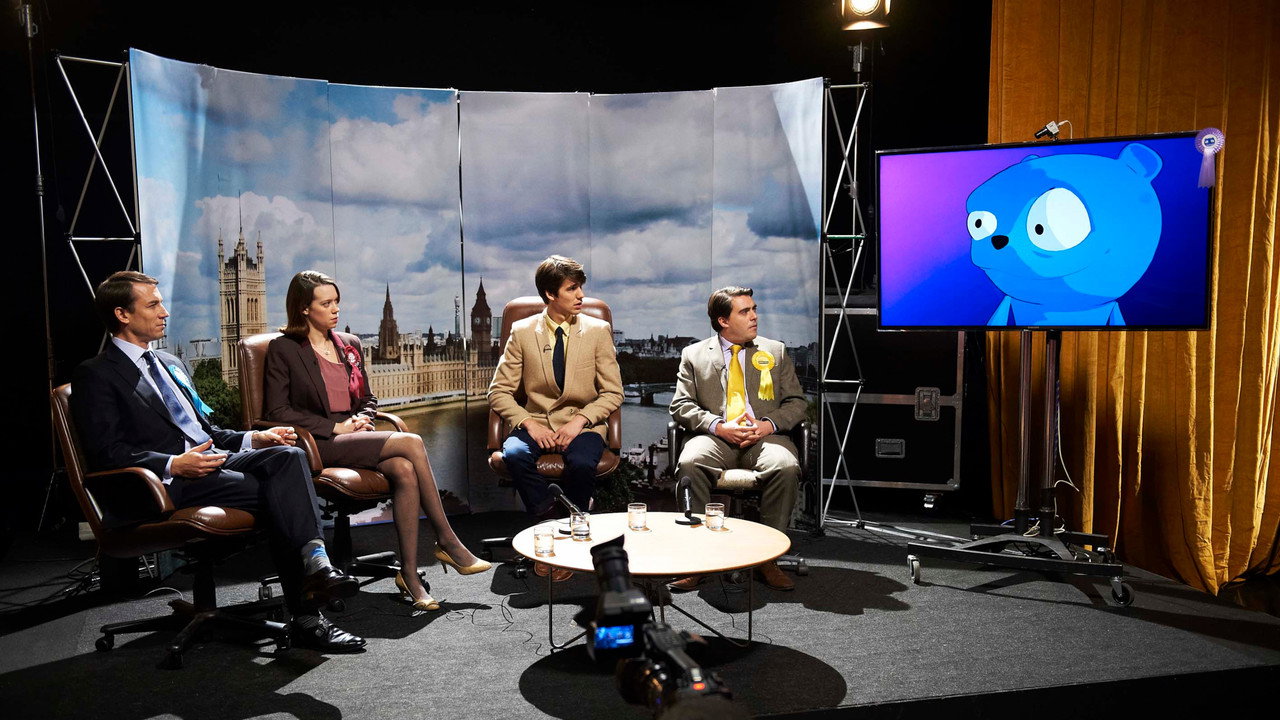
Jamie performs Waldo live, a cartoon bear who humiliates a pompous MP on air. The channel smells a hit.
- On the ballot
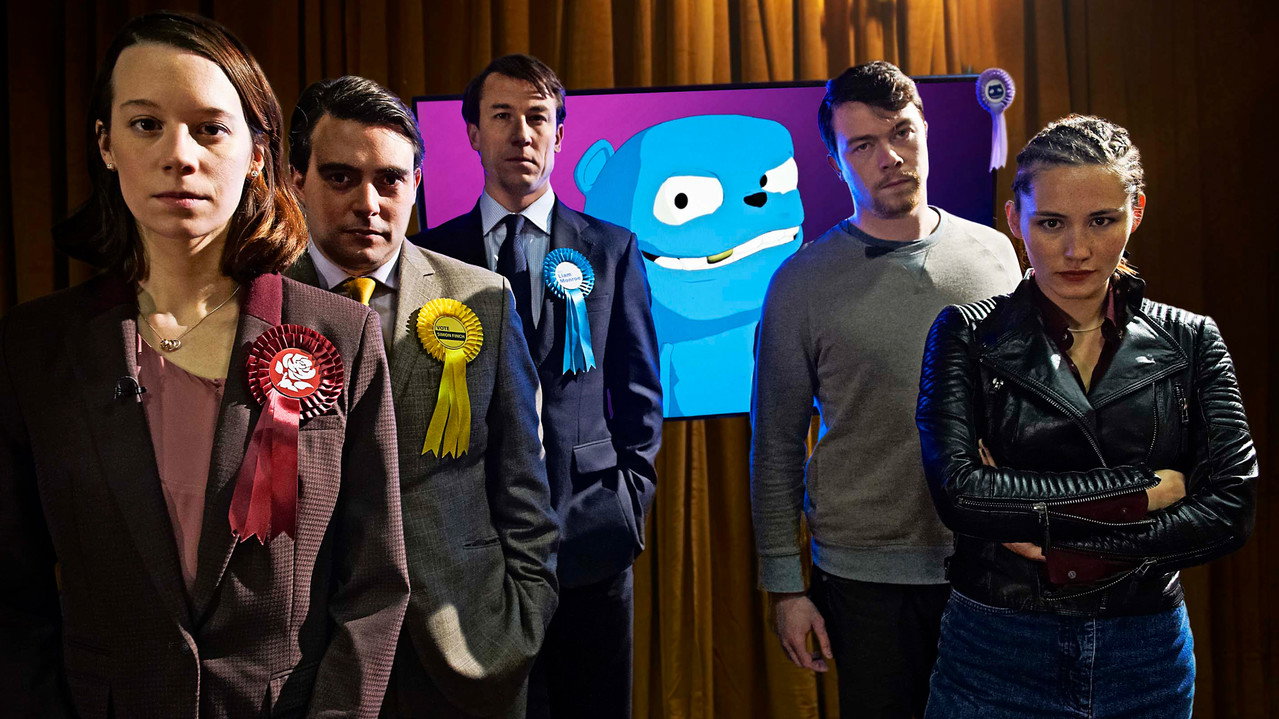
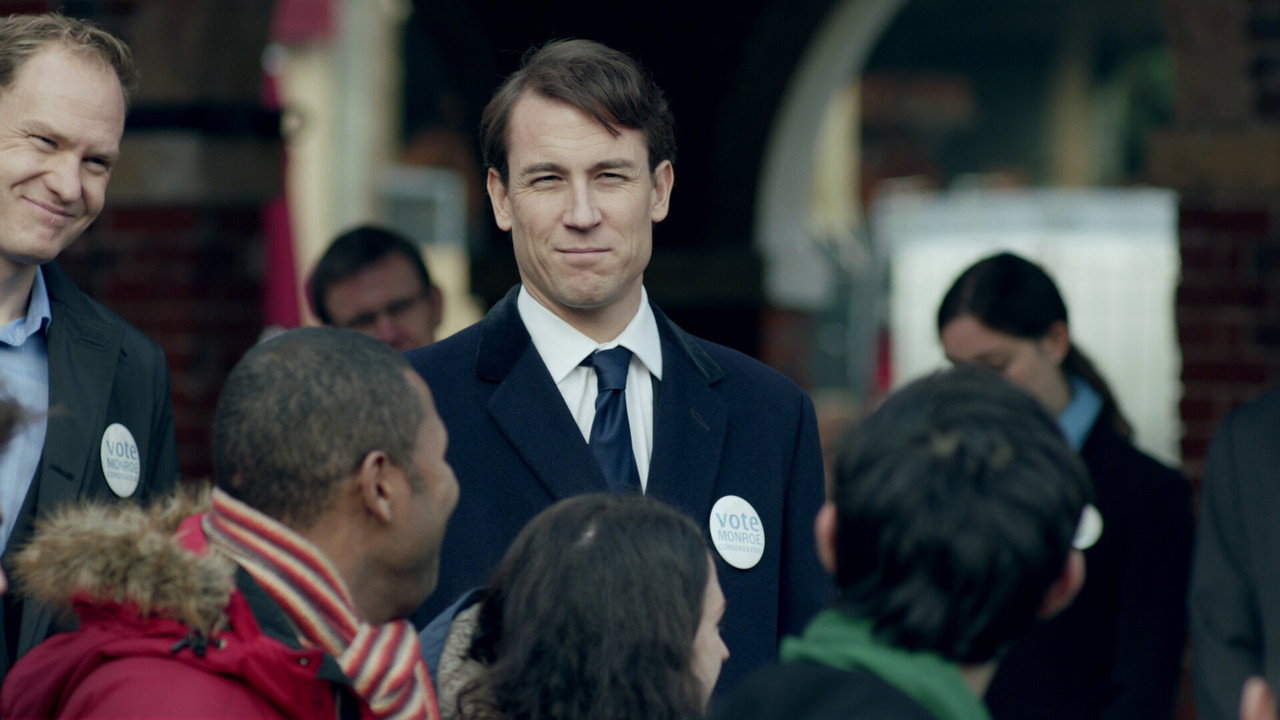
Monroe enters a by-election in a safe Conservative seat, and the channel enters Waldo against him.
- Gwendolyn
Jamie falls for Gwendolyn Harris, the Labour candidate. Then, at a student hustings, Waldo uses what she told him in private.
Out of the vanSpoiler · tap to reveal
Jamie breaks character to tell voters not to back Waldo. Someone else takes over the controls.
EverywhereSpoiler · tap to reveal
Later, Jamie is homeless, and Waldo is on every screen in every language.
Why it still matters
Jamie Salter is a comedian whose career has come down to being the voice and face behind Waldo, a crude animated blue bear who ambushes public figures in the style of a children's show. When a Conservative candidate, Liam Monroe, stands in a by-election, the channel decides Waldo should stand too. Daniel Rigby plays Jamie as a man who can do the act perfectly and can't stand doing it.
Critics were lukewarm in 2013, and Charlie Brooker has said it's the one he "didn't nail." Then 2016 happened, and it was widely described as prescient. There's hardly any science fiction in it. Watch it as a portrait of an anti-politics candidate who "offers nothing," in Brooker's words, and of the people around him who notice how well nothing sells.
Anyone can be Waldo
Monroe wins the by-election. Waldo comes second and Harris third. But the executive Jack Napier, now working the bear himself, uses Waldo to whip up a riot, and an American agent has already explained why a cartoon figurehead can carry a political message abroad better than a human. In the last scene Jamie is sleeping rough and being moved on by police. Waldo is on screens across every channel, in several languages. Jamie throws a bottle at one, and the police tase him.
The ending was the most criticised part on broadcast. Den of Geek's Ryan Lambie called it "sudden" and "on-the-nose." Brooker later said the story should have been longer, maybe a two-parter or a miniseries tracing how Waldo rose from a by-election candidate to a fascist leader. That jump is what people point to now: reviewers in 2013 wondered how Waldo could last more than fifteen minutes, and the question read differently a few years later.
Behind the scenes
- Brooker and Chris Morris came up with the idea in 2005, while writing Nathan Barley: a politician modelled on Gorillaz, the band whose members are cartoons.
- Brooker drew on Boris Johnson, whom he called "quite a clown," and on Ali G. Jón Gnarr, the comedian who became mayor of Reykjavík, was another reference point.
- Some of Jamie's lines come from Brooker's own experience co-presenting 10 O'Clock Live. He said the episode was really "asking what satire's about."
- It was written in a rush because Brooker was rewriting "White Bear" at the same time. He consulted his sister-in-law, Rupa Huq, then a Labour politician.
- Waldo's look was partly based on Ratz, the floating cat head from the children's show Live & Kicking. Passion Pictures, fresh from the meerkat in the "Compare the Meerkat" adverts, did the animation, kept deliberately clunky so you'd believe Jamie was working it live.
- The Waldo van toured High Wycombe during filming, and members of the public interacted with it.
- After the 2016 US election the official Black Mirror Twitter account posted: "This isn't an episode. This isn't marketing. This is reality." Commentators have also compared the episode to real campaigns: Chris Cillizza in The Washington Post to Donald Trump's in 2016, and Adrian Karatnycky in Politico to Volodymyr Zelenskyy's in 2019.
The thread
Where Waldo came from: a cartoon band, a media satire and a comic character Brooker had in mind.
Came before
Shares DNA with
DNA strand
Be Careful What You Wish For
Voters fed up with career politicians get exactly what they asked for: someone who says the unsayable and promises nothing. Jamie gets his wish too, a hit at last. Neither of them is ready for what the character can do once it no longer needs either of them.
Every great sci-fi story is built from a handful of strands like this one. Each strand page explains how it works and traces it across shows, books and films.
If this one stayed with you
Where to go next, and why.
Watch · Film
A Face in the Crowd (1957)
A drifter with a guitar becomes a broadcast star, and the people behind him spot what else his audience could be used for, decades before Waldo.
Watch · Black Mirror
"The National Anthem"
The show's first episode, and its other big swing at Westminster: a prime minister, a terrible demand and a public watching every second.
Watch · TV series
Nathan Barley
Brooker and Chris Morris's sitcom about media hipsters, where Waldo first took shape. It's lighter and sillier, and just as sour about the people making the content.
Read · Book
Amusing Ourselves to Death by Neil Postman
The classic argument that television turns politics into show business, which makes Waldo look less like satire.