
More from the episode
The story in 5 beats
- The museum
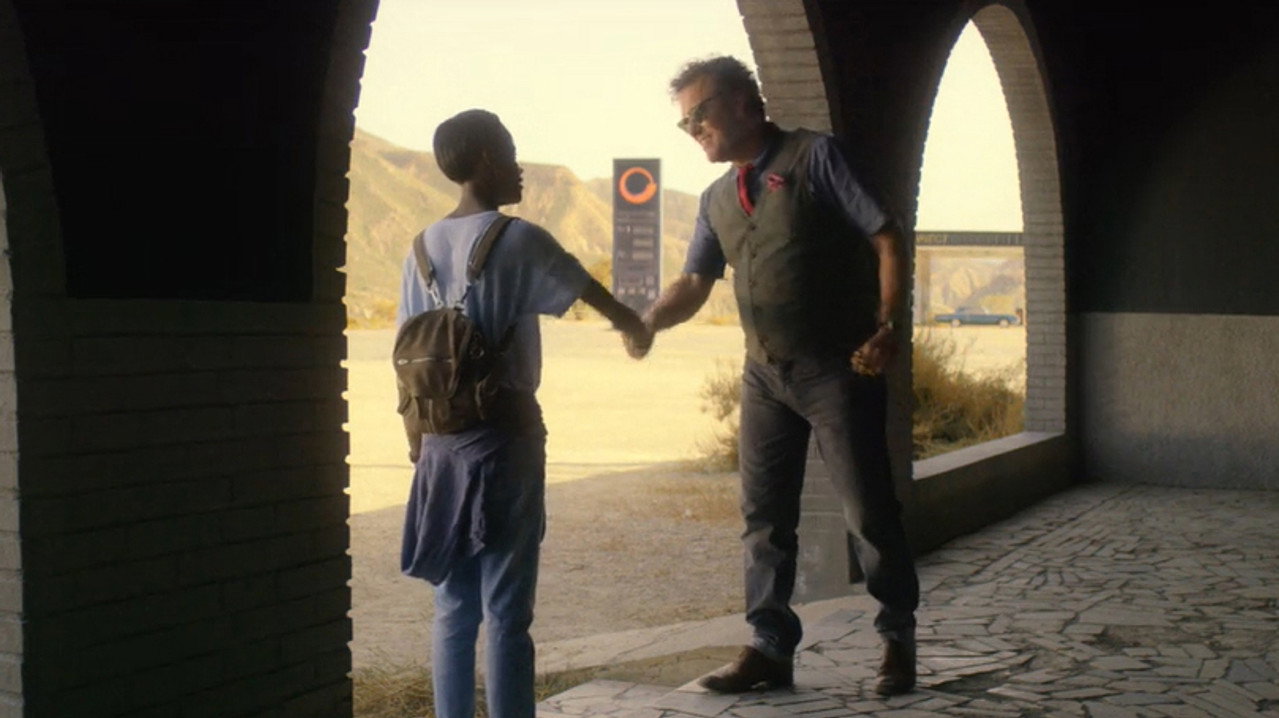
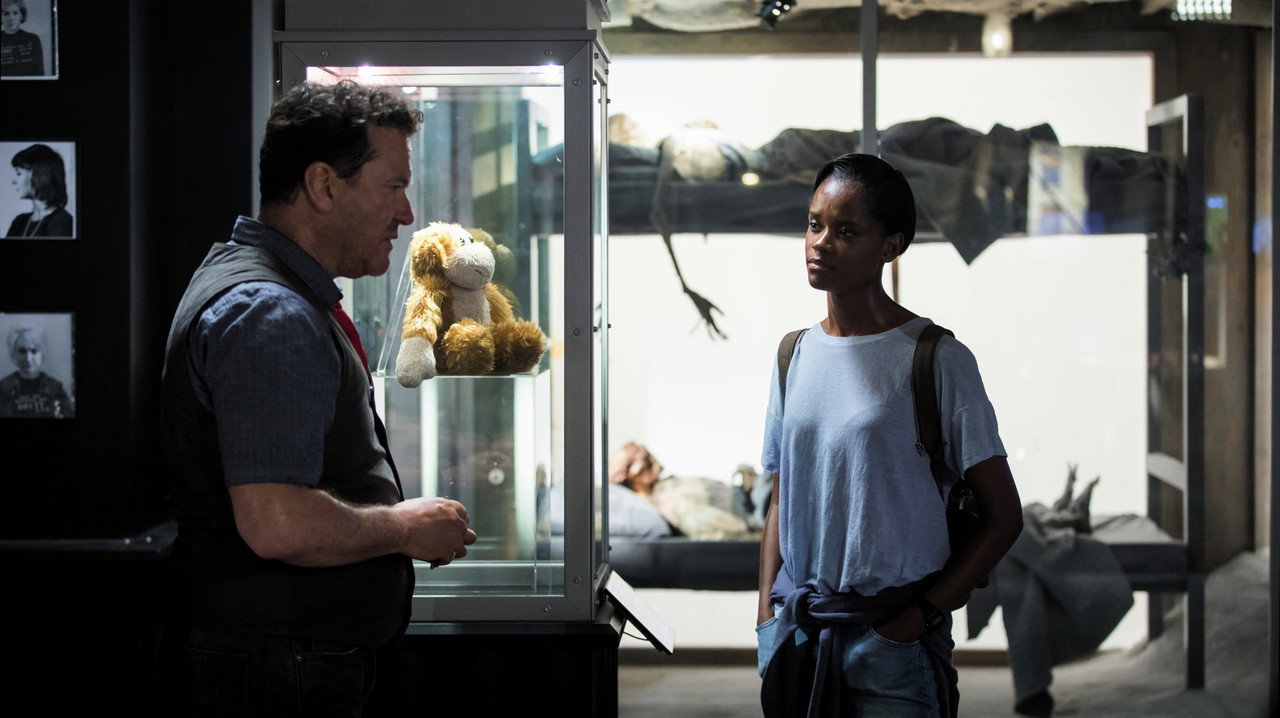
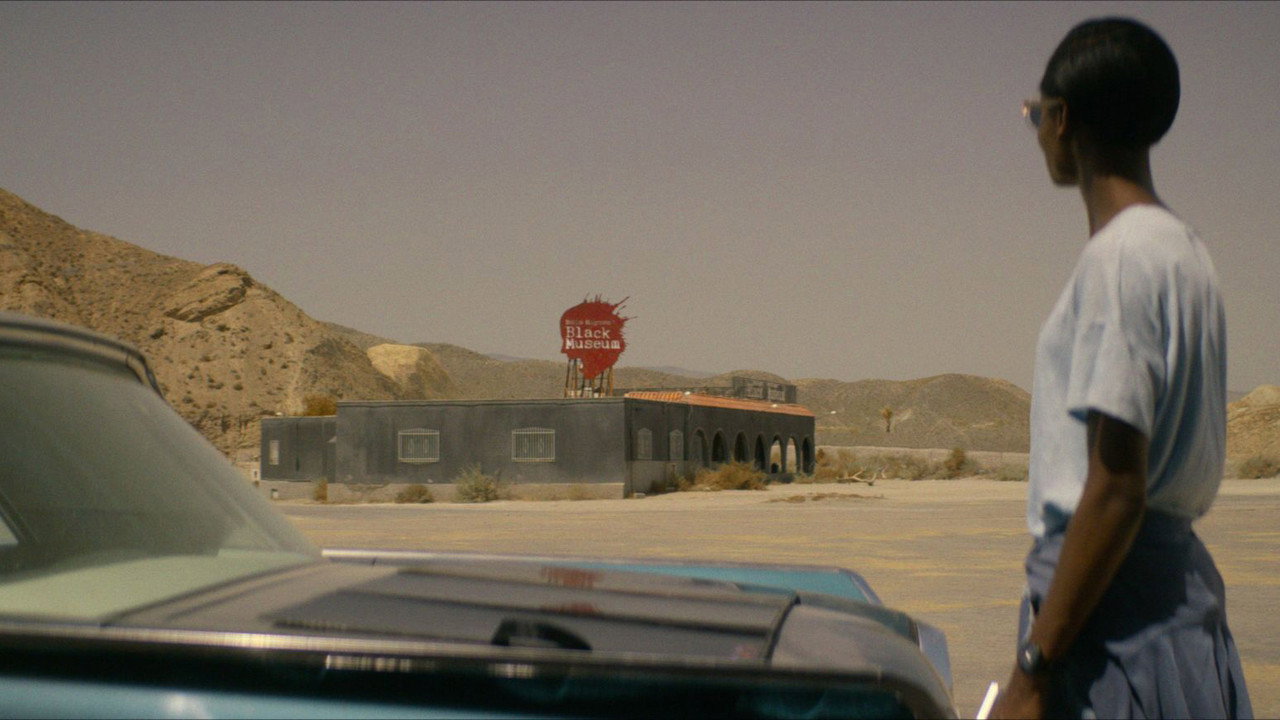
Nish stops at a remote museum while her car charges. The owner, Rolo, offers her the tour.
- The doctor
A doctor gets an implant that lets him feel his patients' symptoms. He starts to enjoy the wrong ones.
- Carrie
A husband agrees to carry his comatose wife's consciousness in his own head. Neither of them is happy for long.
The main exhibitSpoiler · tap to reveal
A hologram of a man from death row. Pull the lever and he feels it.
SouvenirSpoiler · tap to reveal
Nish has her own reason for coming, and her own souvenir to take home.
Why it still matters
It's built like "White Christmas": three nasty little stories told by a man who seems to enjoy telling them. Rolo Haynes runs a dusty museum in the desert, and every exhibit is a piece of technology he helped launch and a person it ruined. A doctor who can feel his patients' pain. A husband carrying his comatose wife's mind in his head. And the main attraction, a death-row prisoner turned into a hologram you can electrocute for a fee.
Brooker called it an episode about punishment and racism, in the vein of "White Bear," with the gleeful tone of Tales from the Crypt. Critics were split; Variety called it the series' worst and The Independent called it very strong. But it's the episode that finally confirmed every Black Mirror story lives in one world, and Letitia Wright's turn as Nish earned an Emmy nomination.
Why Nish came
Clayton Leigh signed his consciousness over to Rolo from death row. As a hologram he was electrocuted over and over by paying visitors, each of whom took home a souvenir copy of him in agony. After protests, only sadists and white supremacists kept coming, until there was nothing left of him but pain. His wife saw what had become of him and died of an overdose the next day.
Nish is their daughter. She has poisoned Rolo's water and sabotaged the air conditioning, and as he struggles to breathe she moves his consciousness into Clayton's hologram, pulls the lever and takes the souvenir. Then she frees Carrie from the toy monkey Rolo left her trapped in, burns the museum down and drives away, with her mother's consciousness riding along in her head, the way Carrie once rode in Jack's.
The Question Underneath
What does it say about us that people will pay to watch suffering?
Every exhibit in Rolo's museum rests on the same excuse: it's only a copy, so it doesn't really count. The episode keeps showing what that excuse lets people do, from a doctor addicted to pain to a prisoner tortured for tourists. By the end the story turns the excuse back on Rolo himself. If copies can suffer, then everything he sold was cruelty with a receipt, and the souvenirs are evidence.
Challenge the DNA
Is Nish's revenge justice?
Or skip ahead to our reading
It's justice by the museum's own rules, which is the problem. Nish ends up carrying a souvenir of suffering, just like the customers she despises.
Behind the scenes
- The first story is Penn Jillette's "The Pain Addict," published in a 1988 anthology and drawn from his time ill in a Spanish hospital in 1981, where a language barrier made diagnosis hard. He told Brooker about it before series three; two years later Brooker asked to use it.
- Jillette also helped shape Rolo as a washed-up Las Vegas carny, partly inspired by Penn & Teller's own work. He wanted to audition for the part, but casting was too far along.
- Brooker had earlier ideas about a digital prisoner electrocuted again and again, and an ex-partner living in someone's head. Both made it in.
- Letitia Wright sent a self-tape with Daniel Kaluuya reading the other parts; they'd just worked together on Black Panther. She filmed this straight after.
- It was shot in about a month in Spain and Nevada. Douglas Hodge called Rolo the most toxic person he'd ever played and kept his distance from Wright on set.
- Director Colm McCarthy said the museum contains a reference to every earlier episode, many placed by set designer Joel Collins.
The thread
The special it echoes, the story it adapts, and the shared world it confirmed.
Came before
Shares DNA with
 ClipOfficial trailer · Netflix · 0:44
Left its mark on
DNA strand
Technology Outpaces Ethics
Every exhibit is a device that worked exactly as designed. What failed was everyone deciding a copy of a person was a product, and the episode makes you watch where that ends up.
Every great sci-fi story is built from a handful of strands like this one. Each strand page explains how it works and traces it across shows, books and films.
If this one stayed with you
Where to go next, and why.
Watch · Black Mirror
"White Christmas"
The blueprint: three stories, one storyteller and a frame with its own twist. Darker, and tighter.
Watch · TV
Tales from the Crypt
The gleefully grisly anthology Brooker was channeling. Pick any episode.
Your next episode
Three directions to go from here, all on Sci-Fi DNA.

More of this feeling
White Christmas
Black Mirror
The same three-stories-and-a-storyteller shape, colder and tighter.

Same question, different answer
USS Callister
Black Mirror
Digital copies of real people again, this time with a way out.

Something completely different
The Trouble with Tribbles
Star Trek
You've earned something with no torture in it at all.