More from the series


Who this is for
You're partway through Dark, or you've just finished it and need a map: the show follows the same people at different ages, played by different actors, across several decades. Tell us how far you've watched and the rest stays folded away.
What it covers
- How the time travel works, and the 33-year rhythm
- Who is who across the decades
- Why nobody in the show manages to change anything
- The family tree, one branch at a time
- What the final season adds, and what the last episode means
- What the creators have said, and what they left open
Spoiler boundary
All three seasons, up to the final episode. Each part says how far it goes. Mentions Primer, Coherence and Twin Peaks by premise only.
Show the full explanationHide the explanationContains spoilers: All three seasons, up to the final episode. Each part says how far it goes.
We’ll only show what you’ve seen. Your choice stays on this device.
How to read the labels
- Confirmed in the work
- Shown or stated on screen or on the page.
- Creator explanation
- What a writer or director has said outside the work.
- Strong inference
- Not stated outright, but the evidence points one way.
- Interpretation
- A reading of what it means. Reasonable people differ.
- Unresolved
- The work doesn't answer this.
The short answer
Time in Winden runs in a closed loop. Travelers jump 33 years at a time through a cave under the nuclear plant, and every attempt to fix the past turns out to be part of the history it meant to fix. Mikkel, who vanishes in 2019 and lands in 1986, grows up to be Jonas's father. The Stranger is adult Jonas, and Adam, who leads Sic Mundus, is Jonas decades later. Season 3 adds a second world led by Eva, an older Martha, tied to the first in a knot that keeps both apocalypses coming.
The knot started in a third world, the origin, where the clockmaker H.G. Tannhaus built a machine to bring back his son's family after a car crash, and split his world in two. In the finale Jonas and Martha stop the crash, and both worlds disappear, along with everyone born because of time travel. The survivors sit down to an ordinary dinner, and a pregnant Hannah says she likes the name Jonas.
How time travel works in Winden · up to S1 E2
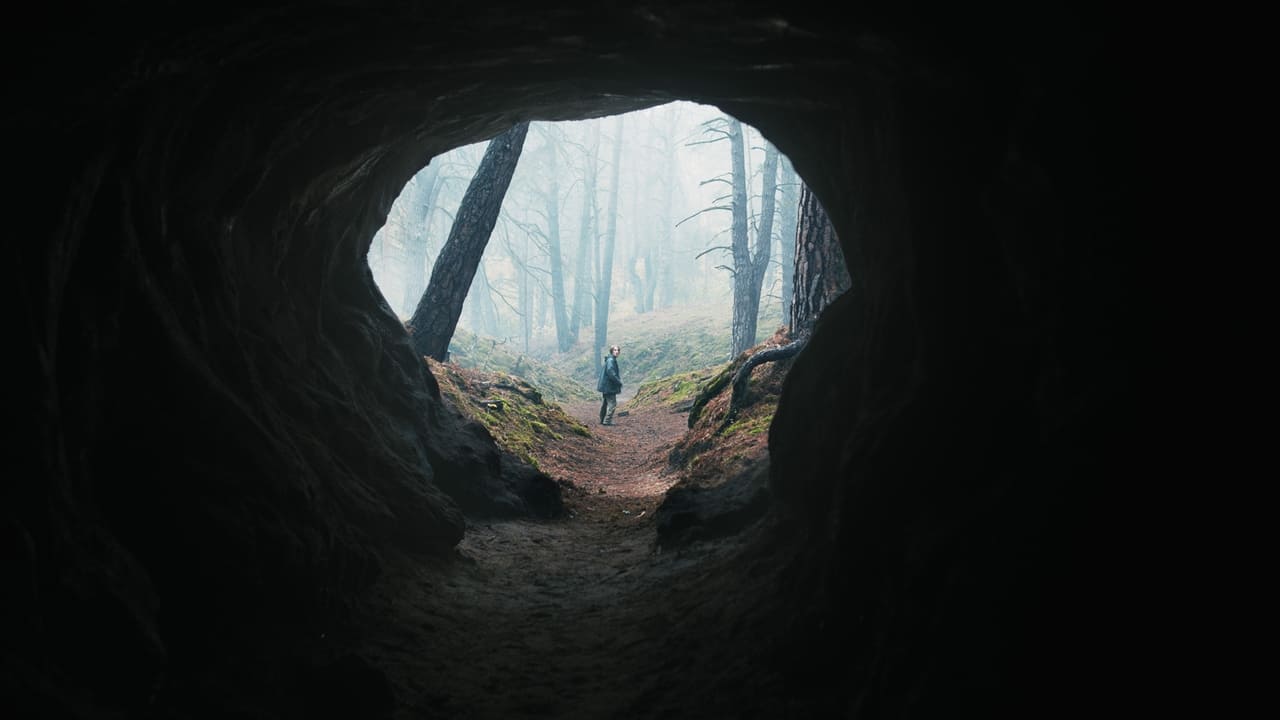
Confirmed in the work Winden is a small fictional German town with a nuclear plant due to close. In the caves under the plant, a passage sends people 33 years into the past or the future. When young Mikkel Nielsen vanishes there in 2019, he wakes up in 1986, the year Ulrich's brother Mads went missing.[1]
- Confirmed in the workThe story runs in three periods 33 years apart (2019, 1986 and 1953), with the same characters played by different actors at different ages.[1]
- Creator explanationBaran bo Odar has said the show's idea of time is "based on the Albert Einstein theory that time's not linear but a circle," and Jantje Friese said following characters across three periods "works like a puzzle."[8]
Strong inference Track families instead of ages. Most scenes make sense once you know which of the four families (Kahnwald, Nielsen, Doppler, Tiedemann) a face belongs to, and Odar has said the designers kept each decade's colors separate, which tells you where you are.[2]
Season 1: Jonas's father and the Stranger · up to S1 E10
Confirmed in the work The series opens with the suicide of Michael Kahnwald, Jonas's father. Through a letter he left, season 1 reveals who he was: Mikkel, who arrived in 1986 as a boy, was taken in by the nurse Ines Kahnwald, and grew up to marry Hannah and have Jonas. Jonas's father is his friend Martha's little brother.[1]
- Confirmed in the workUlrich Nielsen follows the trail back to 1953, attacks the young Helge Doppler and is arrested. He's stranded in the past, and later turns up held in an asylum in 1987.[1]
- Confirmed in the workThe Stranger asks the old clockmaker H.G. Tannhaus to repair a broken brass device so he can destroy the wormhole. Tannhaus finishes it from the broken version the Stranger brought him.[1]
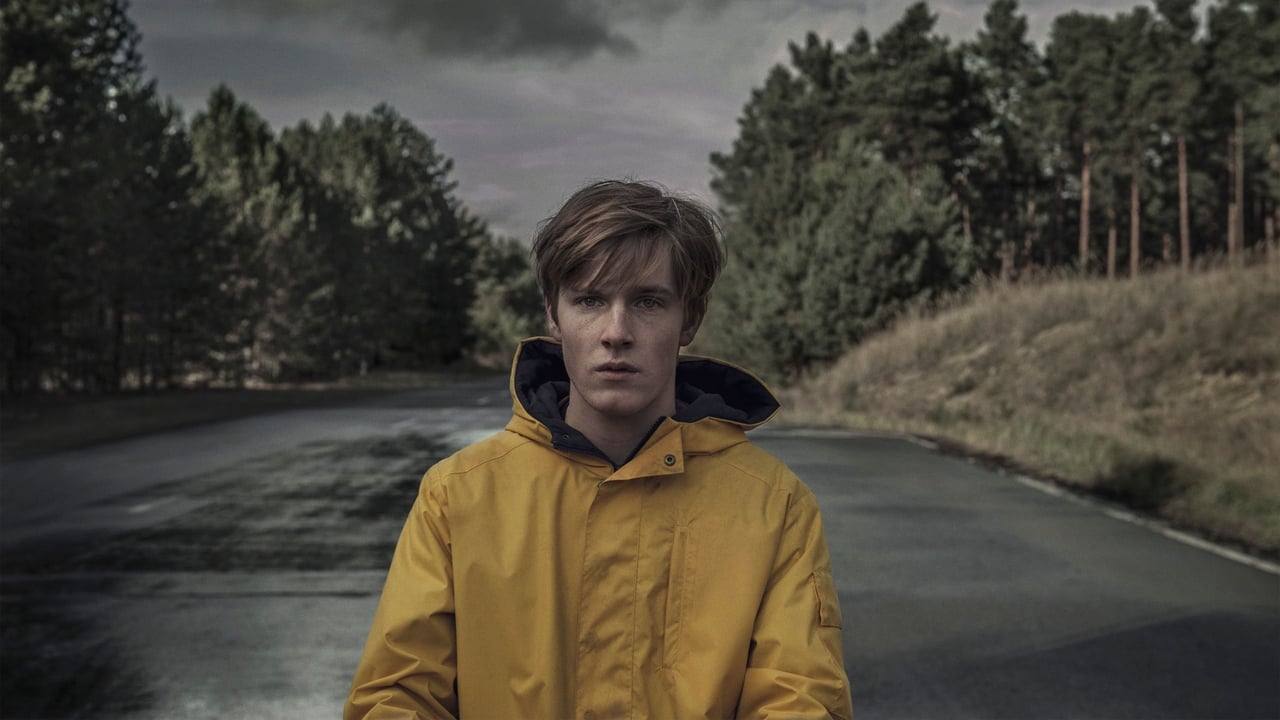
- Confirmed in the workIn the season 1 finale the Stranger turns out to be adult Jonas. His attempt to close the passage fails, and teenage Jonas ends up in a ruined Winden in 2052.[1]
Why nobody can change anything · up to S2 E6
Confirmed in the work Dark makes heavy use of the bootstrap paradox, where a cause and its effect loop into each other with no starting point, and season 2 shows how far that goes.[1]
- Confirmed in the workIn "The Travelers" (S2 E4), Jonas, stuck in 1921, meets Adam, the old leader of the secret society Sic Mundus, who tells him he is Jonas, 66 years on.[6]
- Confirmed in the workJonas goes back to stop his father's suicide, and Michael tells him that a future Jonas led him into the caves as a child. Jonas's attempt to undo his father's fate is part of what made it.[6]
Strong inference Hold onto that rule for the rest of the show. Each traveler arrives knowing exactly enough to keep things the same, and free will, in Dark, is the feeling of making a choice the loop already contained.
Season 2: Sic Mundus and the end of the world · up to S2 E8
Confirmed in the work Noah and Charlotte. Noah, the priest who turns up in several decades, works for Adam. He tells Charlotte Doppler, raised by Tannhaus, that he is her father. He doesn't mention that her mother is Elisabeth Doppler, Charlotte's own daughter: Elisabeth and Noah have Charlotte in the future, and she ends up in the past as a child, grows up and gives birth to Elisabeth.[6]
Confirmed in the work Claudia. Claudia Tiedemann gets a time machine from her older self and becomes the traveler Sic Mundus calls the White Devil. Noah kills one version of her, but others are still at work.[1]
Confirmed in the work The apocalypse. On June 27, 2020, the day the plant is decommissioned, the barrels of radioactive waste buried there are opened and a mass of dark matter called the God Particle forms. Travelers in 2053 and 1921 open the passage at the same moment, and Winden is destroyed.[6]
Confirmed in the work The cliffhanger. Adam says the dark matter has to be created so he can turn it to its real purpose, the end of this world. Then he shoots Martha in front of Jonas. Moments later a second Martha, with a different haircut, pulls Jonas out. Asked what time she comes from, she says the question is what world.[7]
Season 3: two worlds and two leaders · up to S3 E6
Confirmed in the work The second Martha comes from a parallel world tied to Jonas's, one where Jonas was never born. Both worlds are heading for the same apocalypse. Jonas's world has Adam and Sic Mundus; the other has a counterpart group, Erit Lux, led by an old woman called Eva.[1]
- Confirmed in the workIn "Adam and Eva" (S3 E3), Eva tells Jonas she is Martha, decades on, and that she and Adam are counterparts. She says Adam wants to destroy both worlds.[1]
- Confirmed in the workEva wants the opposite. She works to keep the loop running, with the Unknown, a traveler who appears at three ages, as her enforcer.[3]
- Confirmed in the workIn "Light and Shadow" (S3 E6), Adam tries to destroy the origin of the knot, and kills a pregnant Martha in the process.[1]
Creator explanation The other world is shot as a mirror image. Odar has said they flipped the picture, so actors had to use their opposite hand, and the production imported English cars to put the steering wheels on the expected side.[2]
Strong inference So the season's fight is between Jonas and Martha in old age. One wants to end everything and the other wants nothing to change, and neither can win while the other world exists, because each world keeps the other's events on track.
The family tree, untangled · up to S3 E7
You don't need every branch. These are the loops that matter, family lines that run back into themselves.
- Confirmed in the workJonas and Martha. Their child is the Unknown. The Unknown is the father of Tronte Nielsen, who is Ulrich's father and Martha's grandfather. That makes Jonas both Martha's nephew and her great-great-grandfather.[5]
- Confirmed in the workBartosz and Silja. Stranded in the 1890s, Bartosz Tiedemann meets Silja, the daughter of Hannah and Egon Tiedemann. Their children are Hanno, who grows up to be Noah, and Agnes, Tronte's mother.[5]
- Confirmed in the workThat makes Bartosz Ulrich's great-grandfather, even though in 2019 he's a teenager in Jonas's class.[3]
- Confirmed in the workCharlotte and Elisabeth. Each is the other's mother and daughter (Noah is Charlotte's father), so Elisabeth is also Noah's granddaughter.[5]
- Confirmed in the workRegina. Bartosz's mother is Regina, Claudia's daughter and Egon Tiedemann's granddaughter.[1]
Strong inference Some of these people exist only because a traveler had a child in the wrong century: Jonas himself, everyone descended from the Unknown, and everyone descended from Noah. Others, like Regina, Hannah, Katharina and Peter, were born the ordinary way. That difference decides who is left at the end.
The origin world and the ending · up to S3 E8
Confirmed in the work Old Claudia is the one who worked it out. She tells Adam that both worlds came from a third, the origin, and that he and Eva are locked in a triquetra knot. His path "had to remain unchanged," she says, an "infinite chain of cause and effect," until a loophole opened during the apocalypse, when time stood still.[3]
Confirmed in the work In the origin world, Tannhaus's son Marek, Marek's wife Sonja and their baby daughter Charlotte die in a car crash. Tannhaus builds a machine to bring them back, and switching it on splits his world into the two we've been watching.[1]
The deal
Confirmed in the work Claudia shows Adam the way out. Adam confronts Eva but refuses to kill her, and Jonas and Martha set off for the origin world.
The crash
Confirmed in the work They reach Tannhaus's family in time and stop the accident.
The fade
Confirmed in the work With no crash there's no machine, so neither world ever exists. Jonas and Martha fade away together.
The dinner
Confirmed in the work In the origin world, Winden families sit down to dinner. Asked about a name for her baby, Hannah suggests Jonas.
Confirmed in the work Everyone born because of time travel is gone. Ulrich and his children, Charlotte and her daughters, Noah, Agnes, Silja and Tronte never existed, which also does away with the Charlotte and Elisabeth paradox.[3]
Creator explanation Friese has said the dinner was planned early: they wanted to end on something that looks normal, a meal with family and friends. She also said saving Regina was always part of the plan.[2]
Strong inference That's what Claudia was working toward the whole time. The only version of events that gives her daughter an ordinary life is one where none of the rest ever happened.
What the ending means · up to S3 E8
A happy ending
Creator explanationOdar has said he sees it as a happy ending, about two people realizing that life isn't only about them. Jonas and Martha give up their own existence so a world without the loop can go on.[2]
What supports it
- Friese said the warm, ordinary last scene was the point.
- Regina, who suffers in every loop, is alive and well.
What complicates it
- Odar admitted you can also read it as a suicide mission.
The loop wins anyway
InterpretationHannah reaching for the name Jonas suggests the origin world isn't free either: some pattern survives the erasure and may start over. Den of Geek read it as a sign that some events are determined by the system, or by a higher power.[4]
What supports it
- Hannah seems to feel a trace of Jonas, which TheWrap likens to déjà vu.
What complicates it
- Friese has described the moment as both hopeful and ominous, and Odar said it's really up to the audience.
What's still open · up to S3 E8
- UnresolvedHow Torben Wöller lost his eye. Odar has said, cheerfully, that they never had an answer.[2]
- UnresolvedWhether Hannah's baby will grow up into anything like the Jonas we knew. The creators left it open on purpose.[2]
- UnresolvedExactly how Tannhaus's machine produced a closed loop of travelers, cave and all, instead of simply bringing his family back. TheWrap calls the mechanics ambiguous, and the show never spells them out.[3]
- UnresolvedWho built the first brass time machine inside the loop. Tannhaus finishes his from the broken device the Stranger brings him, so the loop's machines have no obvious beginning.
The Question Underneath
If everything you do was always going to happen, does any of it still matter?
Dark spends three seasons on people who try to change the past and end up causing the thing they meant to stop. Jonas fights his fate for 26 episodes and turns out to be one of its authors. Jantje Friese has said the question that stays with viewers is one we sometimes ask about ourselves: whether we matter at all. The loop never cared about any of them, but the last two people inside it chose to give others ordinary lives, at the cost of their own, and the show treats that choice as truly theirs.
Connections that give things away
- Similar themeParallels Star Trek: The Next Generation · S7 E11
Worf slips between versions of his life where small things are different. Dark's final season does the same to Jonas, far less kindly.
Where to go next
More of this feeling
Help Me Understand
The same slow dread of an ordinary place going wrong, in one night instead of three seasons.
Same question, different answer
Help Me Understand
If you could go back, would you trust yourself with it?
Something completely different
Help Me Understand
Another carefully plotted puzzle series, this time set in an office with very long corridors.
How it connects
- Editor's pairingTwin Peaks (1990) TV series · Mark Frost and David Lynch
The creators said their show was closer to Twin Peaks than to Stranger Things, with a David Lynch and David Fincher mood: a small town, a missing young person and a lot of family secrets. Source
- Similar story mechanismPrimer (2004) Help Me Understand
Another time-travel story that refuses to slow down for the viewer and rewards a second watch with notes in hand. Nobody involved has said one influenced the other.
- Similar themeCoherence (2013) Help Me Understand
Ordinary people in one small place slowly realize the rules of reality have shifted around them.
Sources
- Dark (TV series) · Wikipedia · accessed 2026-11-21
- Interview: Baran bo Odar and Jantje Friese on Dark's final season · The Hollywood Reporter · accessed 2026-11-21
- Everything You Need to Know About 'Dark' Season 3, Explained · TheWrap · accessed 2026-11-21
- Dark Season 3 Ending Explained · Den of Geek · accessed 2026-11-21
- Dark Season 3 Family Tree Explained and Who Dies at the End · Den of Geek · accessed 2026-11-21
- Dark Season 2 Explained · TV Guide · accessed 2026-11-21
- Dark Season 2 Finale Explained · Refinery29 · accessed 2026-11-21
- The creators behind Netflix drama Dark explain why their show is more Twin Peaks than Stranger Things · GamesRadar+ · accessed 2026-11-21
- 'Dark': The Netflix Show's Creators Discuss the Impossibility of Saying Goodbye · Yahoo Entertainment · accessed 2026-11-21
Plot summaries are in our own words. Labels mark what the work shows, what its makers have said, and what is our reading. Last reviewed 2026-11-21. Spot an error? Tell us.