The story in 5 beats
- The elevator
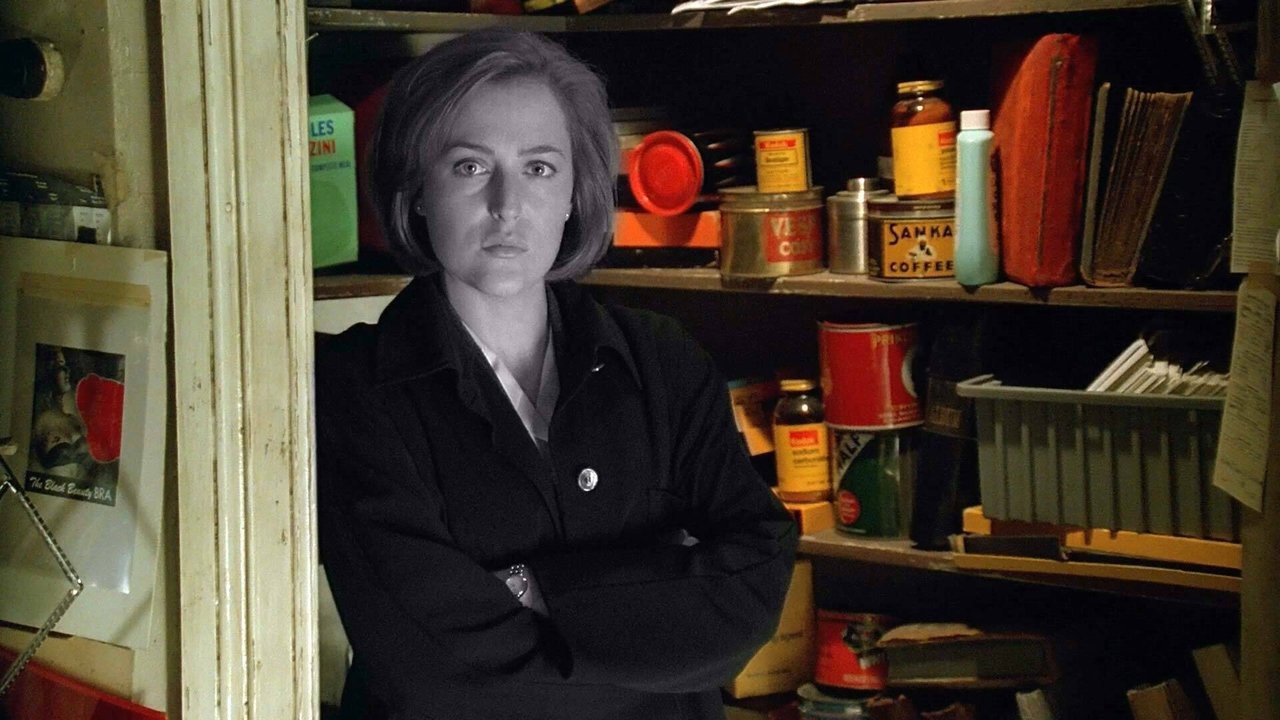
In New York, an old man follows a woman who looks gray to him. Her elevator falls, and he is there with his camera when it lands.
- A new partner
Kersh puts Scully with a new partner, Agent Peyton Ritter, to look into Fellig. His police photography records go back to 1964, yet he looks no older than he did then.
- A ride at night
Fellig survives a stabbing that should have killed him and denies he's a murderer. He takes Scully out driving and tells her he can see who is about to die. They look gray.
His storySpoiler · tap to reveal
Fellig says he is 149. Sick with yellow fever long ago, he refused to look Death in the face, Death took his nurse instead, and since then he hasn't been able to die.
Ritter arrivesSpoiler · tap to reveal
As Fellig talks, Scully turns gray in his eyes. Ritter ambushes Fellig and fires, and the bullet passes through him into Scully.
Why it still matters
The writers had wanted an immortality story for years and could never make living forever frightening. According to Andy Meisler's official Season 6 guide, Frank Spotnitz found the way in: a man who can't die, photographing the dying in the hope of catching Death on film. Vince Gilligan wrote it, and he built Alfred Fellig out of three things: the New York tabloid photographer Arthur "Weegee" Fellig, whose name he borrowed; a 19th-century yellow fever epidemic in the city; and the Greek myth of Tithonus, the lover of the dawn goddess Eos, who had him made immortal and forgot to ask for eternal youth to go with it.
It's a quiet, sad episode, and a lot of it rests on Geoffrey Lewis, who plays Fellig as a tired old pro who resents everyone who gets to die. Robert Shearman, in Wanting to Believe, singled out Lewis's performance. Zack Handlen of The A.V. Club wrote that the episode "doesn't play out like a classic monster episode, it feels like one," and Tom Kessenich called it a "fascinating offshoot" of an earlier entry in the series.
Close your eyes
Scully lies bleeding, and Fellig kneels beside her and asks her to close her eyes rather than look at Death. The color comes back into her as it drains out of him. He has taken her place, and finally gets to die; Scully makes a full recovery.
Viewers noticed that Scully had just done what Fellig did a century before: she didn't look Death in the face. Plenty of fans online decided she might now be unable to die, and in 2009 Spotnitz confirmed the theory in a post on his production company's blog. Slate's Josh Daniel had already traced the idea back to Clyde Bruckman telling Scully, in Season 3, that she wouldn't die, and in the official Season 6 guide Spotnitz said he was pleased "Tithonus" could bookend that thread, calling it "very satisfying."
Challenge the DNA
Was Fellig a villain or a victim?
Or skip ahead to our reading
He takes Scully's place and finally gets to die, and she recovers. The episode gives him a kind of grace at the end.
Behind the scenes
- Season 6 was the first made in Los Angeles instead of Vancouver, and several scenes were shot on the sound stage of ABC's NYPD Blue, whose sets stood just across from the Fox studios.
- Fellig's cameras were borrowed from the University of California's Museum of Photography, and many of the prints came from the agency Corbis. Property master Tom Day researched government typefaces and printing methods so each photo would look right for its decade.
- To drain the color from chosen people in a shot, visual effects producer Bill Millar used what he called colorization in reverse: the figures were outlined in a painstaking process and a computer did the rest. He had used the trick on Nightmare Cafe in 1992 and on Pleasantville.
- Fellig's stab wounds were made in precisely graduated sizes, so the episode could show his back healing scene by scene.
- Matthew VanWinkle's chapter in The X-Files and Literature (2007) ties Fellig's gray vision to a line from Tennyson's "Tithonus": "Alas! For this gray shadow, once a man."
The thread
The episode it's always compared with, the poem it borrows from, and other stories about people who can't, or won't, let Death in.
Came before
Shares DNA with
DNA strand
Be Careful What You Wish For
Fellig got what most people would bargain for and has spent more than a century trying to give it back. Like Tithonus in the myth, he has endless life without any of the reasons to want it, and the job he's chosen keeps him standing next to the one thing he can't have.
Every great sci-fi story is built from a handful of strands like this one. Each strand page explains how it works and traces it across shows, books and films.
If this one stayed with you
Where to go next, and why.
Watch · Film
The Seventh Seal (1957)
A knight back from the Crusades plays chess with Death to buy time, and Ingmar Bergman makes Death a patient, almost polite opponent.
Watch · Film
Final Destination (2000)
Teenagers who dodge a plane crash find Death coming back for them one by one, in the order they should have gone.
Read · Novel
Tuck Everlasting by Natalie Babbitt
A family who drank from a spring and stopped aging try to explain to a young girl why living forever is nothing to wish for.
Read · Photography
Naked City by Weegee
The real Fellig's book of night-time New York, full of crime scenes and the crowds who gathered to stare at them.
Your next episode
Three directions to go from here, all on Sci-Fi DNA.
Same question, different answer
The Long Morrow
The Twilight Zone
It asks what a very long life is worth if it has to be spent alone.

Something completely different
The Rain King
The X-Files
For something warmer, watch the agents visit a Kansas town that pays a man to make it rain.