
More from the episode
The story in 5 beats
- The raid
A tipster called Sidney reports child abuse and guns at the Temple of the Seven Stars in Apison, Tennessee. FBI and ATF agents raid it, but the leader, Vernon Ephesian, is missing.
- Déjà vu
Mulder walks into a field as if he knows it and finds a trapdoor. Below, Ephesian and his six wives are about to drink a red liquid. Mulder feels drawn to one wife, Melissa Riedal-Ephesian.
- Sidney
Skinner gives them a day before the cult walks free. Questioned, Melissa starts talking as Sidney and says Harry Truman is president. Scully sees multiple personalities; Mulder sees a past life.
- Another voice
At the temple, Melissa speaks as a Civil War-era woman whose beloved, a Confederate soldier, died in that field. He was Mulder, she says. Under hypnosis she recalls finding him life after life.
Mulder under hypnosisSpoiler · tap to reveal
Mulder recalls being a Jewish woman whose husband, Melissa, is taken by a Gestapo officer, the Smoking Man. He was also Sullivan Biddle, who loved Sarah Kavanaugh; Scully was his sergeant.
Why it still matters
Glen Morgan and James Wong built it around two performances: they wrote it for Kristen Cloke, the star of their Fox series Space: Above and Beyond, and Morgan said he also "wanted to write something for David Duchovny that challenged him." Gillian Anderson counts it among her favorites; she said she "loved the script" and that it made her cry.
Paula Vitaris of Cinefantastique gave it three and a half stars out of four, calling it an "unabashedly emotional episode" that is "unafraid to plumb the depths of human loss and grief", and called Cloke "a truly gifted actor, slipping faultlessly into the skin of all of Melissa's personalities." She thought Duchovny underplayed his hypnosis scene. Robert Shearman, in Wanting to Believe, said it "stumbles around a lot" and has "a few too many ingredients", yet gives "the impression there's nothing else on TV quite like it", and he liked the idea that Mulder and Scully have been friends across their lives. Entertainment Weekly gave it an F and called it "stultifyingly awful".
The field again
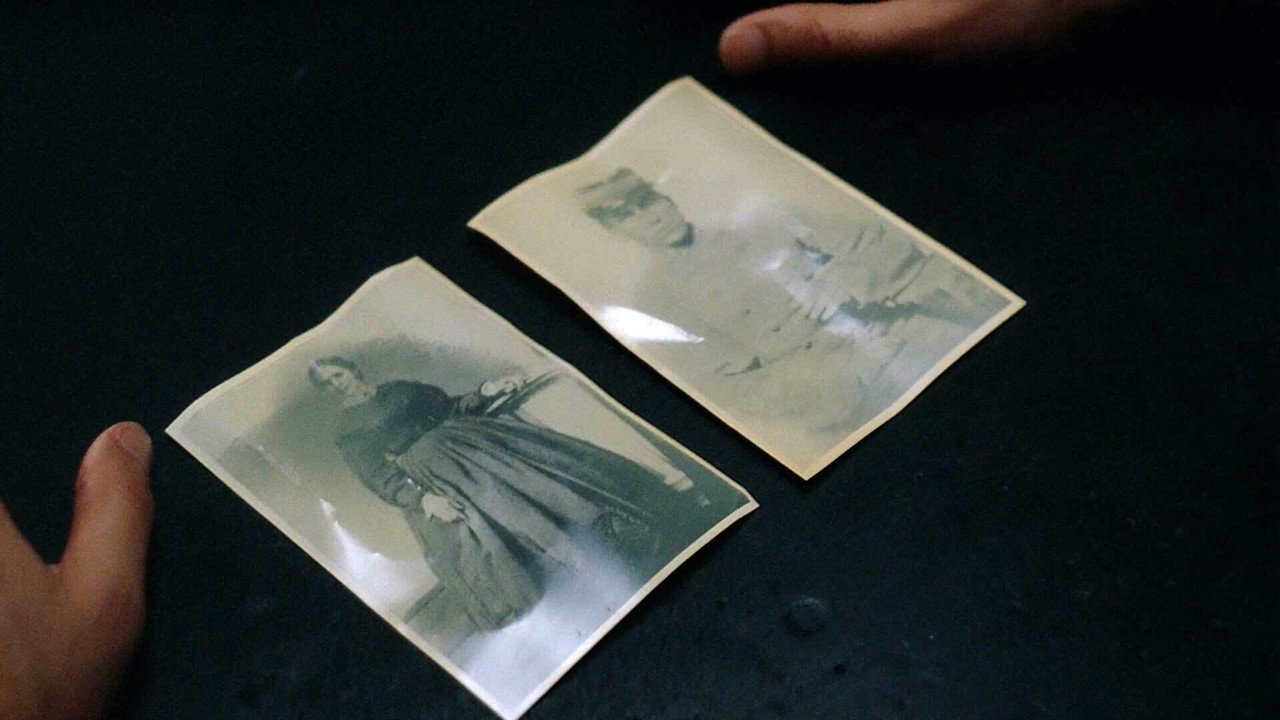
In the life with the Gestapo officer, Mulder's son carries the soul of his sister, Samantha. Scully goes to the county hall of records and comes back with photographs of Sullivan Biddle and Sarah Kavanaugh; Biddle wears a Confederate uniform. When the FBI and ATF move in for a second search, Ephesian knows he won't survive another siege. He hands out poison while his men open fire on the agents, and everyone inside dies except him and Melissa, who only pretended to drink. Mulder surrenders to get into the temple. Before he reaches them Ephesian has made Melissa drink, and Mulder finds them both dead. He holds her and looks out at the field.
Zack Handlen of The A.V. Club, who gave it a B+, thought the hour worked "pretty well" but that "the episode isn't quite good enough for the conclusion to be as devastating as it should be", and that Mulder accepts his past lives too quickly. Less than six months after it aired, the Heaven's Gate group carried out its mass suicide, and Chris Carter got angry phone calls about the episode. He declined to comment.
Challenge the DNA
Was Mulder really remembering past lives?
Or skip ahead to our reading
Scully comes back with photographs of Sullivan Biddle and Sarah Kavanaugh, which is as close to proof as the show gets. The episode keeps its eye on the loss either way.
Behind the scenes
- Morgan had written Cloke a part full of voices on purpose: "I knew she did a lot of characters and voices, so I wanted to incorporate that." She prepared by researching dissociative identity disorder and based Melissa's personalities on people she knew.
- Pitching it to Rob Bowman, Morgan and Wong said they wanted it to feel like the moment in Ken Burns' Civil War documentary where the Sullivan Ballou letter is read.
- Michael Massee wanted Ephesian "normal looking" and "nondemonic": "You have to believe that he believes his own rap." The name came from David Koresh, the Branch Davidian leader born Vernon Wayne Howell, and from the biblical Epistle to the Ephesians.
- The Temple of the Seven Stars was built on a soundstage at North Shore Studios, one of the show's most expensive sets at the time. The old photographs were composites of freely available pictures melded by computer, with a face for Sullivan picked for its "uncanny" likeness to Mulder.
- The first cut ran over an hour. Eighteen minutes came out, and with them two of Melissa's personalities.
The thread
Love that outlasts a single lifetime, and the old words and pictures this episode reached for.
Came before
Shares DNA with
DNA strand
Love Beyond Limits
The limit here is death itself. Melissa believes she and Mulder find each other again in life after life, and the episode lets him believe it too, so a raid on a cult becomes a love story stretched across more than a century.
Every great sci-fi story is built from a handful of strands like this one. Each strand page explains how it works and traces it across shows, books and films.
If this one stayed with you
Where to go next, and why.
Read · Novel
Cloud Atlas by David Mitchell
Six stories across centuries are linked by characters who may share one soul, each life echoing the last.
Watch · Film
The Fountain (2006)
Hugh Jackman and Rachel Weisz play lovers in three eras, one of them always losing the other.
Watch · Film
Somewhere in Time (1980)
A playwright falls for a woman in an old photograph and wills himself back decades to meet her.
Your next episode
Three directions to go from here, all on Sci-Fi DNA.
More of this feeling
Rejoined
Star Trek: Deep Space Nine
Two people drawn to each other across more than one lifetime give it the same quiet ache.
Same question, different answer
Facets
Star Trek: Deep Space Nine
It asks how much of who we are we carry over from the lives that came before this one.

Something completely different
Musings of a Cigarette Smoking Man
The X-Files
For a story told from the other side, hear the Lone Gunmen's version of where the Smoking Man came from.
Sources
- “The Field Where I Died,” Wikipedia
- “The X-Files season 4,” Wikipedia
- “Kristen Cloke,” Wikipedia
- “Sullivan Ballou,” Wikipedia
- “Paracelsus (poem),” Wikipedia
- Zack Handlen, “'The Field Where I Died'/'522666' | The X-Files/Millennium,” The A.V. Club, 2010
- “X Cyclopedia: The Ultimate Episode Guide, Season IV,” Entertainment Weekly, 1996