More from the episode
The story in 5 beats
- A pattern
Angie's sighting isn't the first. Three similar encounters, beside three similar murders, have been reported in the area in as many weeks.
- She is me
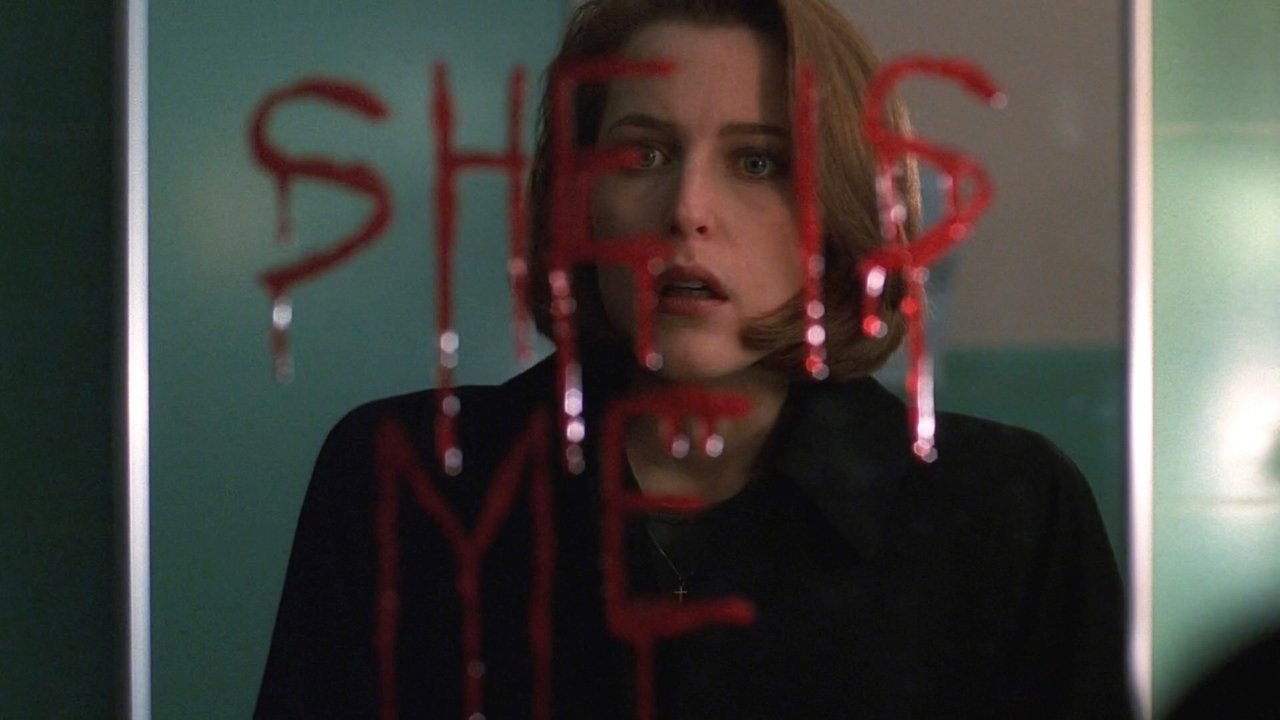
The words "She is me" are written on the lane. A 911 caller quoted them as a victim's last words, though her throat was cut. The call came from a payphone at a psychiatric center.
- Scully in the restroom
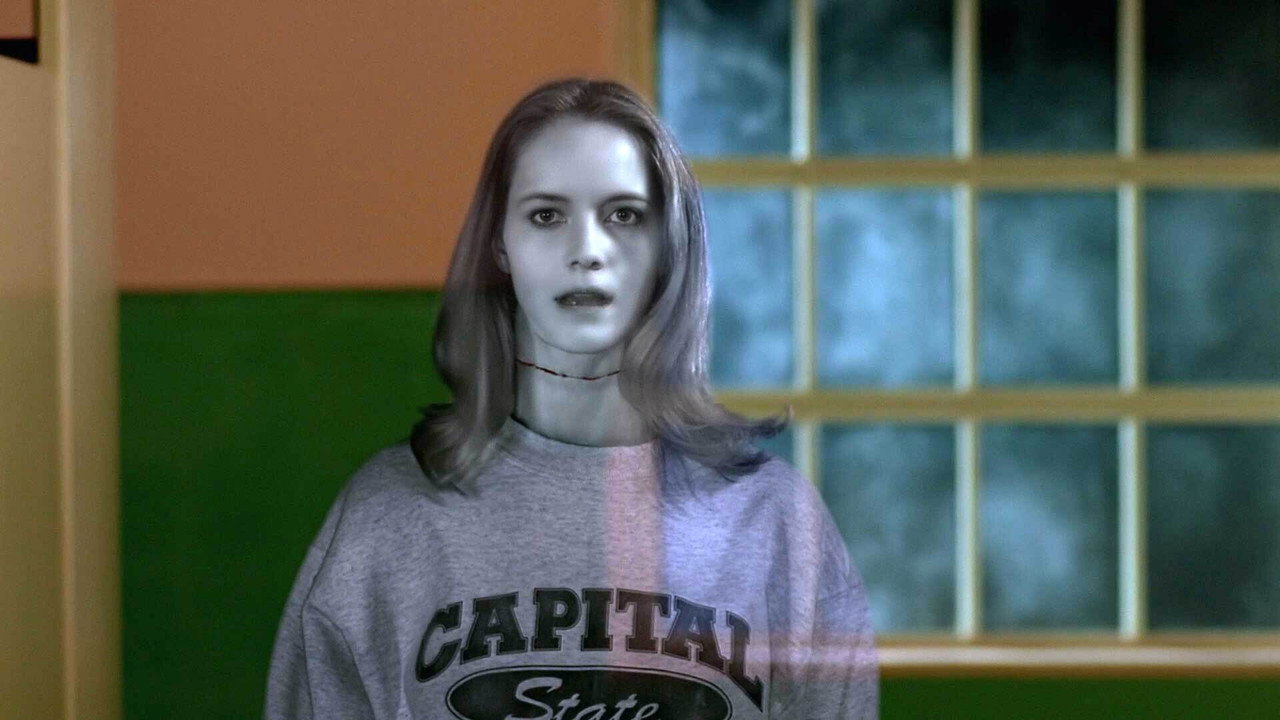
Stopping a nosebleed, Scully sees a young blond woman in the restroom. Minutes later another victim is found nearby, and it's the woman she saw.
The numbersSpoiler · tap to reveal
The strings of numbers patient Harold Spuller recites are bowling scores. Mulder works out a rule about who sees the dead girls, and Scully keeps quiet.
The last apparitionSpoiler · tap to reveal
Harold's medication turns out to matter. The case closes at the psychiatric center, and Scully gets one more visitor.
Why it still matters
"Elegy" is a ghost story, but John Shiban's script keeps turning back to Scully, who is ill and keeping things from Mulder. Its strongest scene has no ghost in it: a session with an FBI counselor where she admits how much she leans on him. Robert Shearman, in his critical guide Wanting to Believe, gave the episode four stars out of five, called it "terrific" and singled out that counseling scene as "the highlight of the season".
It's also an episode critics argue about. Emily St. James of The A.V. Club gave it a B−, calling it "alternately deeply moving and really, really stupid": she found its portrayal of mental illness "offensive at worst and just plain idiotic at best" and its "magical mentally handicapped person" trope "cringe-worthy". Even she thought the small scenes showing "the weight of everything Scully's been carrying" rescued it, and that split is a fair guide to what you'll get: a shaky case wrapped around some very good quiet work from Gillian Anderson.
Only the dying can see them
Harold, an autistic man who works at the alley and lives at the New Horizon Psychiatric Center, has met each of the murdered women at the alley and sees every one of them after death. When Angie dies of a heart attack, Mulder pieces it together: everyone who has seen an apparition was dying or about to die. He thinks Harold made a connection with each woman that he couldn't put into words, and that it reached them after death. Scully, who saw one too, hears the implication and says nothing.
The killer is Nurse Innes, who has been bullying Harold and taking the medication he stopped swallowing, which made her violent and unpredictable. When she comes at Scully with a scalpel, Scully shoots her in the shoulder. Scully's theory is that Innes, left by her husband for a younger woman, killed to destroy the happiness and innocent affection Harold felt. Harold is found dead in an alley, apparently of respiratory failure. Scully finally admits to Mulder what she saw, they talk about trust and the fear they share, and later, in her car, she sees Harold sitting in the back seat.
Challenge the DNA
Were the ghosts a warning, or just a sign of what was coming?
Or skip ahead to our reading
Mulder works out that everyone who saw an apparition was dying or about to. The episode makes that unsettling for Scully, and leaves the ghosts' purpose open.
Behind the scenes
- Shiban got the idea visiting his future wife's dying father in hospital. The old man kept looking around the room as if other people were there and asked who else had come; Shiban started wondering whether "a dying person might be able to look through the cracks" into the next world. He set it in a haunted bowling alley because "it just seemed right".
- Harold was inspired by One Flew Over the Cuckoo's Nest. By coincidence, his friend Chuck Forsch is played by Sydney Lassick, who played Charlie Cheswick, one of the ward's patients, in that 1975 film.
- Steven M. Porter, a friend of co-executive producer Frank Spotnitz, got the chance to audition through him and came out thinking he had "either made a great impression or a complete fool of myself". He built Harold's gestures and tics from his work in a play called Asylum.
- Many bowling alleys turned the show down because filming meant closing for three days. The Thunderbird Bowling Centre agreed on condition that the lanes were left untouched, so the crew wore bowling shoes or paper booties.
- Between setups, David Duchovny and director James Charleston bowled together. Duchovny joked afterward that the soreness made him realize how old he was: "When you get sore from bowling, it's time to start thinking about your life and where it's going."
The thread
The film behind Harold, the diagnosis that hangs over this episode, and other X-Files stories about people who see what's coming.
Came before
Shares DNA with
DNA strand
Love Beyond Limits
Harold can't tell the young women at the alley what they mean to him, so the feeling finds another way out. Beside his story runs Scully's, about the things she can't bring herself to say to Mulder.
Every great sci-fi story is built from a handful of strands like this one. Each strand page explains how it works and traces it across shows, books and films.
If this one stayed with you
Where to go next, and why.
Watch · Film
The Sixth Sense (1999)
A child psychologist treats a boy who says he sees dead people, and the film takes the claim seriously.
Watch · Film
Rain Man (1988)
Tom Cruise takes a road trip with the autistic older brother he never knew he had, played by Dustin Hoffman.
Read · Novel
The Lovely Bones by Alice Sebold
A murdered girl tells her own story from the afterlife, watching the people she left behind try to carry on.
Read · Novel
The Curious Incident of the Dog in the Night-Time by Mark Haddon
A teenage boy who thinks in numbers and patterns sets out to find who killed a neighbor's dog, his own way.
Your next episode
Three directions to go from here, all on Sci-Fi DNA.

Something completely different
Unusual Suspects
The X-Files
For something lighter, see how the Lone Gunmen first met at a computer fair in 1989.