More from the episode
The story in 5 beats
- The colonel's house
Military police storm the Idaho home of Colonel Robert Budahas, a test pilot who stole a military vehicle and barricaded himself in. They find him trembling and covered in rashes.
- A warning in the restroom
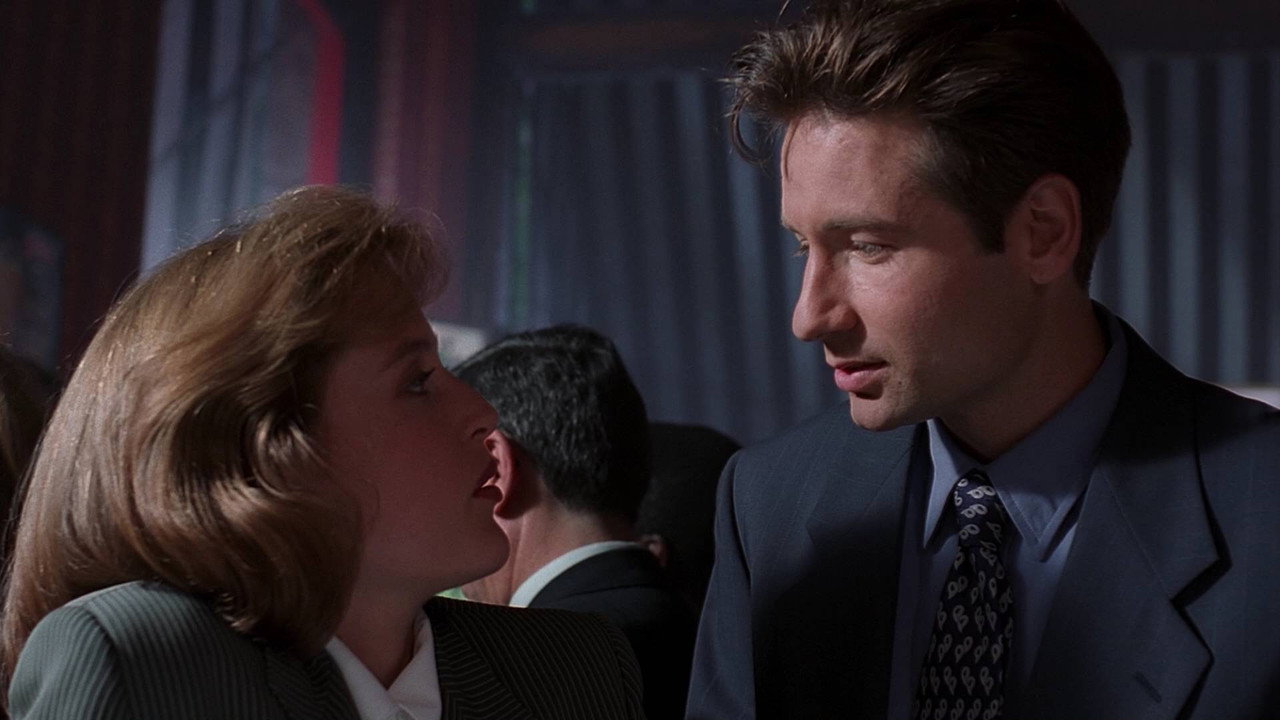
Four months on, Mulder tells Scully over drinks that Budahas hasn't been seen since and six other pilots are missing. In the restroom, an older man tells him to leave it alone.
- Lights over the base
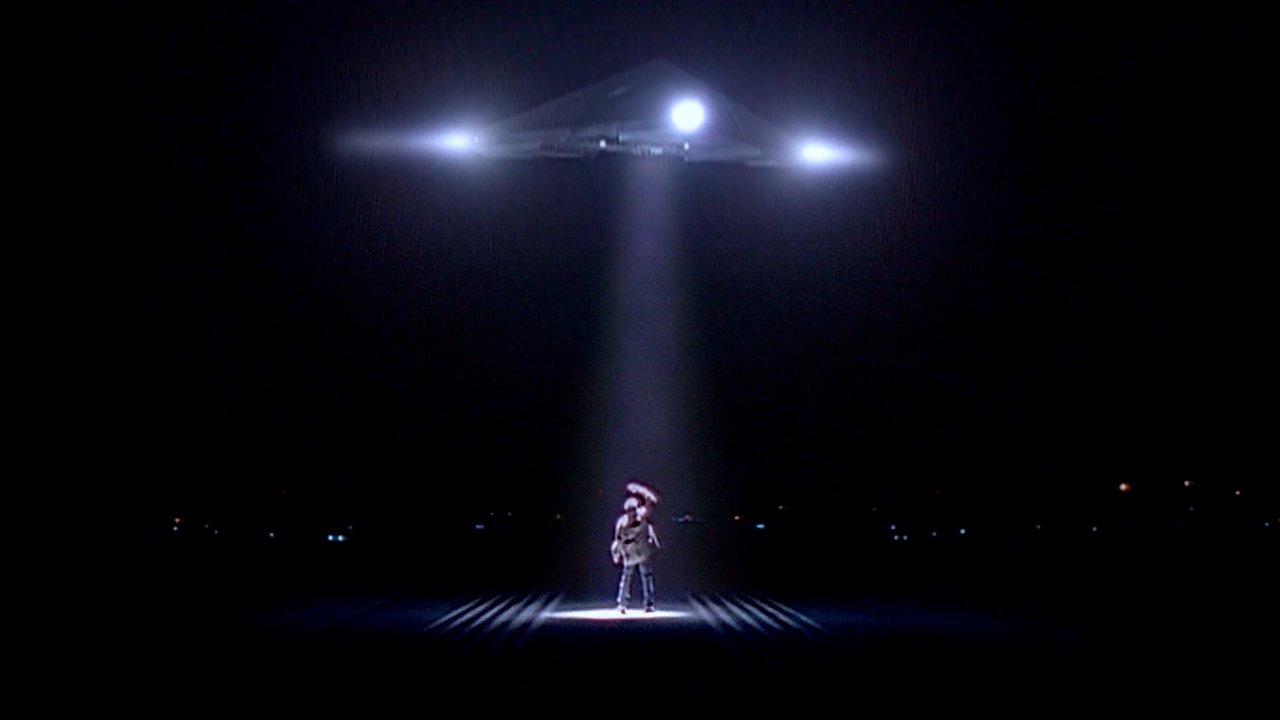
In Idaho, a local reporter points them to a UFO-themed diner. That night a craft makes impossible moves over the base, until a black helicopter comes after two trespassing teenagers.
Over the fenceSpoiler · tap to reveal
With the teenagers' help, Mulder slips onto the base. A triangular craft passes low overhead. Then soldiers catch him, and they do something to his memory.
Scully's moveSpoiler · tap to reveal
Scully learns the helpful reporter, Paul Mossinger, is really a security man for the base. She holds a gun on him and makes him take her to the base to swap him for Mulder.
Why it still matters
This is where the long mythology storyline of The X-Files starts to take shape, with several of the elements the show would keep coming back to for years. It introduces the informant known as Deep Throat, whom Chris Carter created to bridge the gap between his two agents and the people working against them, describing him as someone "who works in some level of government that we have no idea exists." Carter said that while making this one, it was evident The X-Files was "a series in making."
Critics who went back to it have treated it as the show's real mission statement. Robert Shearman found it "much more confident in its pacing and tone" than the pilot and wrote that "it sets up the overall themes of the show so well, it almost seems like a primer." For Tor.com, Meghan Deans put it this way: "although the pilot introduced the idea of government conspiracy, it's 'Deep Throat' that kicks out the edges of the canvas." Keith Phipps of The A.V. Club singled out a scene near the end as "one of the scariest moments from the series' early days, as much for what it suggests as for what it shows."
A long, long time
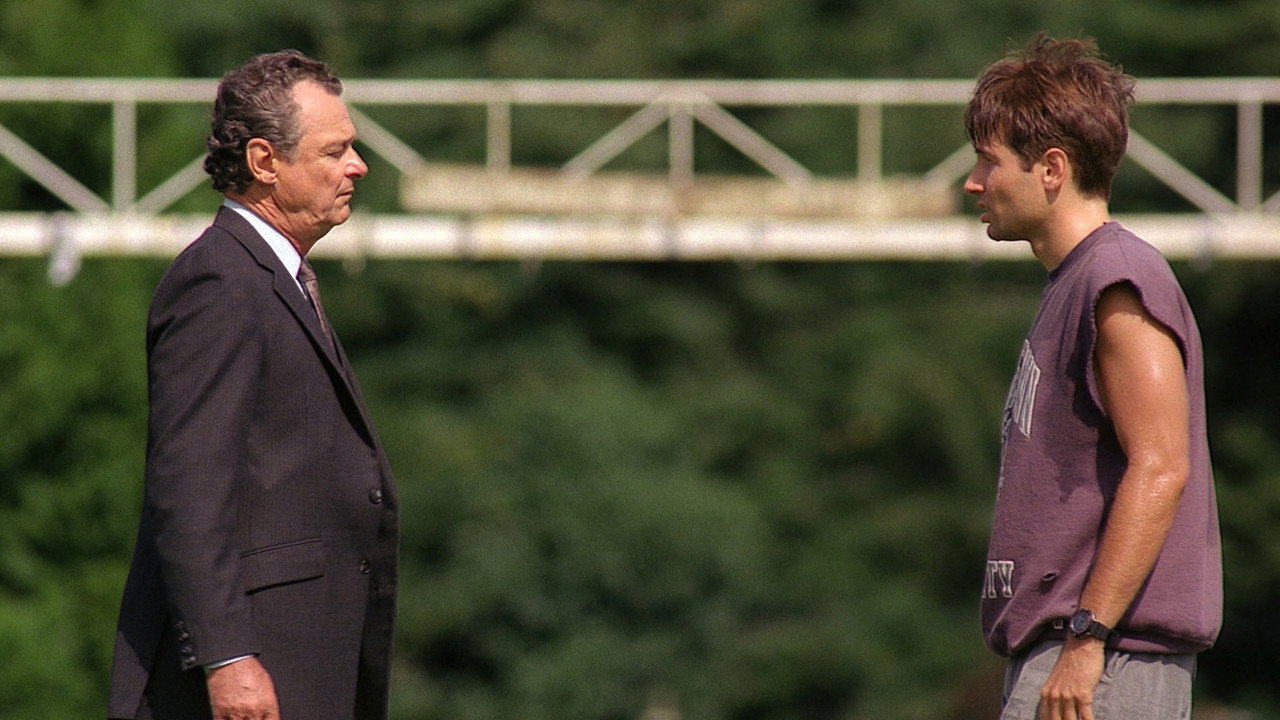
While the agents were out at the base, Budahas was returned to his wife with no memory of where he had been. Mulder gets nothing out of Idaho either: the base keeps its secrets and the agents go back to Washington empty-handed. Days later, the stranger from the restroom finds him jogging at a local track. Mulder asks whether "they" are really here. "They have been here for a long, long time," the man answers.
Scholars have taken both ends of the story seriously. Writers in The Philosophy of The X-Files read Mossinger's warning, that some truths are better kept from the public, as a picture of how hard it is to make big institutions answer for wrongdoing. The authors of Deny All Knowledge place that last line in a trend they trace to 1980s science fiction cinema, where stories of space exploration gave way to plots shaped by Watergate and conspiracy theories.
Challenge the DNA
Was Mulder right to push into the base?
Or skip ahead to our reading
He gets nothing he can show anyone, except a stranger's word that they have been here a long time. The episode makes his stubbornness both his strength and his risk.
Behind the scenes
- Carter wanted Jerry Hardin after seeing him in The Firm (1993), called the casting an "easy choice" and called Hardin's performance "very, very good."
- Ellens Air Force Base is named after Carter's college girlfriend, whose surname was Ellens. The Budahas family name came from a high school friend of his.
- The secret aircraft nods to a rumour, which Carter remembered people talking about, that the U.S. Air Force had built an experimental plane called Aurora.
- Carter later called the flashing lights in the sky the "worst effects we've ever done." He and Beck tried to make them look three-dimensional, and Carter said the result looked like a "kind of hi-tech Pong game."
- Scully typing up the case with a voiceover at the end was added because Fox executives wanted more closure. Carter said it "made the episode better," and it became "a running story crutch" the show leaned on for years.
The thread
Where Mulder's informant came from, and other stories of air bases, secret aircraft and pilots who see more than they should.
Came before
Shares DNA with
DNA strand
The State Knows Best
Here the state is a perimeter fence and men in dark suits who destroy the agents' photographs and order them out of town. The military won't say where its pilots went, and a polite stranger in Washington suggests Mulder would be safer not knowing.
Every great sci-fi story is built from a handful of strands like this one. Each strand page explains how it works and traces it across shows, books and films.
If this one stayed with you
Where to go next, and why.
Watch · Film
Three Days of the Condor (1975)
A CIA researcher comes back from lunch to find his whole office shot dead and has to work out which people on his own side want him gone.
Watch · Film
The Parallax View (1974)
A reporter notices that the witnesses to a political assassination keep dying and follows the trail to a corporation that would rather he didn't.
Read · Book
Skunk Works by Ben R. Rich and Leo Janos
The man who ran Lockheed's secret aircraft shop explains how planes like the stealth fighter were designed and flown for years before the public knew they existed.
Read · Book
Area 51 by Annie Jacobsen
A history of the secret Nevada base built from interviews with the engineers and pilots who worked there.
Your next episode
Three directions to go from here, all on Sci-Fi DNA.
More of this feeling
Whispers
Star Trek: Deep Space Nine
An officer who senses the people around him are hiding something makes for the same slow, paranoid tension.
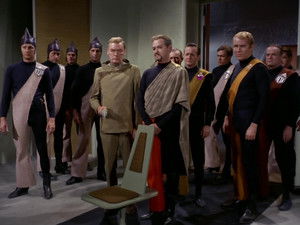
Same question, different answer
A Taste of Armageddon
Star Trek
It looks at what happens when a government keeps its people calm by hiding what it's really doing.

Something completely different
The Jersey Devil
The X-Files
For a case built on a local legend instead of a military secret, follow the agents to Atlantic City.
Sources
- “Deep Throat (The X-Files episode),” Wikipedia
- “The X-Files season 1,” Wikipedia
- Keith Phipps, “'Deep Throat' / 'Squeeze' | The X-Files/Millennium,” The A.V. Club, 2008
- Meghan Deans, “Reopening The X-Files: 'Deep Throat',” Tor.com, 2011
- “X Cyclopedia: The Ultimate Episode Guide, Season 1,” Entertainment Weekly, 1996
- Bruce Fretts, “The 100 Greatest Moments in Television: 1990s,” Entertainment Weekly, 1999