
More from the episode
The story in 5 beats
- Harold Piller
In Sacramento, a psychic named Harold Piller approaches Mulder. He says he has helped law enforcement all over the world, and he has a theory about what happens to children who vanish.
- Scully's doubts
Scully grows worried about how much sway Piller has over Mulder. The agents go back to Washington, where Mulder keeps looking for evidence.
- April Air Force Base
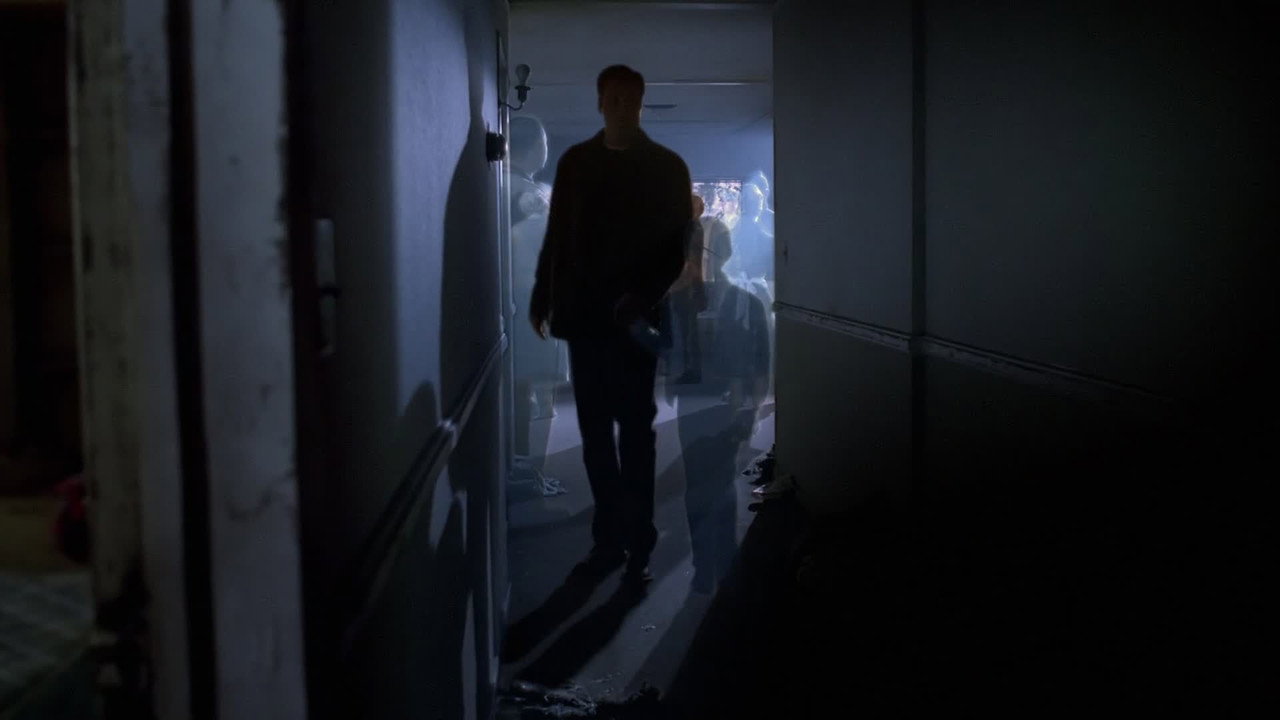
One of Piller's visions sends Mulder to April Air Force Base, a closed military base full of empty houses.
A tape from 1989Spoiler · tap to reveal
Scully watches a 1989 tape of Mulder under hypnotic regression. When she gets home, someone is waiting for her in her apartment.
In the woodsSpoiler · tap to reveal
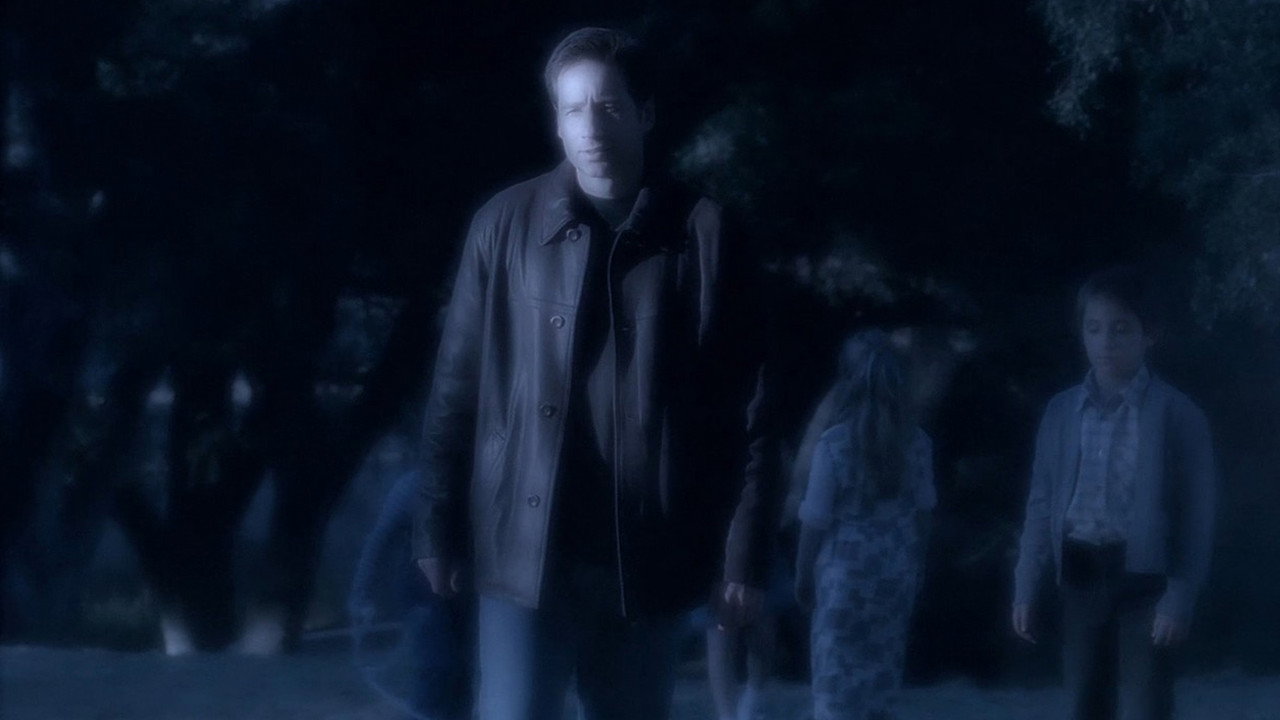
Mulder walks out among the trees at night, and what he finds there settles the question he has carried since he was a boy.
Why it still matters
The 150th episode of The X-Files picks up where Chris Carter and Frank Spotnitz left "Sein und Zeit" and heads somewhere else entirely: the first part was a missing-child case, and this one is about belief. It opens with Mulder saying, in voiceover, "I want to believe so badly; in a truth beyond our own," and in We Want to Believe, her book on faith in the series, Amy M. Donaldson reads the episode as Mulder having to take a leap of faith to find the truth he's after.
It was also made in an unfamiliar light: one of the first episodes the crew could "shoot in Los Angeles with the sun out," after a stretch of fretting that the show had become "very bright and cheery" since leaving Vancouver, so cinematographer Bill Roe blocked the sun with tree branches and C-stands. The first reviews were split. Tom Kessenich didn't think it was perfect but decided its "plusses greatly outweighed any missteps along the way," Jeremy Conrad of IGN called it "excellent," and Paula Vitaris of Cinefantastique panned it. Later reviews were kinder: Robert Shearman called it "brave."
I'm free
Truelove, who ran the Santa Village, admits to killing twenty-four children but swears he didn't take Amber Lynn. Piller tells Mulder that children have been taken by walk-ins, beings made of starlight who save children from terrible fates, and the vision that sends Mulder to the air base is of his dead mother. The Smoking Man is the visitor in Scully's apartment. He tells her he called off the search for Samantha when she vanished because he knew she was dead.
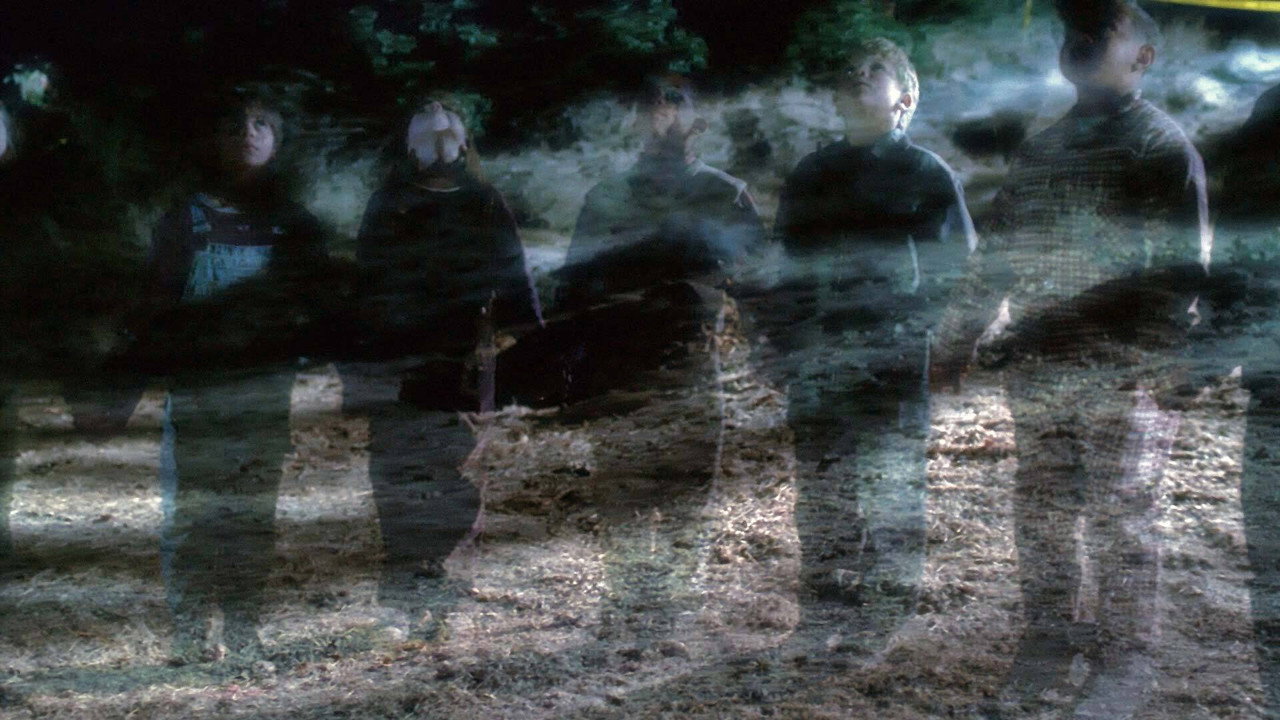
At the base, Mulder finds proof that Samantha lived there with the Smoking Man and his son, Jeffrey Spender, and was put through painful tests. Her diary says she ran away at 14. Scully turns up a 1979 police report of a girl who matches her description and was taken to a hospital emergency room, and the nurse who treated her says the girl disappeared the same way Amber Lynn did, without a trace, before the men who came for her arrived. In the woods Mulder sees Samantha with the spirits of other children, Amber Lynn among them. Piller won't accept that the vision means his own missing son is dead. Mulder accepts that his sister is, and that she is somewhere better. When Scully comforts him and asks if he's all right, he answers with a choked "I'm fine. I'm free," and the story ends there.
Challenge the DNA
Is the ending a real answer for Mulder?
Or skip ahead to our reading
Piller's walk-ins and the vision at the air base give Mulder a kind of peace. The episode chooses closure over proof, and says so in its title.
Behind the scenes
- Spotnitz thought Duchovny had grown tired of playing the man who is missing his sister, and told him, "This is going to be the last time you're going to have to play [that part]." Paul Rabwin agreed it was time: "I don't think any of us are going to miss Samantha Mulder."
- The script had Samantha run up and hug Mulder and Mulder start crying. Duchovny didn't want to cry and asked Manners to trust him; he held the young actress with what Manners called "a beatific smile" that was "absolutely astounding", and that take made the cut.
- The children rising from the ground were filmed in Griffith Park, above the playground. Manners worried that telling child actors to climb out of graves could upset them, so the crew called the holes "forts".
- Moby's "My Weakness", from his 1999 album Play, plays over the discovery of the mass grave and again at the end. Carter never told composer Mark Snow he was using someone else's music; Snow later said the song was a "perfect" fit.
- Marc Shapiro's official guide notes that the episode is "very much a [Smoking Man] episode" for how much it explores his part in Samantha's disappearance.
The thread
The first half of the story, an earlier case it has been read against, and other X-Files about people who claim to see what the rest of us can't.
Came before
Shares DNA with
DNA strand
Memory & Identity
Mulder has built his adult life around one memory from when he was twelve, and he has never been able to leave it alone. Here a stranger who says he sees lost children asks him to trust visions over evidence, and the episode watches what that memory has made of him.
Every great sci-fi story is built from a handful of strands like this one. Each strand page explains how it works and traces it across shows, books and films.
If this one stayed with you
Where to go next, and why.
Watch · Film
Contact (1997)
A scientist who trusts only evidence comes back from the experience of her life with nothing she can prove, and has to ask other people to take it on faith.
Watch · Film
The Pledge (2001)
Jack Nicholson plays a detective on his last day before retirement who promises a mother he'll find her daughter's killer and can't let the case go.
Read · Novel
The Dead Zone by Stephen King
A man wakes from a long coma able to see things about people by touching them, and ends up helping a sheriff hunt a killer.
Your next episode
Three directions to go from here, all on Sci-Fi DNA.

More of this feeling
All Good Things...
Star Trek: The Next Generation
It has the same bittersweet feeling of a long story finally reaching an ending.

Same question, different answer
Long Distance Call
The Twilight Zone
It asks whether it is kinder to let go of someone you have lost or to keep searching.

Something completely different
Rush
The X-Files
For a change of pace, watch the agents meet three teenagers who move faster than the eye can follow.