
More from the episode

The story in 5 beats
- The palace
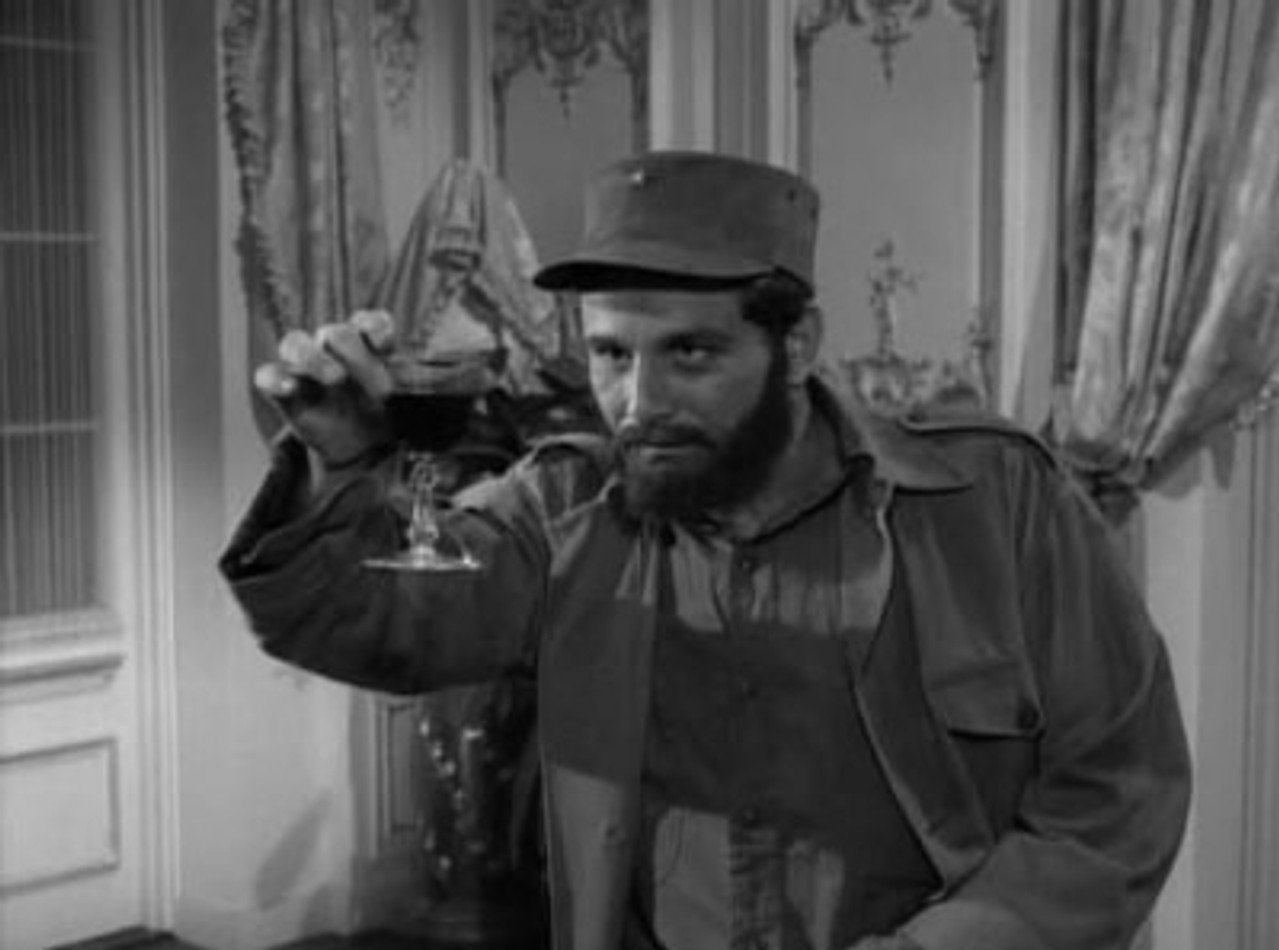
Ramos Clemente and his four oldest friends overthrow General De Cruz. Clemente gloats; the old general tells him what comes next.
- The gift
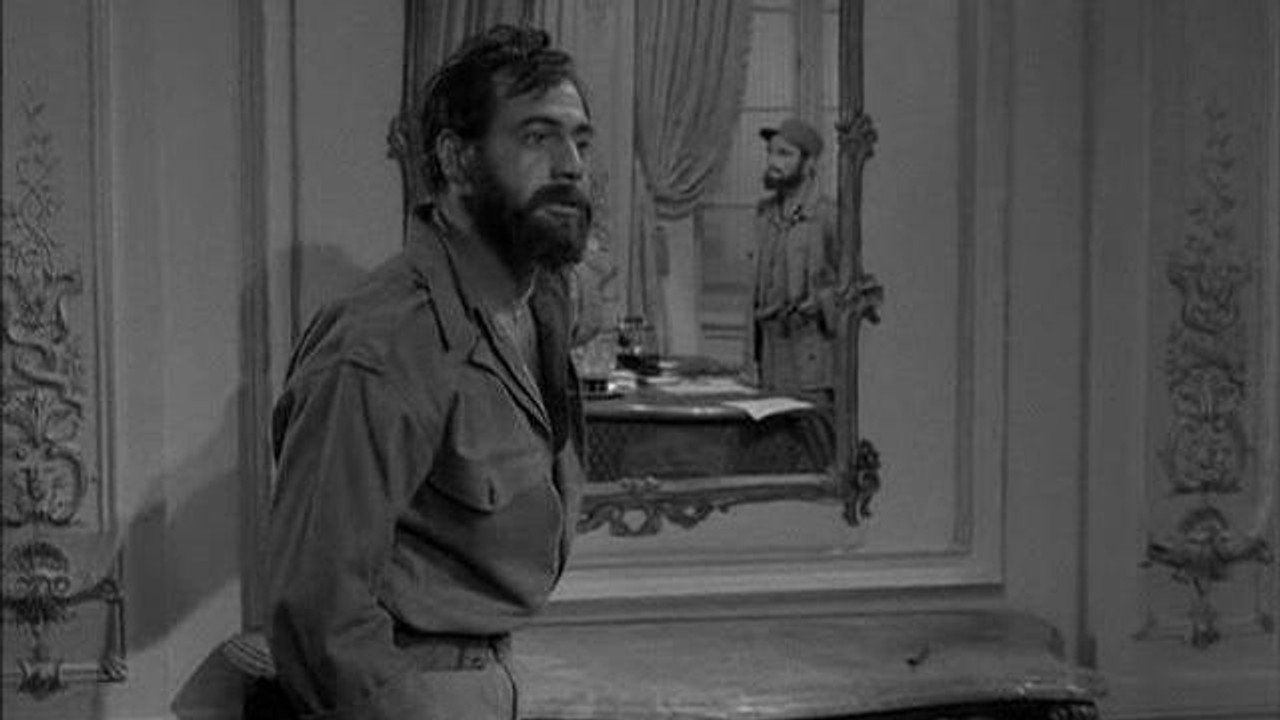
De Cruz points to an ornate mirror and says it will show Clemente the faces of his enemies. Clemente laughs it off.
The purgeSpoiler · tap to reveal
Clemente takes up the methods he fought against. He looks in the mirror and sees each of his four friends plotting to kill him.
The firing squadsSpoiler · tap to reveal
One by one he has them killed, and orders round-the-clock executions of his enemies. Father Tomas, a priest, begs him to stop.
The last assassinSpoiler · tap to reveal
The priest says a tyrant's one real enemy is someone he never recognizes in time. Clemente looks in the mirror and sees only himself.
Why it still matters
Peter Falk, years before Columbo, plays Ramos Clemente, who a year earlier was, as Serling's narration puts it, a beardless, nameless worker of the dirt. Now he has the beard, the fatigues and the cigar, and he's standing in the office of General De Cruz, the man he has just overthrown. De Cruz warns him that ruling by force has a price, and points out an ornate mirror on the wall. Look into it, he says, and you'll see your assassins.
Nobody watching in October 1961 needed telling who Clemente was meant to be. Fidel Castro had taken power in Cuba two years before, and producer Buck Houghton later said plainly, "This was our impression of Castro at that time," adding that they had a fairly simplistic view of him. That's the episode's weakness, and its interest now: a snapshot of how American TV saw the Cuban revolution while it was still news.
It's not one of the well-loved ones. Zack Handlen at The A.V. Club gave it a D+, and SlashFilm called it a low point in a strong season. Still, Don Medford gives it striking shadows and compositions, and Falk's menace is quiet and watchful. The central idea is a good one too: a man already inclined to see enemies everywhere is handed a glass that claims to show them. It's worth seeing for Falk, and as a period piece.
Who the mirror was showing
Clemente sees his friends Cristo, D'Alessandro, Tabal and Garcia in the glass, each apparently plotting against him, and he deals with all four. He throws one from a balcony when he objects to the mass executions, orders two others to run the firing squads and has the guards kill them too, and shoots the last himself. Father Tomas comes to beg him to end the killing. Clemente refuses: the executions will go on as long as he has enemies. The priest's answer gives him no comfort: a tyrant has only one real enemy, and never recognizes him until too late.
Clemente looks into the mirror once more and sees only his own face. He hurls his pistol at it and the glass shatters. The priest hears the crash and then a shot, and finds Clemente dead on the floor. Serling's closing narration calls him a would-be god in dungarees, strangled by an illusion, and Father Tomas has the last word: "The last assassin. They never learn." Whether you take the mirror as magic or as a mirror is up to you, which is the nicest touch in the script.
Behind the scenes
- Clemente is clearly modeled on Fidel Castro, who had taken power in Cuba two years earlier, though the episode never names him or the country.
- Producer Buck Houghton, quoted in Marc Scott Zicree's The Twilight Zone Companion, said, "This was our impression of Castro at that time," called Castro "a very flamboyant Latin, which Peter isn't," and admitted "we had a fairly simplistic view of Castro at that time."
- Zicree describes it as a one-sided portrait of a Communist leader, made for an audience primed to revile the "Red Menace."
- Rod Serling wrote it and Don Medford directed. Serling described it as "the story of a tyrant and his assassins, a shattered dream and the death of a cause."
- The A.V. Club's Zack Handlen gave it a D+, calling Falk badly cast but noting that the thought of Columbo in a Castro disguise could make him smile.
The thread
Revolutionaries who become the thing they overthrew, and magic mirrors that tell the truth.
Came before
Shares DNA with
DNA strand
The State Knows Best
Clemente's state is himself, and once the people around him become a threat in his eyes, the only policy left is the firing squad. Serling's point is that the paranoia comes with the power, and the mirror just gives it a face.
Every great sci-fi story is built from a handful of strands like this one. Each strand page explains how it works and traces it across shows, books and films.
If this one stayed with you
Where to go next, and why.
Read · Play
Macbeth, William Shakespeare
If Clemente's spiral was the best part, here's the original: a man who takes power by killing and can't stop, with prophecies in place of a mirror.
Read · Novel
Animal Farm, George Orwell
The revolution that turns into the regime it overthrew, told as a fable, and shorter and sharper than you remember.
Watch · Film
The Death of Stalin (2017)
Armando Iannucci plays the same paranoia at the top for laughs: men who know any one of them could be next.
Watch · The Twilight Zone
"The Obsolete Man"
The season 2 finale: a librarian on trial before a state that has declared him useless. It's Serling's harder look at power that answers to no one.
Sources
- “The Mirror (The Twilight Zone),” Wikipedia
- Josh Weiss, “Remember When Columbo Played Fidel Castro (Sort of) on The Twilight Zone?,” SYFY WIRE, 2024
- “Even Columbo's Peter Falk Couldn't Save The Twilight Zone's Take On Fidel Castro,” SlashFilm
- Zack Handlen, “The Twilight Zone: "A Game Of Pool"/"The Mirror",” The A.V. Club, 2013