
More from the episode
The story in 5 beats
- Sam and the clock
Sam's father finished the clock the day Sam was born. Sam is sure that when it stops, so does he.
- The psychiatrist
Marnie and Doug ask a friend, Dr. Mel Avery, to talk to Sam, and he advises selling the clock.
- Next door
Sam sells it to the neighbors on the condition that he can come over and keep it wound.
The weekend awaySpoiler · tap to reveal
The neighbors go away, the house is locked, and Sam breaks a window trying to reach the clock. A policeman takes him home.
Time to goSpoiler · tap to reveal
The clock winds down, and a ghostly Sam tells him it's time. Sam decides he'd rather see his great-grandchild grow up.
Why it still matters
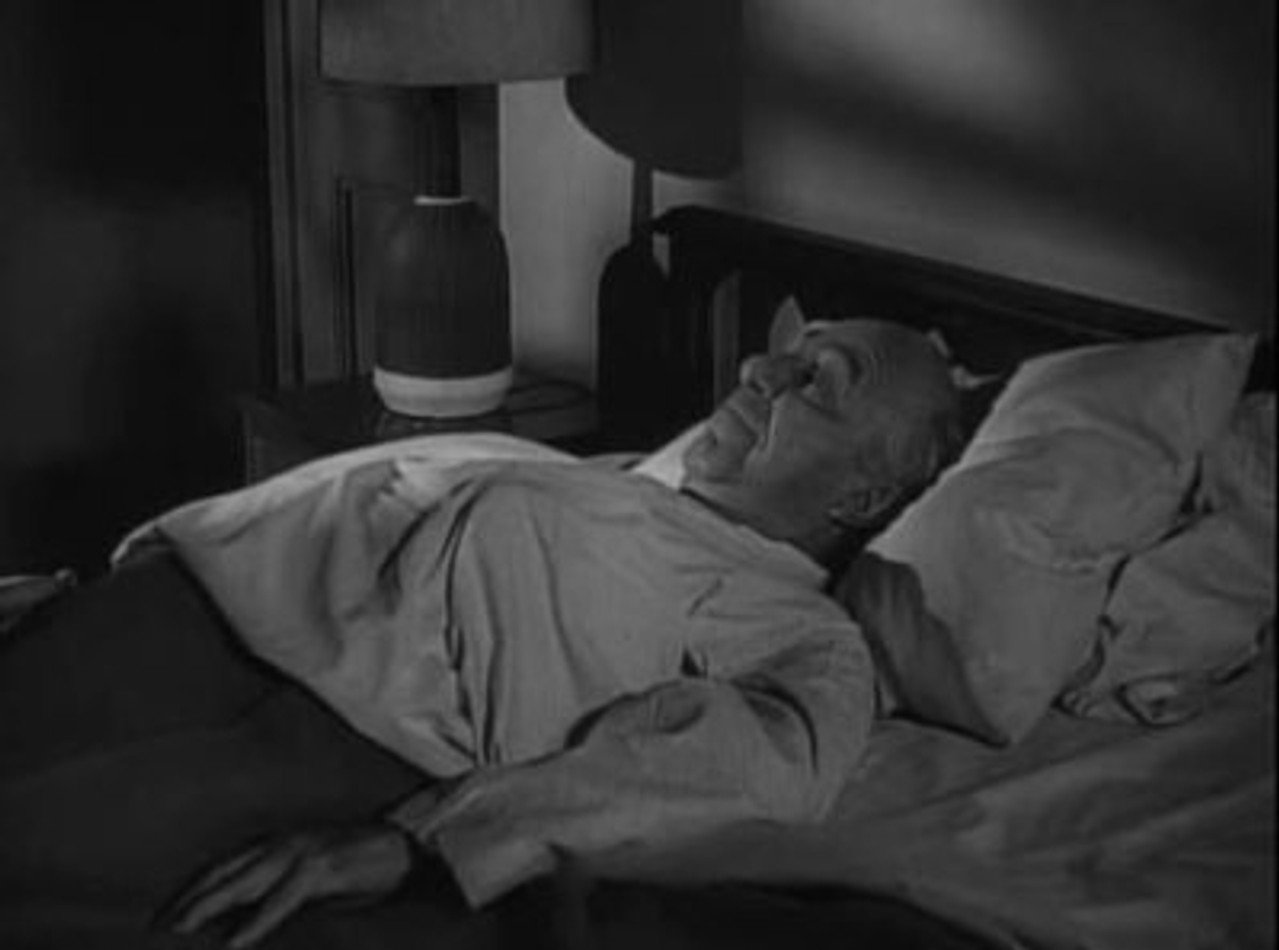
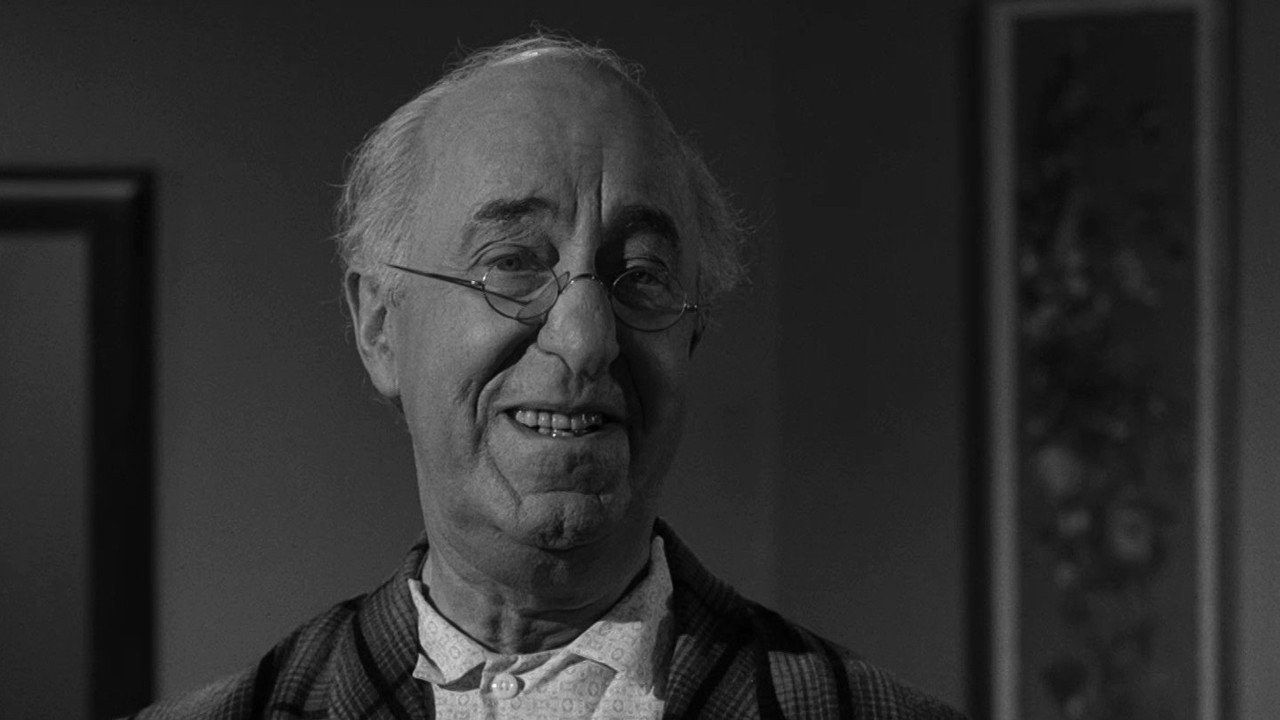
Sam Forstmann is 76, a retired clockmaker living with his pregnant granddaughter Marnie and her husband Doug. His father finished a grandfather clock on the day Sam was born, and Sam believes that if it ever stops, his heart stops with it. He fusses over it constantly, and the young couple are running out of patience.
The pleasure here is Ed Wynn, who had played the pitchman in "One for the Angels" four seasons earlier. Zack Handlen at The A.V. Club wrote that his Sam "comes up to the edge of being saccharine without ever going over." The other pleasure is Bernard Herrmann's score, his last original one for the series.
It's also a kinder episode than you might expect. The psychiatrist they bring in is decent and good at his job, and the question is less whether the clock is magic than whether Sam can live without believing it is. How the episode answers that is the part fans still argue about.
The clock stops. Sam doesn't.
Sitting in his chair, Sam watches the clock through the window as it slows. A translucent figure of himself, also played by Wynn, appears and tells him it's been a good life and it's time to go. Sam argues back. He wants to see the baby grow up, and he refuses to go along with it. The figure fades, and the next morning Sam tells Marnie that when the clock died, he was born again.
That turn is where the episode loses people. In Johnson's version, called "Tick of Time," Sam dies when the clock stops, and the clock starts again when the grandchild is born. Johnson said the rewrite "makes the whole plot trivial," and Marc Scott Zicree's The Twilight Zone Companion calls the climax inept, because Sam drops in a moment a belief he has fought for all along. Handlen thought the ending was weak too, though he couldn't bring himself to hate a Twilight Zone that lets an old man choose to live.
Behind the scenes
- George Clayton Johnson developed the story as "The Grandfather Clock" for producer Bert Granet. Under William Froug, who took over as producer in season five, Richard De Roy was brought in to rewrite it, and Johnson was credited under the pen name "Johnson Smith."
- Johnson's original script wasn't published until 2009.
- All three working titles, "The Grandfather Clock," "Tick of Time" and the final one, point to Henry Clay Work's 1876 song "My Grandfather's Clock."
- It's Bernard Herrmann's final original score for the series.
- It's director Roger Kay's only Twilight Zone episode. He's best known for the 1962 film The Cabinet of Caligari.
- Ed Wynn had worked with Rod Serling before, on Requiem for a Heavyweight. He died in 1966, three years after this aired.
- One of the movers is Dick Wilson, better known as Mr. Whipple from the Charmin commercials.
The thread
An old song, two other Twilight Zones about old people facing the end, and an old man's dream of a watch with no hands.
Came before
Shares DNA with
Left its mark on
DNA strand
Is Any of This Real?
The episode never settles whether the clock has any power over Sam. The psychiatrist calls it an obsession, and the old song says otherwise. What it does settle is that the belief has power, and that Sam is the only one who can let go of it.
Every great sci-fi story is built from a handful of strands like this one. Each strand page explains how it works and traces it across shows, books and films.
If this one stayed with you
Where to go next, and why.
Watch · The Twilight Zone S1
"One for the Angels"
Ed Wynn again, as a sidewalk salesman who isn't ready to go when his time comes. Watch the two back to back and you get four years of Wynn bargaining with the inevitable.
Watch · The Twilight Zone S3
"Nothing in the Dark"
If you wondered what George Clayton Johnson's own take on this sort of story looks like, here it is, with an old woman who won't open her door.
Watch · Film
Wild Strawberries (1957)
Bergman's old man dreams of a watch without hands, then takes a journey back into his own youth. Sam's clock would feel at home in it.
Read · Novel
Dandelion Wine by Ray Bradbury
A boy's summer of 1928, an old colonel he calls "the Time Machine," and the slow discovery that the old people around him won't be there forever.
Sources
- “Ninety Years Without Slumbering,” Wikipedia
- Brian Durant, “Ninety Years Without Slumbering,” The Twilight Zone Vortex, 2025
- Zack Handlen, “The Twilight Zone: "Ninety Years Without Slumbering"/"Ring-A-Ding Girl",” The A.V. Club, 2014
- Peter Martin, “Exploring The Twilight Zone, Episode #132: "Ninety Years Without Slumbering",” ScreenAnarchy, 2012
- “The Twilight Zone: Season 5, Episode 12, Ninety Years Without Slumbering,” Great Books Guy, 2022
- “The Twilight Zone, season 5 episode guide,” TVmaze
- “Wild Strawberries,” The Criterion Collection
- “Dandelion Wine by Ray Bradbury,” EBSCO Research Starters