
More from the episode
The story in 5 beats
- Aunt Nedra quits
A widowed father is left alone with three children and no idea how to raise them.
- Facsimile Ltd.
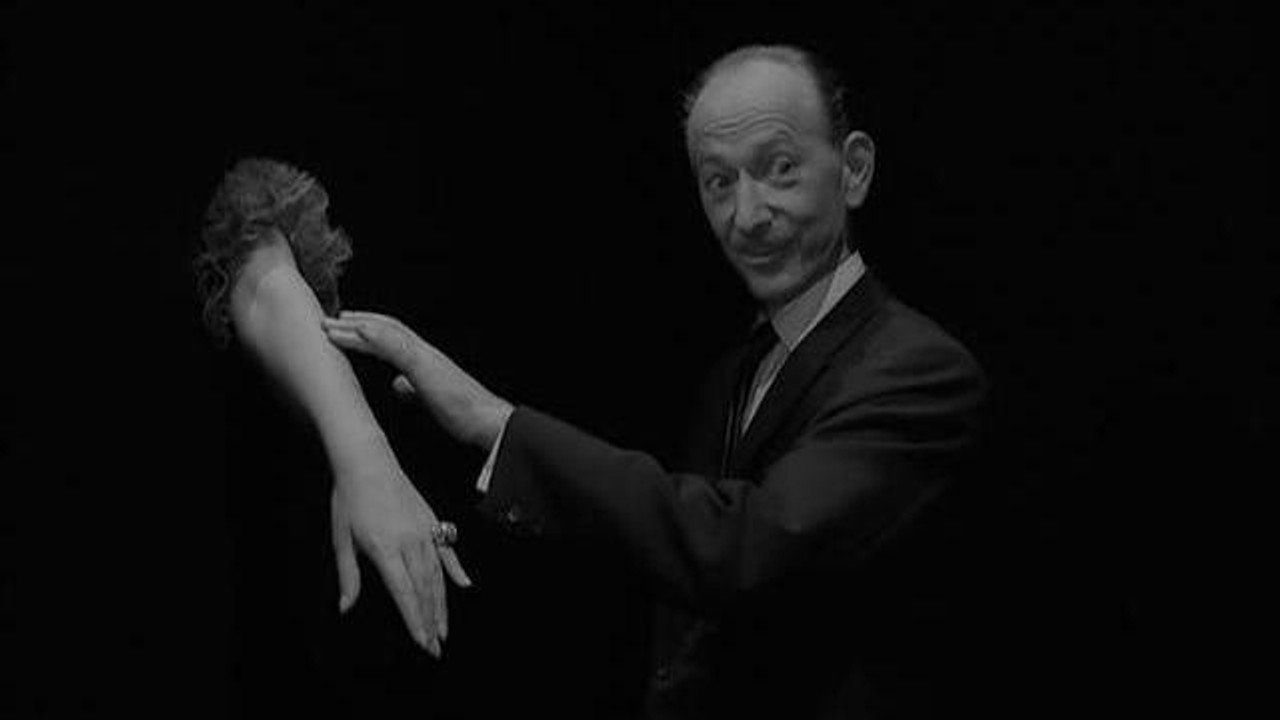
A salesman offers the family a grandmother, built to order.
- Anne holds out
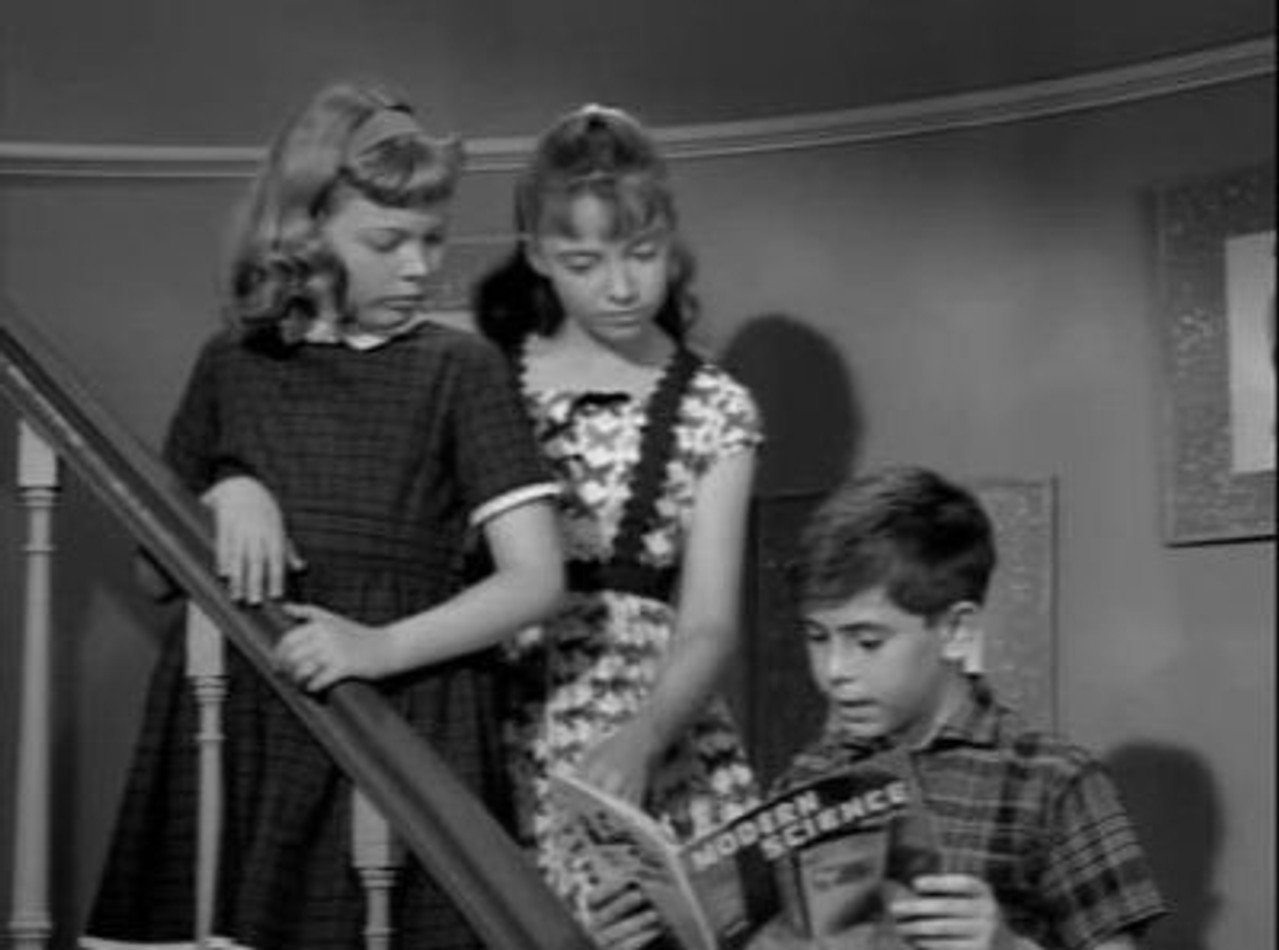
Tom and Karen love Grandma. Anne can't forgive her for not being their mother.
The vanSpoiler · tap to reveal
Anne runs into the road. Grandma pushes her clear and takes the hit, then stands up.
Grown upSpoiler · tap to reveal
The children leave for college, and Grandma goes back to the place that made her.
Why it still matters
This is the only Twilight Zone script Ray Bradbury ever got on screen, which is strange for a show that owed him so much. It's also the gentlest robot story the series told. Mr. Rogers is a widower whose aunt Nedra has just walked out, declaring the children too much to handle. So he takes them to Facsimile Ltd., where a salesman builds them a grandmother to order. Tom and Karen take to her at once. Anne, the eldest, won't, because Grandma reminds her of their mother, who died.
Where "The Lonely" asked whether a man could love a machine, Bradbury asks whether a machine can love a family, and whether a child can trust that love. Josephine Hutchinson plays Grandma with a calm that never tips into creepy. The episode runs on Bradbury's language more than plot, and Serling once said of him that what reads so beautifully on the printed page "doesn't fit in the mouth." Listen for which lines land and which ones sound like a book read aloud.
The title is Walt Whitman's, from an 1855 poem, and the story went on to a second life as a Bradbury short story and a Peabody-winning TV film.
Why Anne comes round
Anne keeps her distance because she's afraid of losing someone again. When she runs into the path of a van, Grandma throws her clear and is struck herself, then gets up without a scratch. Grandma can't die, so she can't abandon Anne the way her mother did, and Anne finally lets her in. Grandma also sees that Mr. Rogers lost his own mother young and never forgave her for it, which brings the two of them closer.
Years pass in a stretch of mid-episode narration, unusual for the show by this point. The grown children leave for college, and Grandma prepares to go back. Her mind may be stored with other grandmothers', and she hopes that by serving well she might one day earn being human. Serling's closing narration calls it a fable and asks who can say such products won't exist one day.
Behind the scenes
- Bradbury's earlier script, an adaptation of his 1951 story "Here There Be Tygers," was turned down because it would have been too expensive to make.
- The first attempt to film this one, in October 1961, failed, and most of the scenes were reshot in February 1962. Two directors share the credit.
- Bradbury was asked to revise the script the night before shooting resumed, while he was busy revising Something Wicked This Way Comes. He said that when he asked why, "they merely shrugged and toed the floor."
- The broadcast cut the moment where Grandma reveals her mechanical nature to the children. Bradbury felt he should have been consulted, and the cut helped convince him he couldn't keep working with the series. He later wrote: "As for our friendship, it is, of course, now officially over."
- It was the series' 100th episode. Bradbury turned the script into a short story of the same name, published in 1969.
The thread
Machines built to care for people, from Whitman's title to Bradbury's own second and third goes at the story.
Came before
Shares DNA with
Retold
DNA strand
Do Machines Dream?
Grandma isn't trying to pass as human, and nobody in the family is fooled. Bradbury's question is whether care counts when the one giving it was built for the job. The children decide it does, and Grandma, hoping to earn humanity, seems to wonder the same thing about herself.
Every great sci-fi story is built from a handful of strands like this one. Each strand page explains how it works and traces it across shows, books and films.
If this one stayed with you
Where to go next, and why.
Read · Short stories
I Sing the Body Electric! — Ray Bradbury
Bradbury's 1969 collection opens up the story he wrote for television, with room for all the language the episode had to trim.
Watch · TV film
The Electric Grandmother (1982)
The same family and the same grandmother twenty years on, with Maureen Stapleton and a script Bradbury co-wrote.
Watch · The Twilight Zone S1
"The Lonely"
The show's earlier, sadder companion machine. If Grandma moved you, Alicia will too.
Sources
- “I Sing the Body Electric (The Twilight Zone),” Wikipedia
- “The Electric Grandmother,” Wikipedia
- “Ray Bradbury and the Twilight Zone,” University of Illinois Press
- “Why Ray Bradbury Only Wrote One Episode Of The Twilight Zone,” SlashFilm
- Emily St. James, “The Twilight Zone: "I Sing the Body Electric"/"Cavender Is Coming",” The A.V. Club, 2013
- “The Twilight Zone episode guide,” epguides.com