More from the episode

The story in 5 beats
- A sleepless sheriff
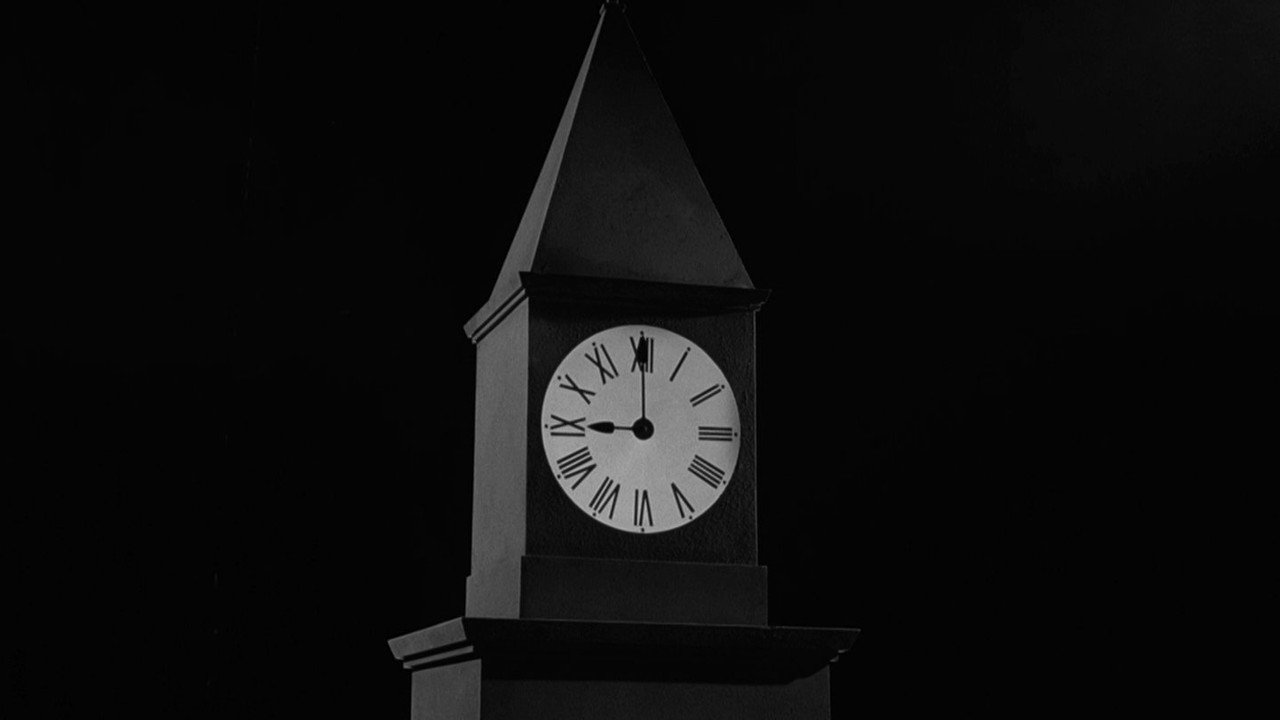
On the morning of Jagger's execution, Sheriff Charlie Koch can't sleep, and the sun fails to rise over the town.
- The prisoner
Jagger, convicted of killing a bigot, says it was self-defense and shows no remorse.
- What the sheriff ignored
Koch admits he let the missing autopsy and the powder burns slide, and went along with the town to win re-election.
Half past nineSpoiler · tap to reveal
The reporter, Colbey, accuses the deputy of perjury. Reverend Anderson reluctantly backs the hanging, and it goes ahead.
The dark spreadsSpoiler · tap to reveal
The darkness deepens. A radio report lists the other places it has fallen, from Berlin to Birmingham to a street in Dallas.
Why it still matters
Rod Serling wrote this largely as his own reaction to the assassination of John F. Kennedy on November 22, 1963, and it aired that March. It's set in a small town where a man named Jagger is to be hanged at 9:30 in the morning for killing a bigot, a killing he says was self-defense. The sheriff can't sleep. Then morning comes, and it stays dark.
It's one of the most openly angry things Serling put on the show, and it doesn't hide its message behind an alien or a robot. That's why opinions split. The A.V. Club found it Serling at his preachiest and felt the whole thing read like a first draft, while also admitting its sincerity is difficult to laugh at. SlashFilm calls it underrated and reads it now as a warning about how a town, its lawman, its reporter and its preacher can all agree on a story that suits them.
It's worth seeing for the cast alone. Michael Constantine is the sheriff, Paul Fix the town's reporter, George Lindsey the deputy, and Ivan Dixon the Reverend Anderson, who has to decide what he believes about the man on the gallows.
A sickness known as hate
The night is the town's hatred made visible. The case against Jagger was rigged: the deputy lied about the evidence, a committee of townspeople decided against an autopsy, and the sheriff knew and let it go. Jagger is hanged anyway, and the darkness only gets worse. Even Reverend Anderson, who first thanked Jagger for standing up for his people, gives in, saying the majority is all there is and that the minority died on the cross.
Then the radio reports the dark spreading to other places, including North Vietnam, parts of the Berlin Wall, Shanghai, Birmingham, Budapest and a street in Dallas, Texas. Serling's closing narration names it a sickness known as hate, and tells you not to look for it in the Twilight Zone but in a mirror, before the light goes out altogether. The A.V. Club's reviewer noted one missed chance: if Jagger had been Black, that would've taken courage.
Behind the scenes
- Serling wrote the script mainly as a personal response to the assassination of President Kennedy on November 22, 1963. The list of darkened places at the end includes a street in Dallas, Texas.
- It echoes Serling's earlier Playhouse 90 teleplay "A Town Has Turned to Dust," about the lynching of an innocent Mexican man, which was based on the Emmett Till case. Serling fought executive interference and network censors to get that one on the air.
- Producer William Froug had written a script on a similar idea, "Many, Many Monkeys," which the network shelved as too disturbing. It was finally made for the 1989 revival.
- Ivan Dixon, who plays Reverend Anderson, had starred in the first-season "The Big Tall Wish" as an aging boxer.
- SlashFilm points out that when the episode aired, 44 states still allowed the death penalty, and Black people were still being lynched in America, according to the Tuskegee Institute's archives.
- Production code 2630. Abner Biberman directed, and the A.V. Club said his work makes sure it looks impressive.
The thread
A town that decides what's true, and the cost of going along.
Came before
Shares DNA with
DNA strand
Us vs. Them
Most Us vs. Them stories need an outsider to fear. Here the outsider is already convicted, and the episode turns to the people who convicted him: the sheriff, the deputy, the reporter, the preacher, each with a reason to go along with the majority.
Every great sci-fi story is built from a handful of strands like this one. Each strand page explains how it works and traces it across shows, books and films.
If this one stayed with you
Where to go next, and why.
Watch · Twilight Zone S1
"The Monsters Are Due on Maple Street" (1960)
Serling's best-known version of a neighborhood that turns on itself, made four years earlier.
Watch · Twilight Zone S1
"The Big Tall Wish" (1960)
If Ivan Dixon's reverend stayed with you, here he is in a lead role, as an aging boxer, in a first-season story about a wish.
Read · Short story
"Going to Meet the Man" by James Baldwin
SlashFilm sets the episode beside this story, published the year after the show ended, about a racist man remembering a lynching. It goes where the episode only gestures.
Watch · Twilight Zone (1980s)
"Many, Many Monkeys" (1989)
William Froug's script on a similar idea, too disturbing for CBS in the 1960s, finally filmed for the revival.
Sources
- “I Am the Night—Color Me Black,” Wikipedia
- “The Twilight Zone: "The Masks"/"I Am The Night, Color Me Black",” The A.V. Club
- “One Underrated Twilight Zone Episode Is A True Crime Cautionary Tale,” SlashFilm
- “The Twilight Zone: Nothing But a Man,” UCLA Film & Television Archive
- “The Twilight Zone, Season 5 episode guide,” TVmaze