
More from the episode
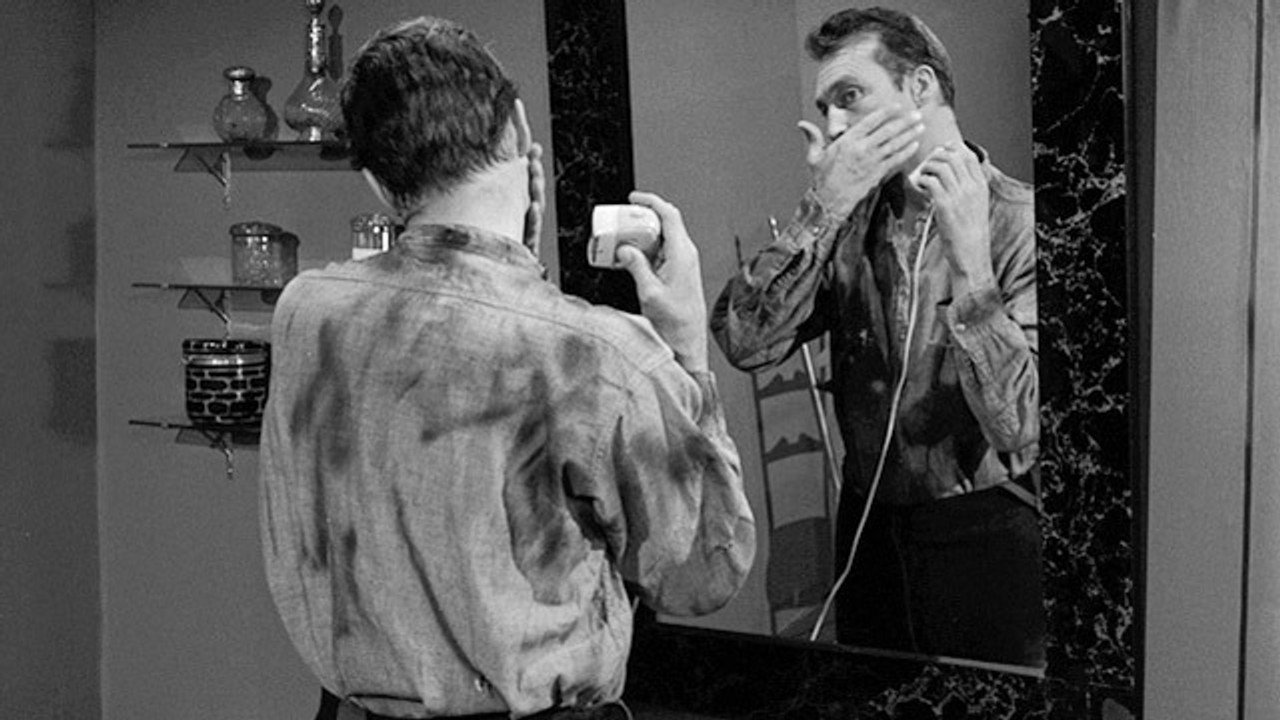
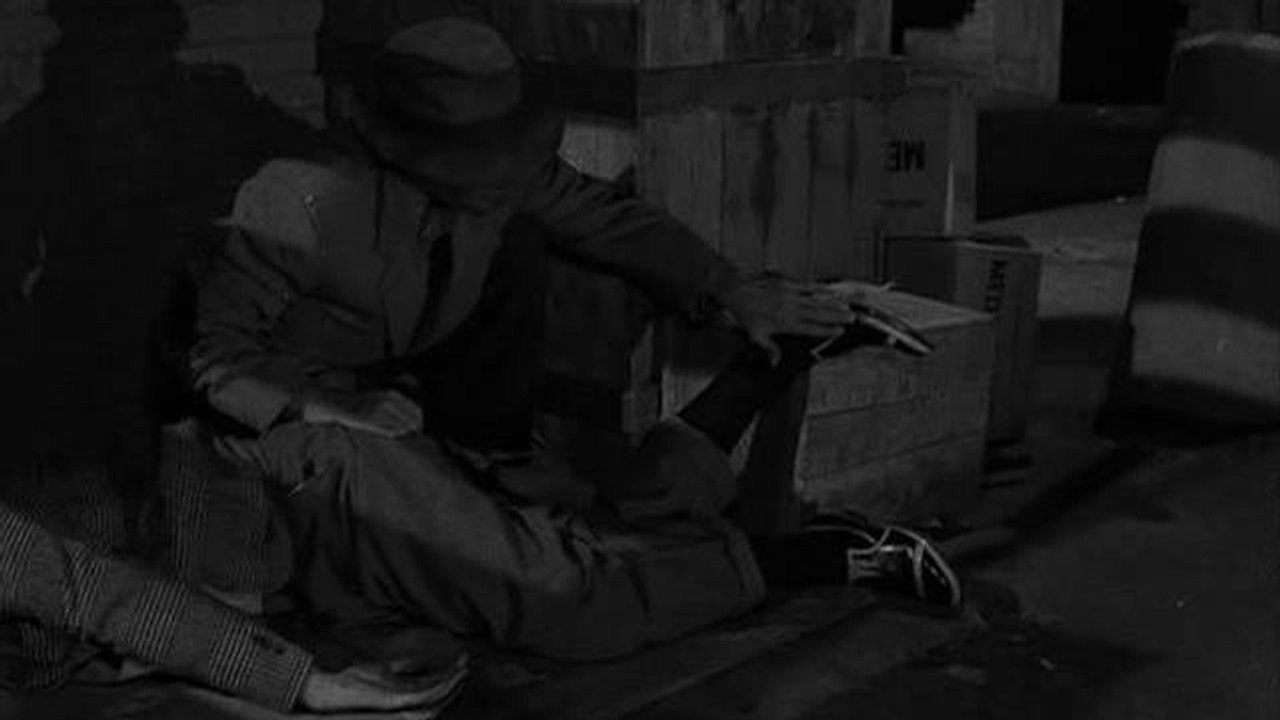
The story in 5 beats
- The alley
A dark sedan dumps a body in a Bowery alley. Nate Bledsoe, sleeping rough nearby, swaps his worn-out shoes for the dead man's fine ones.
- A new walk
Nate brushes off his old friends and strides uptown to a nice building, as if he lives there.
- Wilma
The dead man's girlfriend knows the shoes at once. Shoes off, Nate is himself again and terrified; shoes on, he's someone else.
Tequila and sugarSpoiler · tap to reveal
At a nightclub he orders the dead man's signature drink, and the gang boss Dagget hears about it. Dane has come back for him.
If the shoe fitsSpoiler · tap to reveal
Dagget's men shoot him again. Dying, he swears he'll keep coming back. In the alley, another drifter eyes the shoes.
Why it still matters
This is the Twilight Zone doing film noir with a supernatural kicker. Nate Bledsoe, a down-and-out on the Bowery, finds a body dumped in an alley and does what a man with holes in his soles would do: he takes the dead man's shoes. Within a block he's walking differently, talking differently and heading for an apartment he has never seen.
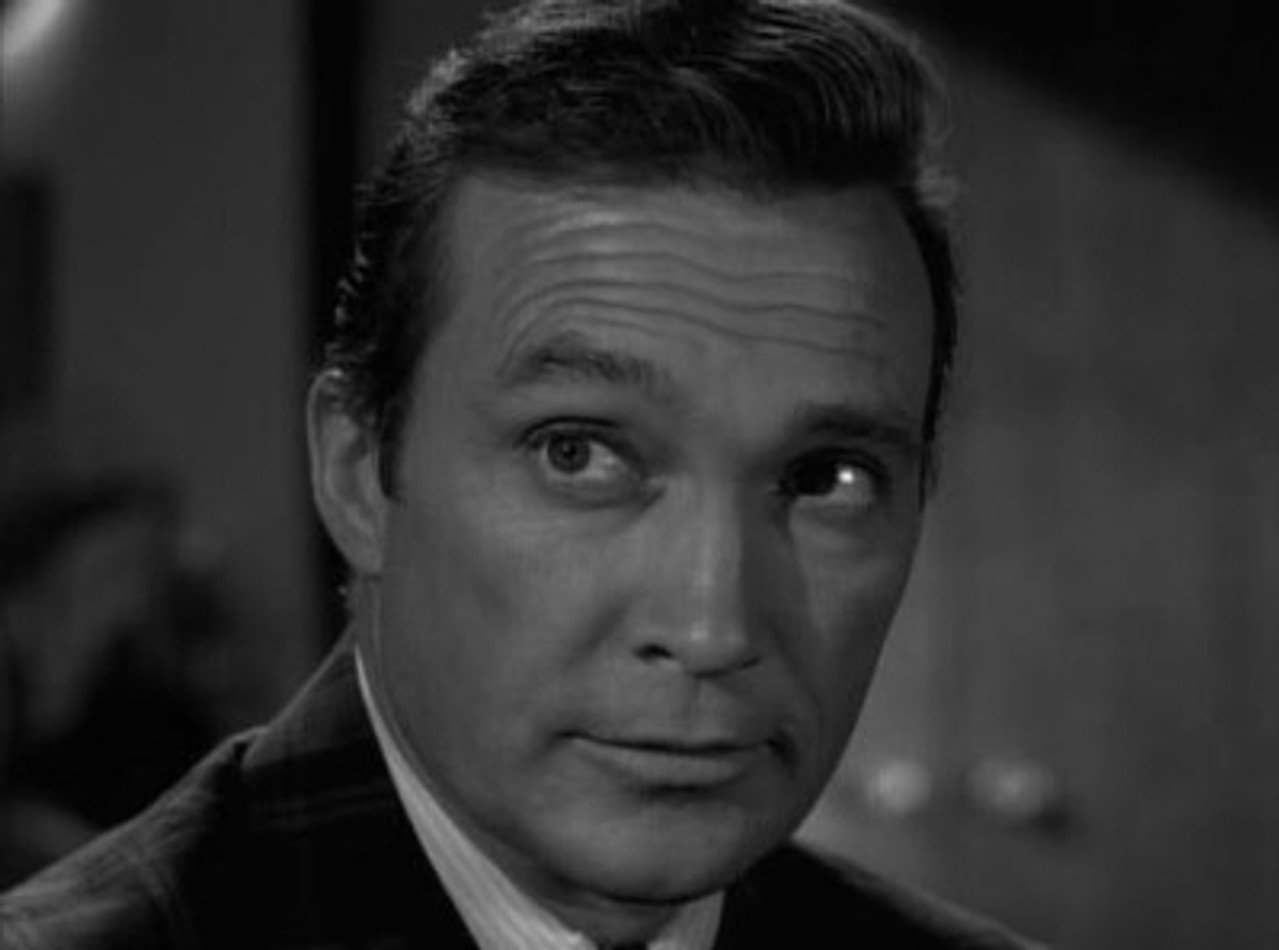
Warren Stevens, a familiar face from Forbidden Planet, carries the episode by playing two men in one body, the timid drifter and the hard-edged gangster Dane, and switching between them with nothing but posture and voice. Reviewers who don't love the script still single him out. Joan Marshall, as the girlfriend who recognizes the shoes before she recognizes the man, gives the middle of the episode its jolt.
It's a slight story, and The A.V. Club and The Twilight Zone Vortex both find it thin. But the premise is neat enough that the 1985 revival remade it with Helen Mirren.
Who's wearing whom
The shoes belong to Dane, a gangster his boss Dagget had killed, and whoever wears them becomes Dane. Dane walks Nate's body straight into Dagget's office and tells him he knows who ordered the hit. He has a gun, but Dagget has men behind hidden panels, and Dane is shot a second time.
Dying, he promises Dagget he'll come back again and again until he gets him. Dagget's men dump Nate's body in the same alley where Dane was left, and one of Nate's old friends from the street finds it and starts pulling off the shoes. Serling's closing narration warns viewers to keep an eye out for a pair of size nine black and gray loafers: if the shoe fits, wear it, but be careful.
Behind the scenes
- Charles Beaumont gets the on-screen credit, but OCee Ritch wrote the episode uncredited. Beaumont was by then handing ideas and scripts to friends, as he did with other late episodes credited to him.
- Ritch's unpublished story, "The Reluctant Genius," used a cowboy hat as the magic object and leaned toward comedy. Producer Buck Houghton liked shoes better because they "would take you places you weren't intending to go."
- Montgomery Pittman, who also directed "Will the Real Martian Please Stand Up?" and "The Grave," gave Warren Stevens no direction at all, Stevens said. "Listen, I don't know how you should play this," Pittman told him.
- Joan Marshall, who plays Wilma, starred in William Castle's Homicidal (1961) under the name Jean Arless and was the first Phoebe Munster in the unaired pilot of The Munsters.
- The score is reused from the earlier episode "The Fever."
- The 1985 revival remade it as "Dead Woman's Shoes," with Helen Mirren and Jeffrey Tambor, directed by Peter Medak. There is also a Twilight Zone Radio Dramas version with Bill Smitrovich.
The thread
Possession stories where a dead man's things carry a dead man's will, and the remakes that kept the shoes walking.
Came before
Shares DNA with
Remade and revisited
DNA strand
Memory & Identity
Nate never decides to become Dane. He just puts on a pair of shoes, and a dead man's memories, habits and grudges come with them. The episode treats identity as something you can step into by accident, and Stevens shows how little of Nate is left once the shoes are laced up.
Every great sci-fi story is built from a handful of strands like this one. Each strand page explains how it works and traces it across shows, books and films.
If this one stayed with you
Where to go next, and why.
Watch · Twilight Zone S1
"The Four of Us Are Dying" (1960)
A small-time crook who can take on other men's faces, in the same smoky world of clubs and gangsters, and the closest companion piece the show made for this one.
Watch · Twilight Zone (1985)
"Dead Woman's Shoes" (1985)
The same shoes, a different wearer. Helen Mirren gets to do what Warren Stevens did, and the remake plays the switch differently.
Watch · Film
Fallen (1998)
If the idea of a killer who can't stay dead stuck with you, this detective thriller follows a spirit that keeps changing hosts.
Read · Novel
The Hands of Orlac — Maurice Renard
A pianist loses his hands and is given a murderer's. It's the old pulp version of Nate's problem, and the root of many films.
Sources
- “Dead Man's Shoes (The Twilight Zone),” Wikipedia
- “The Twilight Zone season 3,” Wikipedia
- Josh Weiss, “Twilight Zone Actor Had Zero Directorial Input For This Classic Episode,” SYFY WIRE, 2026
- Jordan Prejean, “Dead Man's Shoes,” The Twilight Zone Vortex, 2016
- Zack Handlen, “The Twilight Zone: "One More Pallbearer"/"Dead Man's Shoes",” The A.V. Club, 2013