
More from the episode


The story in 5 beats
- Throckmorton's shop
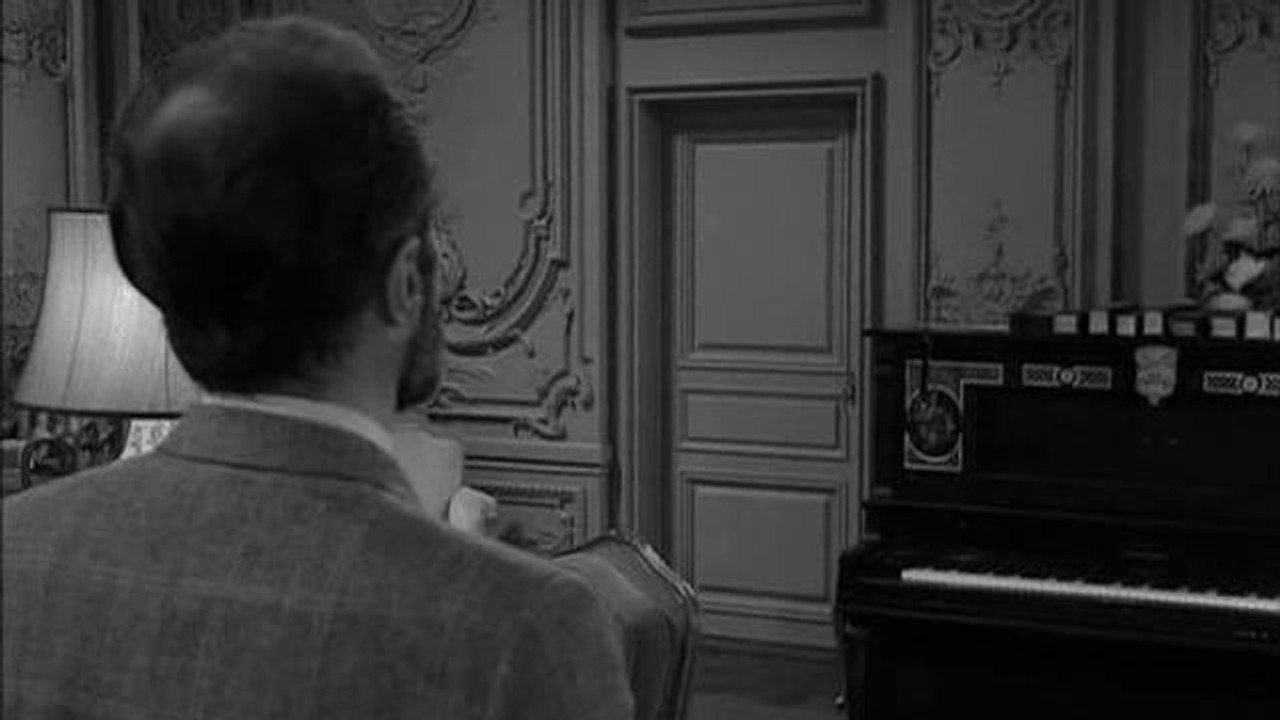
Fitzgerald Fortune buys an old player piano at Throckmorton's Curio Shop. Its music makes people reveal what they really feel.
- Happy birthday
He brings it home as a present for Esther, who is turning 26. He uses it on her first.
- The party
Guests arrive, and Fortune starts choosing rolls. Each tune pulls out one more secret, and he enjoys every one.
Marge's snowflakeSpoiler · tap to reveal
Under the music, Marge, who jokes about her weight, becomes a little girl who dreams of being a snowflake. Fortune laughs at her.
BrahmsSpoiler · tap to reveal
Esther has swapped in one more roll. This time the music plays for Fortune.
Why it still matters
Earl Hamner Jr. sold this one to the show at the same time as "The Hunt," and it's hard to believe the same writer did both. Gone are the mountains and the coon dogs. This is a drawing room full of brittle people, and at the center is Fitzgerald Fortune, a drama critic who enjoys hurting people and is very good at it. Barry Morse plays him with real relish, and Joan Hackett, as his wife Esther, is just as good in the quieter part.
The gadget is simple. Fortune picks up a player piano in a curio shop, and every roll it plays makes the listeners drop their guard and say what's underneath. In his hands it's a weapon. The A.V. Club called the episode an oddity and found it sadistic and misjudged, and also couldn't stop watching it, which is about right. Watch for the moment the party stops being fun, and for the butler, who sees more than anyone.
What the lullaby gets out of him
Fortune works his way through his guests. Greg Walker is made to confess a secret about himself and Esther. Marge Moore drifts into her childhood daydream of being a snowflake, and Fortune mocks her for it. Then the piano plays Brahms' Lullaby, the roll Esther slipped in, and Fortune is the one who talks. He admits he is a frightened child who strikes out at people, that he's jealous of Marge's and Greg's talent, and how coldly he treats his wife.
The guests leave, and Esther leaves with Greg. Fortune wrecks the room and rips the roll out of the piano. His butler, Marvin, who had admitted earlier that he found his employer amusing, comes in and tells him: "I'm not laughing, Mr. Fortune. You're not funny anymore." It's a small, mean ending, and the only punishment is that everyone, Marvin included, finally sees him clearly.
Behind the scenes
- Hamner wrote it alongside "The Hunt" when he first pitched the show, and submitted it under the title "Won't You Play a Simple Melody?" He later said he remembered little about what inspired it.
- It was David Greene's only Twilight Zone. He later won Emmys for directing Rich Man, Poor Man and the first part of Roots.
- Producer Buck Houghton remembered Joan Hackett as "very anxious during the filming," though not difficult.
- The piano's rolls include "I'm in the Mood for Love," "Smiles," Khachaturian's "Sabre Dance," "These Foolish Things," Debussy's "Clair de lune" and Brahms' Lullaby.
- Cyril Delevanti, who plays Marvin the butler, appeared in four episodes of the series, including "The Silence" and "A Penny for Your Thoughts."
- Barry Morse is remembered for The Fugitive and for The Outer Limits. The story was later done as a Twilight Zone Radio Drama with Michael York.
The thread
Magic that makes people tell the truth, and the cruel men it catches.
Came before
Shares DNA with
Left its mark on
DNA strand
Be Careful What You Wish For
Fortune gets exactly what a critic wants: a machine that exposes everyone in the room. He never thinks about who else might choose the music. The wish turns back on the wisher, which is the oldest shape there is, and Hamner plays it at a cocktail party.
Every great sci-fi story is built from a handful of strands like this one. Each strand page explains how it works and traces it across shows, books and films.
If this one stayed with you
Where to go next, and why.
Watch · The Twilight Zone
"A Thing About Machines"
Another sour, superior man who sneers at everyone, and the household objects that have had enough of him.
Watch · The Twilight Zone
"The Whole Truth"
The same idea in a used-car lot, with a lot more laughs and a salesman who suddenly can't lie.
Watch · Film
Who's Afraid of Virginia Woolf? (1966)
If the party was the best part, this is a whole night of it, with no magic piano needed to get the truth out.
Read · Novel
The Picture of Dorian Gray — Oscar Wilde
A clever, cruel man and an object that knows what he's really like. Wilde's version takes a lot longer to catch up with him.