
More from the episode

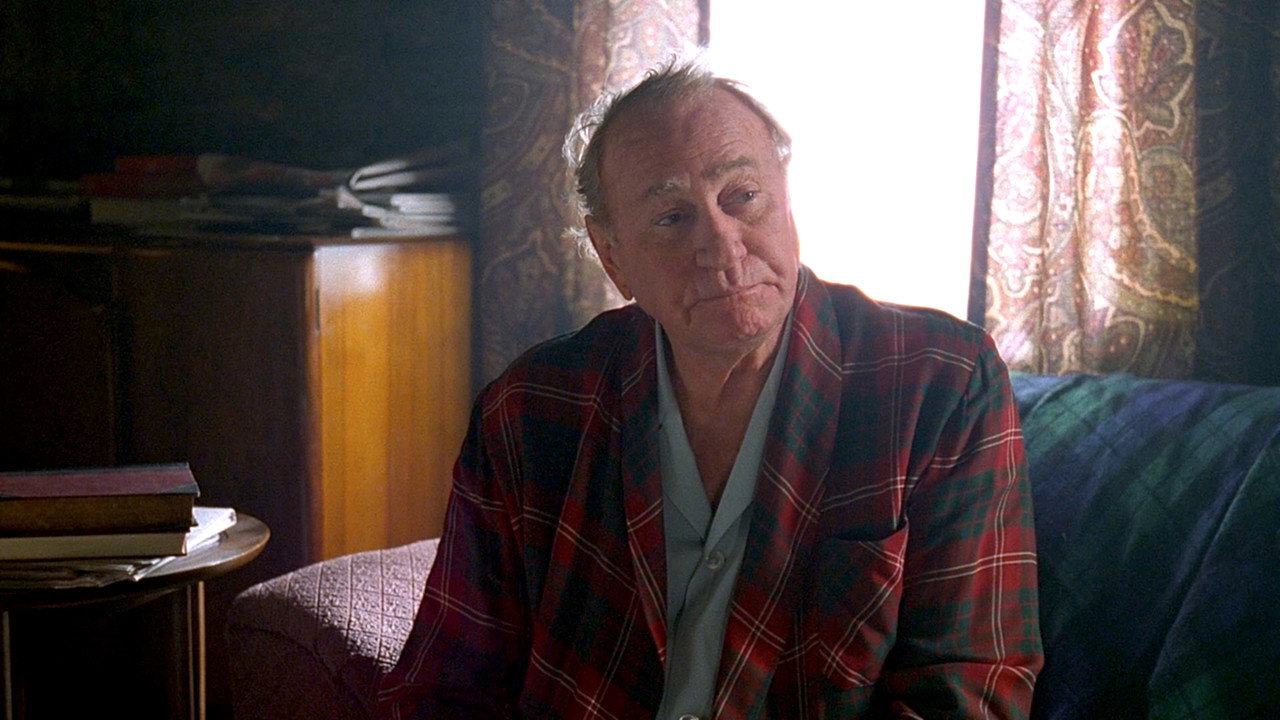
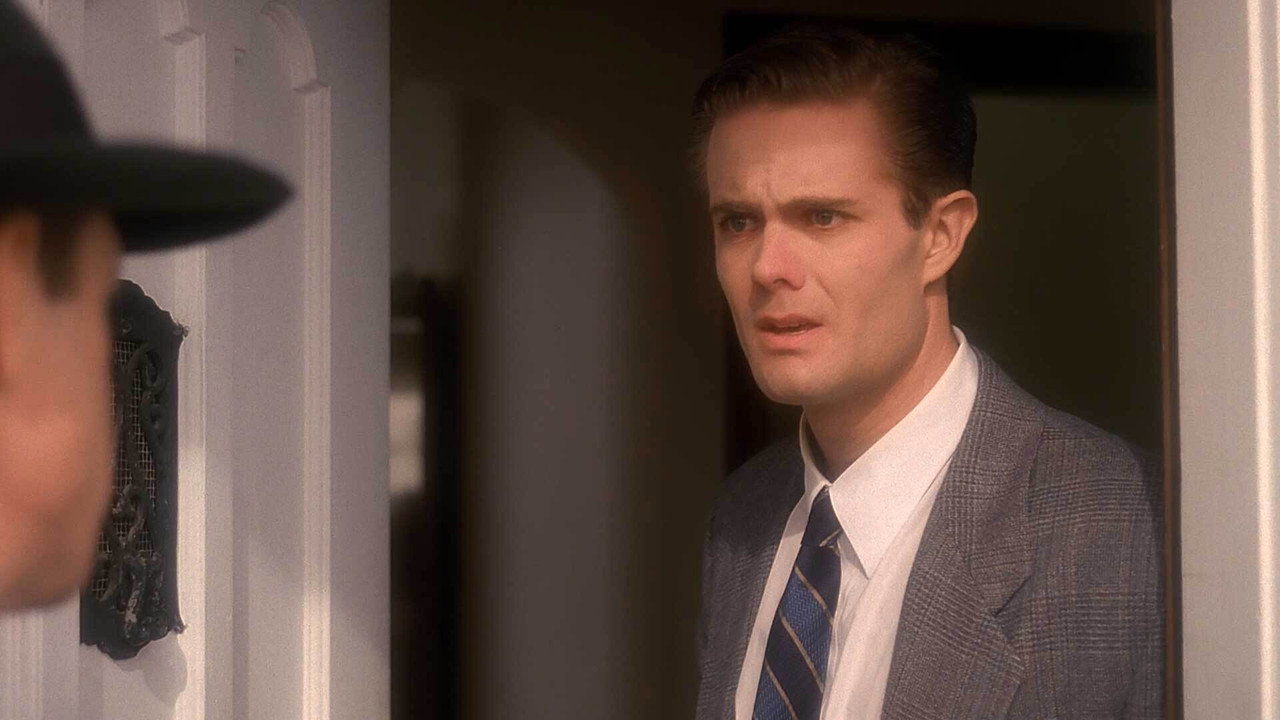
The story in 5 beats
- Caledonia, 1990
An eviction in Caledonia, Wisconsin, ends with a police officer shooting a man named Edward Skur. His last word is "Mulder".
- The man who won't talk
Mulder finds that Skur was reported dead in 1952 and seeks out Arthur Dales, the retired agent who investigated him. Dales warns him off until Mulder threatens a subpoena.
- The 1950s
Young Dales and his partner, Hayes Michel, arrest Skur. When Dales hears Skur hanged himself in custody, he goes to apologize to the widow and finds Skur alive.
Come aloneSpoiler · tap to reveal
Something comes out of Skur's mouth in the struggle before he escapes. Later a German doctor is killed, and a coaster at the scene reads "come alone".
The morgueSpoiler · tap to reveal
A secretary, Dorothy Bahnsen, helps Dales find the file on another man, Gissing. Dales has the body cut open and finds a creature sewn into his chest.
Why it still matters
Darren McGavin was TV's Carl Kolchak, and the show had been trying to get him for years. He had been the casting directors' first choice for Senator Matheson in "Little Green Men" and was later sought to play Mulder's father, and both times it fell through. Here Carter asked for him by name. "McGavin was Chris's inspiration for writing this series," casting director Rick Millikan said. "He always had Darren in mind to use somewhere." In Wanting to Believe, Robert Shearman called McGavin "the series' spiritual father."
It's also a period piece. Most of the story takes place in the early 1950s, and the 1990 scenes catch Mulder before the X-Files, still working in the Behavioral Science Unit. John Shiban and Frank Spotnitz saw the chance to "trace the roots of both Fox Mulder and the X-Files." Scully doesn't appear at all, one of two Season 5 episodes without her, because Gillian Anderson was finishing work on the movie. Reviews split hard. Shearman called it "fresh and urgent"; Emily VanDerWerff of The A.V. Club said it played like a "weird backdoor pilot" for a show that never happened; Paula Vitaris of Cinefantastique found it "not particularly entertaining" and Dales "not an intriguing character," but called the visuals "outstanding."
The man from the State Department
Skur was first arrested as a suspected communist, and Roy Cohn is among those who tell Dales to change his report after the fight, which he does. The man waiting at the bar is Bill Mulder, Fox's father, then an agent with the State Department. He tells Dales that Skur and two other men were experimented on, that the other two killed themselves, and that Skur killed the German doctor for what was done to him. Skur thinks Dales and Michel are part of it and will come for them too. Dales can't reach Michel in time, and Cohn buries the murder. Dales tells Skur's wife the truth, and when she goes down to the bomb shelter in the backyard to tell her husband, the thing inside him takes over and he kills her.
Cohn takes Dales to J. Edgar Hoover, who talks him into helping bring Skur in. Dales is sent back to the bar as bait while Bill Mulder and another agent wait outside, holding off until they think he's dead; they come in to find him alive and Skur in handcuffs. In 1990, Mulder is shaken by what his father was part of. Dales guesses someone helped Skur get away, perhaps hoping the truth would come out one day, and the last flashback shows Bill Mulder handing Skur a set of car keys and walking off. Shearman liked how the story plays with the previous episode's tagline, where serving means patriotism and resisting means treason, and A.J. Black of The Companion noted that it turns the fear of communism into a fear of something from outer space "without ever using the word."
Challenge the DNA
Was Arthur Dales right to change his report?
Or skip ahead to our reading
Cohn is among those who tell him to change it, and he does. The episode is sympathetic to him and still makes clear what his silence cost.
Behind the scenes
- The episode grew out of Howard Dimsdale, a screenwriter hurt by the Hollywood blacklist who wrote several films under the pen name "Arthur Dales". He taught Spotnitz and Shiban at the American Film Institute, and they combined his stories of "paranoia, treachery, and double-dealing" with the idea that "the witch-hunt was actually a smoke screen to conceal something else."
- Season 5 was short on time and money, and the episode was rushed. Costume designer Jenni Gullet had to rent or make the period clothes "frantically", and art director Gary Allen researched Hoover's office to get it right.
- Allen also built the bomb shelter; his father was a contractor who had built several real ones.
- Toby Lindala's effects team made the creature and a facial appliance for Garret Dillahunt that let it crawl out of Skur's mouth. The finished film was slightly bleached to look vintage.
- Agent Hayes Michel is named after the fiancé of Mary Astadourian, Chris Carter's executive assistant.
The thread
The show McGavin made before this one, another Season 5 trip into Mulder's past, and stories about people pressed to turn on their neighbours.
Came before
Shares DNA with
DNA strand
Us vs. Them
Dales is a loyal agent in a Bureau that decides who counts as the enemy, and one case makes him wonder which side he's really on. Forty years later his reluctance to talk tells Mulder almost as much as the story does.
Every great sci-fi story is built from a handful of strands like this one. Each strand page explains how it works and traces it across shows, books and films.
If this one stayed with you
Where to go next, and why.
Watch · Film
Good Night, and Good Luck. (2005)
Edward R. Murrow and his CBS team decide to take on Senator McCarthy on air, knowing what it could cost them.
Read · Play
The Crucible by Arthur Miller
A town turns on itself through accusations, and a man has to decide whether to save himself by naming others.
Read · Novel
The Puppet Masters by Robert A. Heinlein
Government agents hunt parasites from space that ride people and steer them, in a novel soaked in early-1950s Cold War nerves.
Your next episode
Three directions to go from here, all on Sci-Fi DNA.

More of this feeling
The Obsolete Man
The Twilight Zone
It has the same cold dread of a state deciding who counts as a person.

Something completely different
Mind's Eye
The X-Files
For a stand-alone mystery, follow the agents to a blind woman who seems to see a killer at work.