More from the episode
The story in 5 beats
- Time stands still
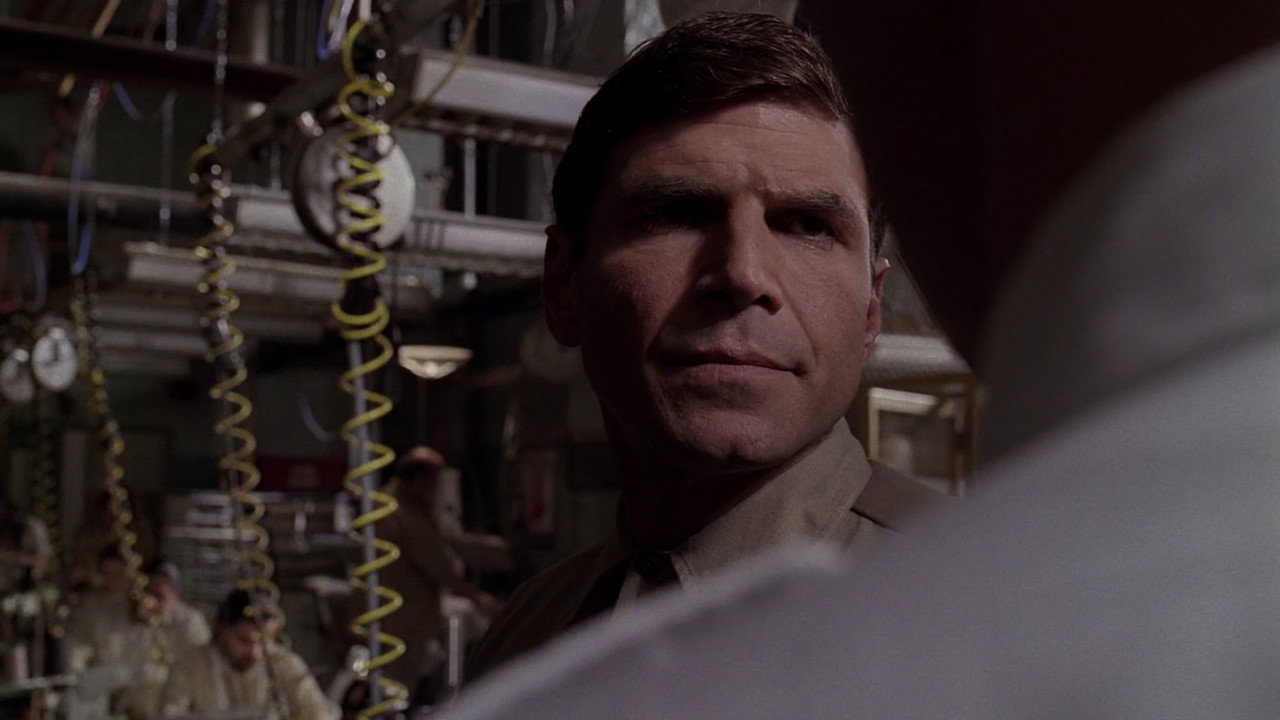
At a prison in Marion, Illinois, an inmate loses his fingers in a workshop accident. Everything seems to slow down, and Donnie Pfaster calmly walks out of the room and out of the prison.
- Three prisons, one chaplain
Three escapes from three prisons all lead to one chaplain, Reverend Orison. He talks himself and Pfaster past U.S. Marshals at a diner, and then Pfaster runs him down with his own car.
- The chaplain's skull
The agents catch up with Orison and question him. A medical exam finds a hole he drilled in his own skull, which Mulder thinks lets him hypnotize people.
In the woodsSpoiler · tap to reveal
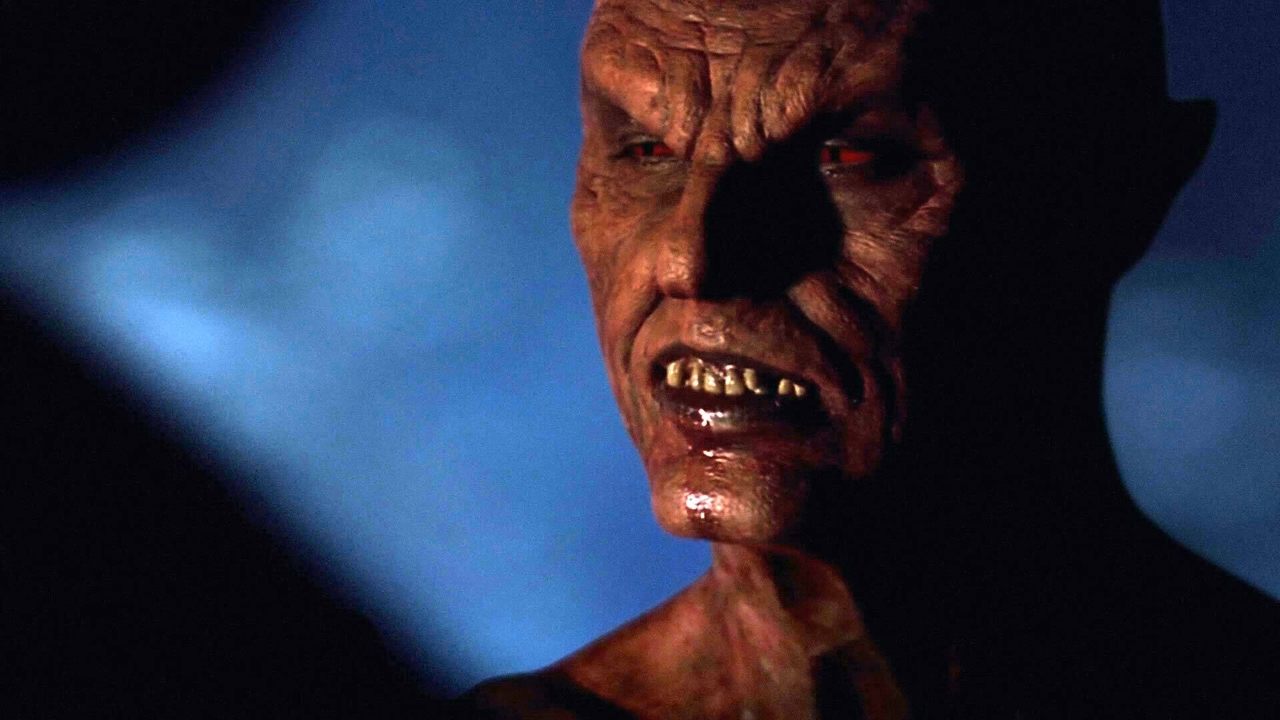
Orison hypnotizes his guard, slips away and takes Pfaster into the woods at gunpoint to dig him a grave. Pfaster turns into something demonic, kills him and buries him there.
A visit at nightSpoiler · tap to reveal
Pfaster tips off the police about the body and goes to Scully's house. He overpowers her and locks her in her closet. Mulder hears the song on his radio, drives over and arrests Pfaster.
Why it still matters
"Orison" brings back Donnie Pfaster, the death fetishist Nick Chinlund first played in Season 2, because the producers had talked about revisiting an old monster that season. "This seemed like the perfect opportunity," Chris Carter said. The episode puts him beside a new kind of danger, Scott Wilson's Reverend Orison, a former convict turned prison chaplain who believes he's doing God's work. Zack Handlen of The A.V. Club called Orison "a potentially fascinating figure" and wished the episode had explored him more.
It's also a Scully story about faith. She keeps hearing the same old soul song wherever she goes and comes to believe it's a sign. Kenneth Silber of Space.com thought it "rises above its origins in the depressing, hackneyed genre of serial-killer dramas," and Tom Kessenich called it "one of the most exhilarating journeys the seventh season has produced thus far." Its last scene divided critics more than anything else in it.
Who pulled the trigger
Before Mulder arrived, Scully told Pfaster that the only reason he didn't get the death penalty was that she had asked the judge for life. Now she gets out of the closet and shoots him dead while he is unarmed and in Mulder's custody. Afterwards she tells Mulder she's scared, because she isn't sure who was in control of her that night, God or something else. John Shiban said the writers decided late to make Pfaster "essentially evil as an entity," a true demon rather than the ambiguous figure of Scully's visions in his first episode.
For Frank Spotnitz, the shooting was the whole point: what justified bringing Donnie back was "the final act of the script when Donnie comes for Scully and she ends up shooting him full of holes." Rob Bowman found the closing talk harder. "You couldn't deny the fact that she killed Donnie Pfaster in cold blood. How do we deal with that?" Critics never agreed. Robert Shearman called it "at worst a betrayal of characterization that has badly damaged the moral fibre of the series," and Paula Vitaris of Cinefantastique said nothing in the episode showed Scully on the verge of losing control. Kessenich saw "a human being pushed beyond the breaking point": it "doesn't make what she did right, but it certainly wasn't a difficult thing to understand."
Challenge the DNA
Was Scully right to shoot Pfaster?
Or skip ahead to our reading
She shoots him while he is unarmed and in Mulder's custody, then tells Mulder she is scared. The episode leaves the question open on purpose.
Behind the scenes
- Chip Johannessen had been an executive producer on Carter's Millennium. His first draft had a prisoner who could stop time, a premise Carter, Spotnitz and John Shiban liked; Pfaster came into it only after Spotnitz and Carter read that draft.
- The opening, where time grinds to a halt, was built in post-production by combining several takes that Bowman had filmed at different speeds.
- Makeup artist John Vulich wanted to "pay homage" to the makeup in "Irresistible," and downloaded photos of it from fan sites to work from.
- The song Scully keeps hearing is a cover of "Don't Look Any Further," first recorded by the former Temptations singer Dennis Edwards. Paul Rabwin went through several covers that didn't work and wanted Lyle Lovett, who wasn't available, so John Hiatt recorded it.
- Composer Mark Snow used single, heavily reverbed hits for one slow-motion scene of Mulder entering a room with guns drawn: "There's nothing else but that. Sometimes, that is really effective."
The thread
The case Pfaster comes from, the Scully episode Carter was reminded of, and other stories of killers who won't stay locked away.
Came before
Shares DNA with
DNA strand
Us vs. Them
Two men claim to know what evil is: a chaplain who thinks God has chosen him to judge, and a killer who simply is what he is. Scully is caught between them, and the episode is less interested in the monster than in what facing him again does to her.
Every great sci-fi story is built from a handful of strands like this one. Each strand page explains how it works and traces it across shows, books and films.
If this one stayed with you
Where to go next, and why.
Watch · Film
The Night of the Hunter (1955)
Robert Mitchum plays a self-made preacher with LOVE and HATE tattooed on his knuckles, a man of God who kills for money.
Watch · Film
Cape Fear (1991)
A man freed from prison sets out after the lawyer he blames for putting him there, and the lawyer's family pays for it.
Watch · Film
Fallen (1998)
Denzel Washington's detective watches a killer die in the gas chamber, and then the killings start again.
Read · Novel
Red Dragon by Thomas Harris
An FBI investigator who gets inside killers' heads pays for the gift, the same cost Scully is still counting here.
Your next episode
Three directions to go from here, all on Sci-Fi DNA.
More of this feeling
Empok Nor
Star Trek: Deep Space Nine
It has the same grim tension of a killer stalking people in a confined space.
Same question, different answer
Blood Oath
Star Trek: Deep Space Nine
It asks whether taking revenge on someone who truly deserves it can ever be right.

Something completely different
The Amazing Maleeni
The X-Files
For a lighter puzzle, watch the agents chase a magician whose head falls off on the Santa Monica Pier.