The story in 5 beats
- Quarantine
Mulder and Scully are rushed into quarantine at a CDC facility at Fort Marlene, decontamination showers and all.
- An old contact
At Fort Marlene, Mulder runs into Marita Covarrubias, badly changed since he last saw her, and she tells him what she knows.
- The whole story
Mulder is told, at last, how all of this began decades ago, and where it is meant to end: an exchange at El Rico Air Force Base.
El RicoSpoiler · tap to reveal
The Syndicate gather at the base to hand Cassandra over, and Mulder and Scully can't reach her in time. Faceless rebels burn the whole group, Cassandra too. The Smoking Man and Fowley escape.
The next morningSpoiler · tap to reveal
In Kersh's office, Spender recommends that Mulder and Scully go back to the X-Files. Later his father berates him for not being more like Mulder, and shoots him in the head.
Why it still matters
Six seasons of hints come due in this hour, and the people writing it knew answers were a gamble. Frank Spotnitz found it hard going, because he believed episodes that answer questions tend to be less entertaining than ones that raise them. He still called it the "biggest chapter we had time to explore in the nine years we were on the air." Chris Carter saw a chance to make up for the 1998 film: "if there was any trouble with the movie, it was that we promised so much that we didn't deliver all of it," he said. "We wanted to deliver a lot, and all at once, in these two episodes."
Reviewers split over whether it worked. Joyce Millman of Salon called this pair one "of the most coherent, [...] almost unbearably tense, hours in the series' run." Robert Shearman thought William B. Davis was "the emotional centre of the episode" and that it "reaches for both significance and closure, and mostly works." Manuel Mendoza of The Dallas Morning News was drier: Carter and Spotnitz "have a wonderfully indirect way of setting up dramatic situations and an unbelievably shorthand way of resolving them." Zack Handlen of The A.V. Club put his doubt in one line, that the show's "mythology only really works as something just out of sight."
The price of a seat on the winning side
Diana Fowley is the one who has Mulder, Scully and Cassandra quarantined, and it is at her apartment that the Smoking Man lays out the history. Years ago the Syndicate agreed to cooperate with the Colonists, handing over members of their own families as collateral in exchange for an alien fetus. Its DNA was meant to give them alien-human hybrids able to survive colonization. Cassandra is that hybrid, and her existence is the signal for the invasion. Krycek reports that the rebels want her kept alive, but the Syndicate choose to surrender her and buy their own survival. Meanwhile a rebel kills one of their surgeons, takes his form and steals the fetus, which is how the rebels get into the handover.
Spotnitz has said the titles map the families. "Two Fathers" means Bill Mulder and the Smoking Man; "One Son" is Mulder, the only son left to either man once Spender is shot. Meghan Deans of Tor.com read the whole pair as a family drama, with Spender and Krycek both bidding to be the Smoking Man's son, Krycek as the prodigal, and Mulder the one he favors. Not everyone bought the ending: Paula Vitaris of Cinefantastique called the burning "clumsily contrived," letting the Smoking Man and Fowley get away "because the show needs them to return at some point."
Challenge the DNA
Did the Syndicate deserve what happened at El Rico?
Or skip ahead to our reading
The Smoking Man lays out the bargain with the Colonists, and the episode then closes the book on most of the men who made it. It treats the end as earned.
Behind the scenes
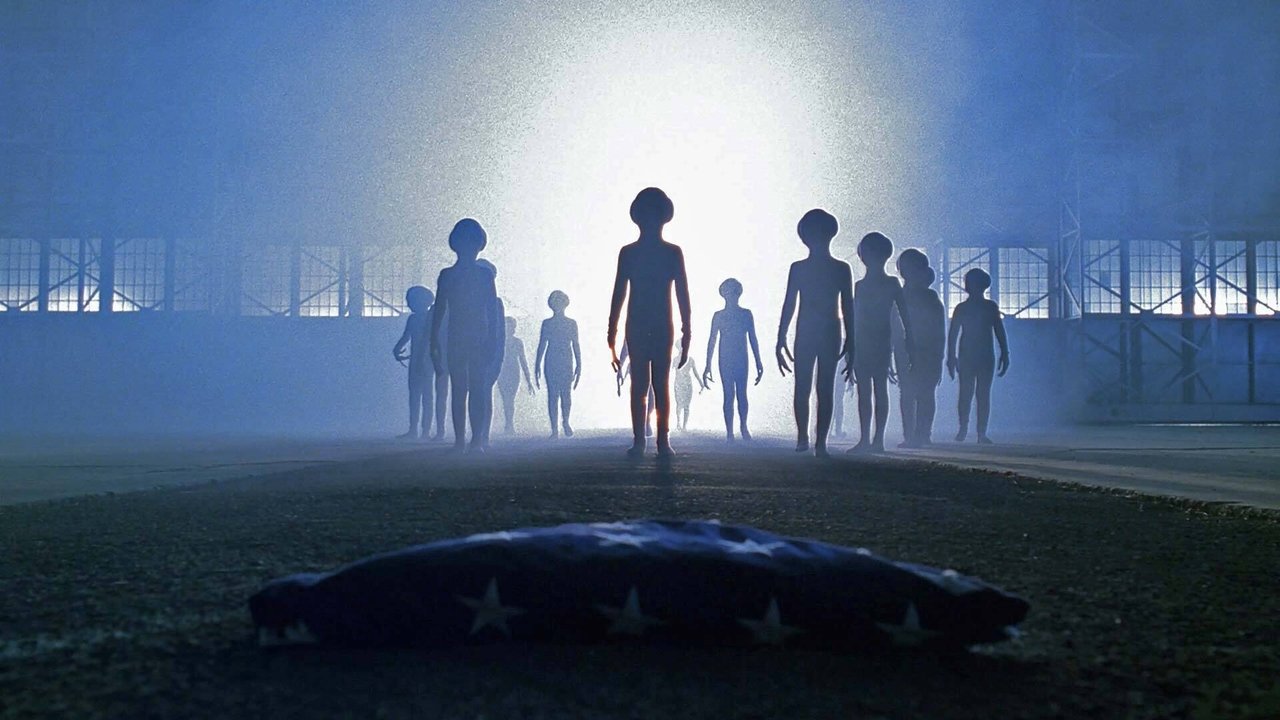
- The opening and the climax were shot in a hangar at Marine Corps Air Station Tustin, built in 1942 for Navy coastal patrols and one of the largest all-wooden hangars in the United States. Rob Bowman and director of photography Bill Roe lit the whole building. The move to Los Angeles had pushed costs up, and Spotnitz saw the hangar as a way "to try and create that cinematic scale and still keep [the show] affordable." Because it was wooden, the burning couldn't be shown with real fire.
- Spotnitz was unhappy with the shot of a Syndicate surgeon turning into a faceless rebel, made on short notice: "It was one of those cases where you just run out of time, sorry to say." He said he'd like to go back and redo it one day.
- Carter told Chris Owens, "You're going to go out a hero, of sorts." William B. Davis was upset to lose him and reportedly said during their last scene together, "I don't want to shoot you! I enjoy working with you!"
- The show had used trains before, in "731" and "Nisei", but kept the train scenes short here for budget reasons. The train carrying Cassandra was doing a little under ten miles an hour; sound effects, music, camera angles and quick cutting made it look fast.
- Makeup head Cheri Montesanto-Medcalf de-aged members of the Syndicate for the flashbacks and froze the lead surgeon's head in liquid nitrogen with blue face paint and silicone icicles.
The thread
The first half of the story, the first-season finale it deliberately calls back to, the Bond film it borrowed a scene from, and other stories of sealed labs and parents and children.
Came before
Shares DNA with
DNA strand
First Contact & Invaders
The visitors stay at a distance in this one, figures in hangar light. Most of the hour belongs to the humans who have known about them for years, and to Mulder hearing, over one long night, where all those years of secrecy were heading.
Every great sci-fi story is built from a handful of strands like this one. Each strand page explains how it works and traces it across shows, books and films.
If this one stayed with you
Where to go next, and why.
Watch · Film
Outbreak (1995)
Army doctors chase a deadly virus through a California town while their own commanders care more about hiding where it came from.
Watch · Film
Seven Days in May (1964)
A Marine colonel pieces together a plan by senior officers to take over the government and has days to get anyone to believe him.
Read · Novel
Fathers and Sons by Ivan Turgenev
Turgenev's novel of two generations who can't make sense of each other makes a good companion to an episode named for fathers and sons.
Your next episode
Three directions to go from here, all on Sci-Fi DNA.
More of this feeling
Tacking Into the Wind
Star Trek: Deep Space Nine
It has the same grim weight of an old order collapsing under the bargains it made.
Same question, different answer
Children of Time
Star Trek: Deep Space Nine
It asks what people will sacrifice of their own families to secure a future.

Something completely different
Dreamland
The X-Files
For something lighter, watch Mulder wake up in the body of a Man in Black outside Area 51.