More from the episode

The story in 5 beats
- The boar
In the Costa Rican rainforest, an entomologist named Robert Torrance finds a dead boar covered in purple sores. One bursts and sprays him. By the next morning, when soldiers arrive, he's dead.
- A package for Torrance
In a Virginia prison, an inmate also named Robert Torrance opens a parcel holding a leg of meat. A sore on it erupts, and he dies within thirty-six hours.
- Quarantine
Two inmates who cleaned his cell, Paul and Steve, escape in a laundry cart. The CDC and the National Guard seal the prison; Mulder joins the Marshals' hunt and Scully stays inside.
What the doctor knewSpoiler · tap to reveal
Scully traces the package to Pinck Pharmaceuticals. The CDC's Dr. Osborne, infected after a body burst in his face, admits his team works for Pinck and the outbreak was an experiment.
The bus to TorontoSpoiler · tap to reveal
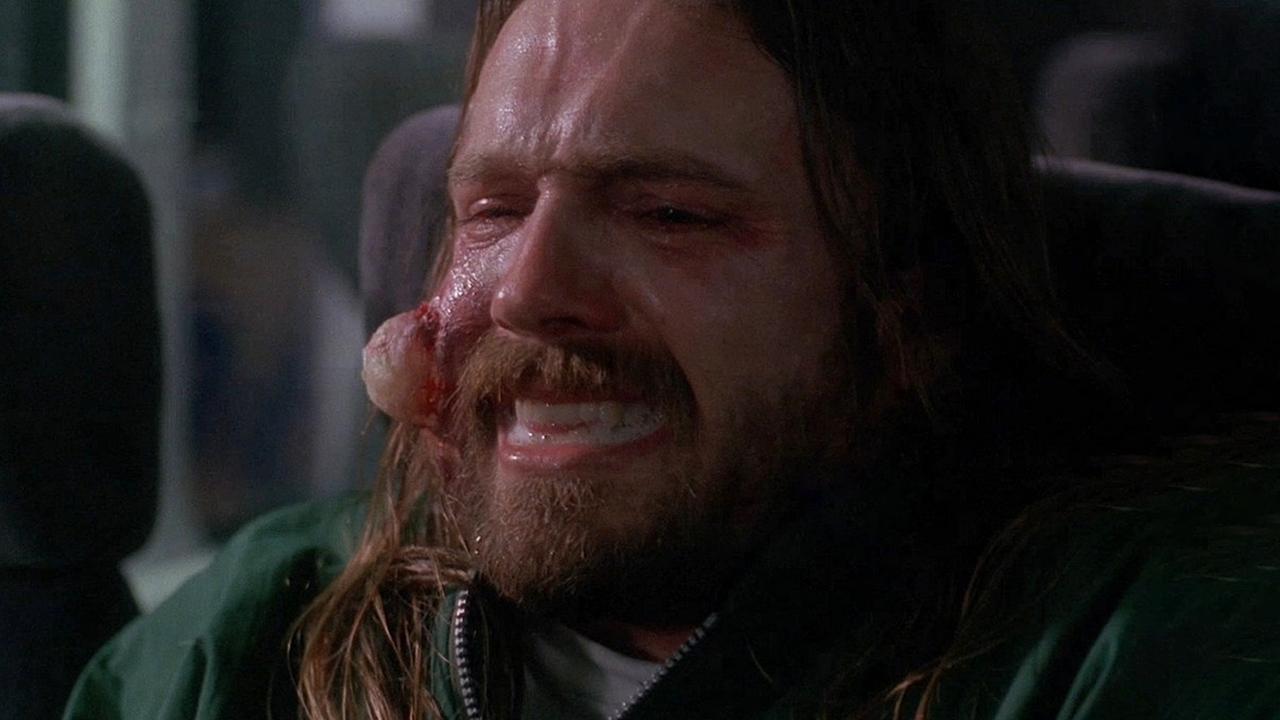
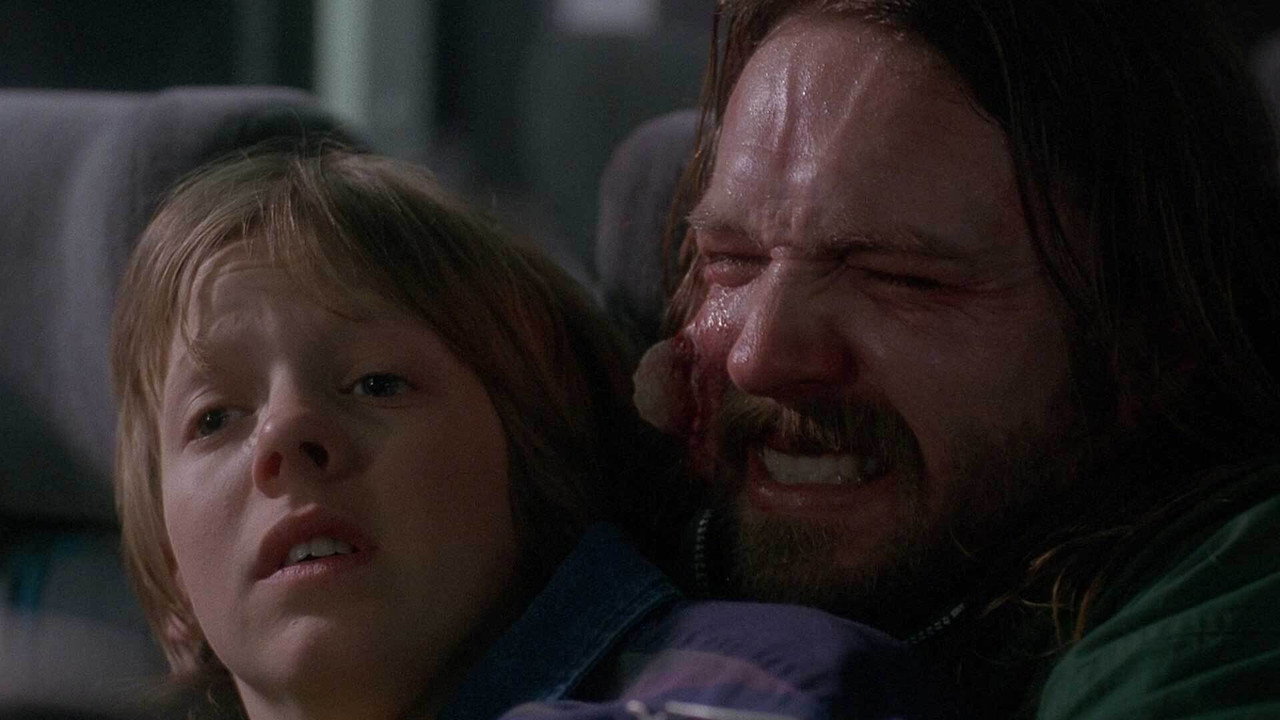
Paul's girlfriend is infected nursing Steve, who dies. The Marshals corner Paul on a bus; Mulder talks him into letting a teenage hostage go, and then the Marshals shoot him dead.
Why it still matters
For its first half this is an outbreak thriller, with a prison sealed off, body bags piling up and two sick men loose in the countryside. Then it turns into an argument about who gets to know. Robert Shearman, in his critical guide to the series, wrote that the story "jogs along quite merrily as a simple contagion story," then "takes a left turn and becomes a thoughtful analysis on disinformation, on cover-up, and the public right to truth." He liked the first half better, and called the two halves "two really interesting rough drafts" that didn't belong together.
Zack Handlen, writing for The A.V. Club in 2010, had no such doubts. He praised how the episode handled its darkness, called it a "tense, gripping mini-movie" and had good words for the guest stars. Entertainment Weekly's 1996 guide went the other way: "A good idea is tainted by plot holes as gaping and disturbing as the pustular boils you'll be treated to in this hour."
Who gets told
Pinck was studying a dilating enzyme the insect produces, and the insect's life cycle kills whatever it lives in. The company sent the package to a prisoner who happened to share the dead entomologist's name, so that the infection would look like a mix-up in the mail. Osborne dies and his body is burned. Suspecting that he and Scully were deceived into taking the case, Mulder confronts Skinner and the Smoking Man and says the public has a right to know. The Smoking Man answers that the truth would cause mass panic, and Scully agrees with him. At the end Skinner tells Mulder they have no evidence and that he should be more careful on future cases.
The Smoking Man turning up at all was unusual. Chris Carter preferred to keep the show's ongoing mythology out of its stand-alone episodes, so his appearance in a case like this one was a rare crossing.
Challenge the DNA
Was keeping the outbreak quiet justified?
Or skip ahead to our reading
The episode lets the cover-up's argument be made out loud and leaves Mulder furious. It's the show at its most cynical about who decides.
Behind the scenes
- Pinck and F. emasculata are invented, but the premise isn't: drug companies really do send researchers around the world in search of plants and animals that might have medicinal use.
- The producers worried about airing it so close to the film Outbreak, about a deadly disease loose in a California town, and decided the two were different enough.
- Makeup supervisor Toby Lindala rigged the sores to burst on cue, with a device connected by hidden tubes. For one scene "I was jammed underneath one of the bus seats with these extras basically stepping on my head," he said. Frank Spotnitz admitted that when they saw a pustule pop on film, "we just laughed because it was just so over-the-top grotesque."
- The Costa Rican jungle was the Lower Seymour Conservation Reserve in North Vancouver, and the gas station and the bus station were the same set, a redecorated car dealership in Delta, British Columbia.
- It earned a Nielsen household rating of 8.9 with a 16 share, 8.5 million households, and 14.0 million U.S. viewers by USA Today's count.
The thread
Quarantines, killer microbes and officials deciding how much the public can handle: a thread that runs from the 1960s to the outbreak films of the mid-1990s.
Came before
Shares DNA with
DNA strand
The State Knows Best
The men in hazmat suits arrive before anyone has explained what's wrong, and the agents spend the hour finding out how little they're meant to know. The question the episode leaves with Mulder is who decides what the public is allowed to hear.
Every great sci-fi story is built from a handful of strands like this one. Each strand page explains how it works and traces it across shows, books and films.
If this one stayed with you
Where to go next, and why.
Watch · Film
Contagion (2011)
Steven Soderbergh follows a new virus from a single cough to a worldwide emergency, with the CDC scientists trying to keep up.
Watch · Film
The Cassandra Crossing (1976)
A man carrying a plague boards a European express train, and the officials in charge decide the passengers are expendable.
Read · Nonfiction
The Hot Zone by Richard Preston
The true story of an Ebola-related virus turning up in monkeys at a lab outside Washington, D.C., in 1989, told like a thriller.
Read · Novel
The Stand by Stephen King
A weaponized flu gets out of a military lab, and the government's first move is to keep anyone from hearing about it.
Your next episode
Three directions to go from here, all on Sci-Fi DNA.

More of this feeling
The Green Death
Doctor Who
A corporation whose product is killing people, and a cover-up around it, set the same mood.

Same question, different answer
The Quickening
Star Trek: Deep Space Nine
It asks who should decide how much the public is told about a deadly disease.

Something completely different
Soft Light
The X-Files
For a scientist whose own experiment turns on him, follow the case in Richmond.