More from the episode

The story in 5 beats
- The yard
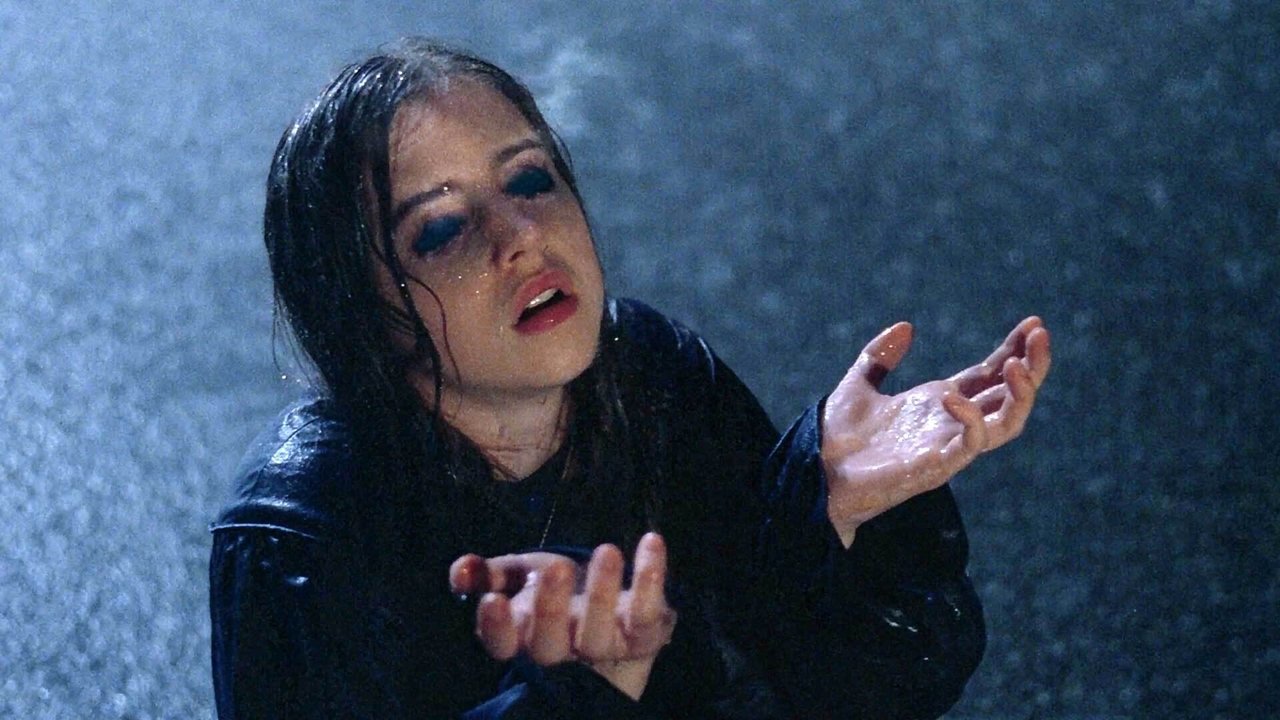
Soon after her baptism, 16-year-old Dara Kernof somehow leaves the house at night. Her father finds her reaching up toward a strange figure. Lightning flashes, and the figure is gone.
- Father McCue
A priest asks Scully to help the Kernofs. Dara was adopted, and her spine was too deformed for her to walk. Her father tells Scully he thinks the figure was the Devil.
- Four sisters
A social worker, Aaron Starkey, turns away a priest visiting Dara's sister Paula, who dies that night. Mulder learns the girls were quadruplets. A third dies before he can reach her.
Left aloneSpoiler · tap to reveal
Father Gregory says he was guarding the girls' souls from the Devil. When the agents step out, Starkey asks him where the last sister is. Gregory won't answer, and burns.
The last sisterSpoiler · tap to reveal
The figure shows itself to Scully: a seraph, the girls' father. At Gregory's church she finds Roberta, the fourth sister, with Starkey, and sees his shadow has horns.
Why it still matters
This is the season's role swap at its plainest. Scully leans toward belief, and Mulder plays the skeptic; Andy Meisler's official guide calls that "Mulder-Scully criss-cross" a major theme of Season 5. The story began with Dan Angel and Billy Brown, two writers who had left the show after Christmas 1997. Their version, John Shiban said, was "about Mulder and Scully and angels, but it never quite worked the way it was originally conceived," so he and Frank Spotnitz rebuilt it around Scully.
Critics were split. Dave Golder of SFX put the episode on his list of the ten best TV angels and enjoyed seeing the partners trade places. Emily St. James, writing for The A.V. Club, found it "occasionally too-slow" but called Gillian Anderson's work "another […] potential Emmy tape in a season full of them," and liked that the show played Scully's faith "with a deathly seriousness" instead of irony. Paula Vitaris of Cinefantastique was having none of it: "with its trip into blatant religiosity, 'All Souls' comes off like a bad episode of Millennium."
Letting go of her hand
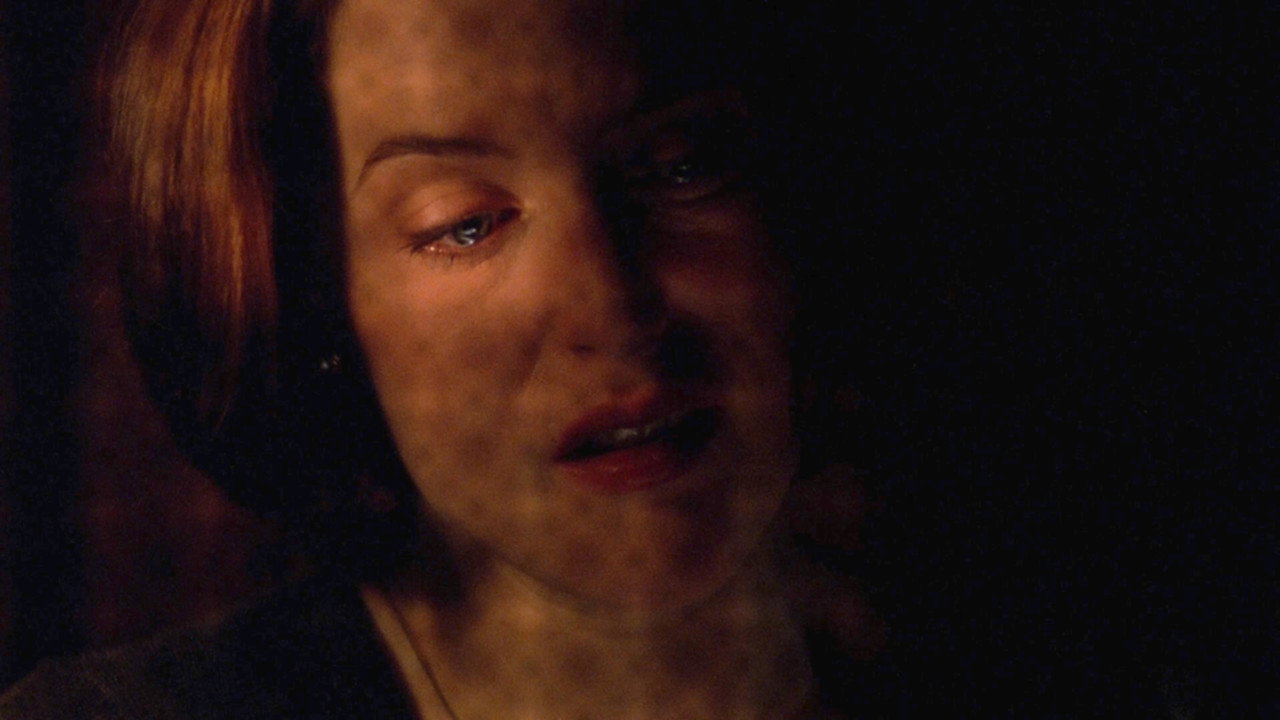
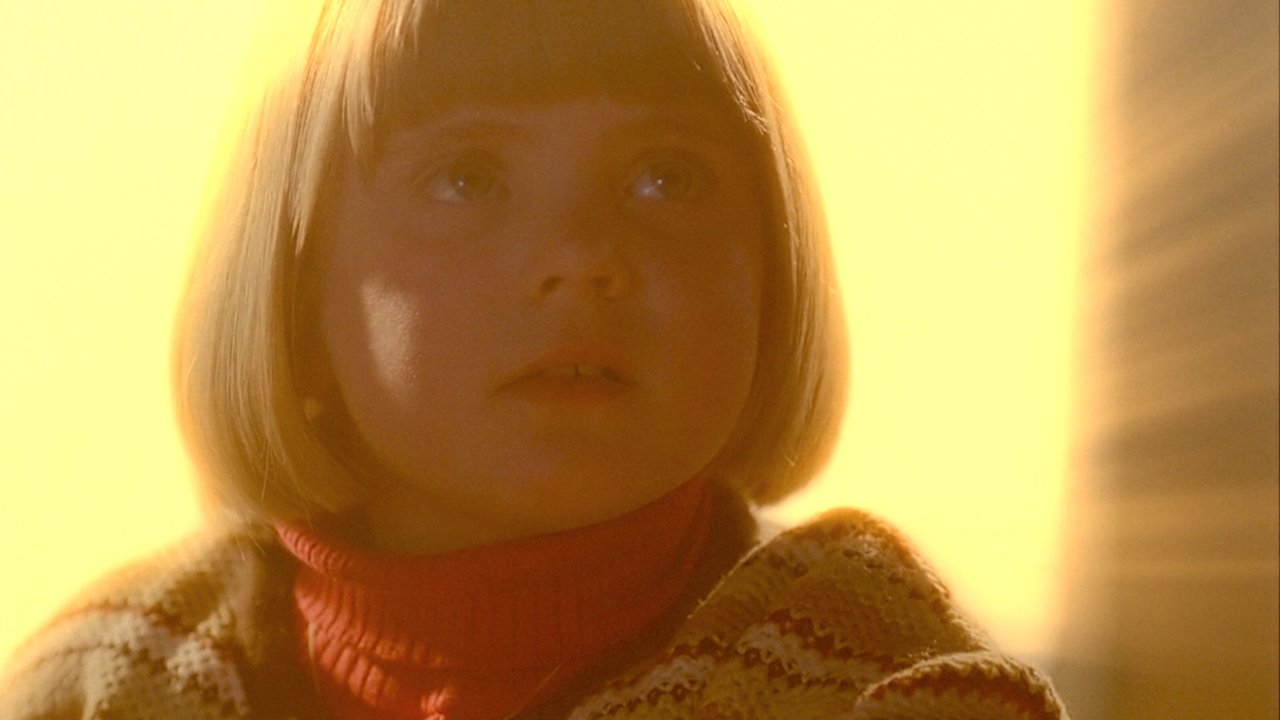
Starkey is the Devil, and he wants the girls' souls for his own ends. The seraph was sent by God to bring its four children home first. When it comes for Roberta, Scully holds on, then sees her daughter Emily in Roberta's place and lets go, and Roberta goes to Heaven.
That grief is why the episode exists in this form. Shiban and Spotnitz pulled in threads from "Christmas Carol" and "Emily" because they wanted the "very universal" idea of Scully working through her feelings for the daughter she lost, and Meisler calls the result the "unofficial third part" of that story. Robert Shearman and Lars Pearson, in Wanting to Believe, objected that the girls seem fated to die because they are disabled, as if they "have no right to live". Vitaris was put off by the imagery as Dara's soul is taken: "the camera pans to the right and stops to linger on a telephone pole that forms a cross."
Challenge the DNA
Was Scully right to let go of Roberta?
Or skip ahead to our reading
When she sees Emily in Roberta's place she lets go, and Roberta goes to Heaven. The episode treats that moment as grief and faith working together.
Behind the scenes
- The confessional scenes that frame the episode came late. After a rough cut, Shiban and Spotnitz felt they were "far from the end" and added them, casting Vancouver producer J. P. Finn as the priest for his "hushed delivery and map-of-Ireland features". The rest of the cut was trimmed "scene by scene and line by line" to fit them.
- Anderson got a batch of rewrites for the confession on the day of filming and asked for more time so she wouldn't rush the emotion. It was shot a day later, and Finn never actually filmed with her.
- "St. John's Church" is St. Augustine Church in Vancouver, whose local monseigneur approved the script before filming. The crew scouted other churches in case permission was withdrawn.
- Father Gregory's church was an old boiler room at George Pearson Hospital, the same place that served as a cafeteria in "Kitsunegari" earlier in the season.
- The seraph's shifting heads were tracked with actor Tracy Elofson in a lion mask, then filmed against green screen and composited. Visual effects supervisor Laurie Kallsen-George finished the shots "hours before airtime."
The thread
Scully's faith had been tested before, and this story's angels come from a strange corner of Genesis. Elsewhere, angels and devils fight over human souls all the time.
Came before
Shares DNA with
DNA strand
Is Any of This Real?
The evidence never settles anything here. Scully has a dead girl, a lightning flash and a frightened father's word, and what she believes about them depends on her faith more than on the autopsy.
Every great sci-fi story is built from a handful of strands like this one. Each strand page explains how it works and traces it across shows, books and films.
If this one stayed with you
Where to go next, and why.
Watch · Film
Wings of Desire (1987)
Wim Wenders's angels drift through Berlin listening to people's thoughts, and one of them starts to wish he could be human.
Watch · Film
Constantine (2005)
Keanu Reeves plays a worn-out exorcist in Los Angeles caught in a fight between Heaven and Hell over who gets to meddle in our world.
Read · Poem
Paradise Lost by John Milton
The great English poem about Satan's fall and his war against Heaven, with the Devil as its most persuasive speaker.
Your next episode
Three directions to go from here, all on Sci-Fi DNA.

More of this feeling
The Hunt
The Twilight Zone
It has the same gentle, hopeful take on where people go when they die.

Same question, different answer
In the Hands of the Prophets
Star Trek: Deep Space Nine
It asks whether faith and science can share a room without one pushing the other out.

Something completely different
Folie à Deux
The X-Files
For something much lighter, watch Mulder walk into a hostage siege at a Chicago telemarketing office.