
More from the episode
The story in 5 beats
- Fifty-one years
The headmaster tells Professor Fowler that he's being retired.
- The yearbooks
Alone at home, Fowler reads through his old students and decides he taught them nothing.
- Christmas Eve
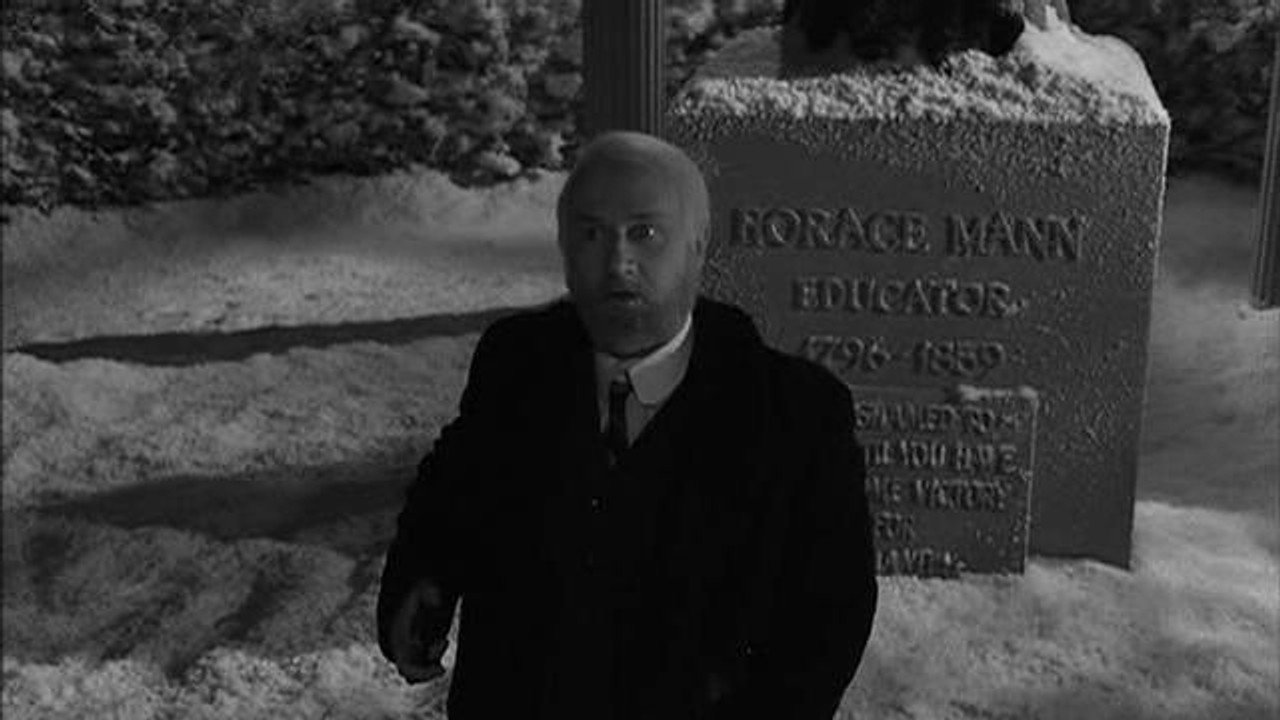
He walks to the Horace Mann statue with a revolver, ashamed that he won no victory for humanity.
The bellSpoiler · tap to reveal
A bell calls him back to his classroom, where seven of his former boys are waiting.
Carols outsideSpoiler · tap to reveal
Fowler accepts his retirement and listens to his current students singing outside his door.
Why it still matters
The third season ends with a Christmas ghost story aired in June, and it was a personal one for Serling. Ellis Fowler has taught English literature at the Rock Spring School for 51 years. The headmaster isn't cruel about it, just impersonal: it's time to go. Leafing through old yearbooks, Fowler concludes that all those years of Housman and Donne made no difference to anyone.
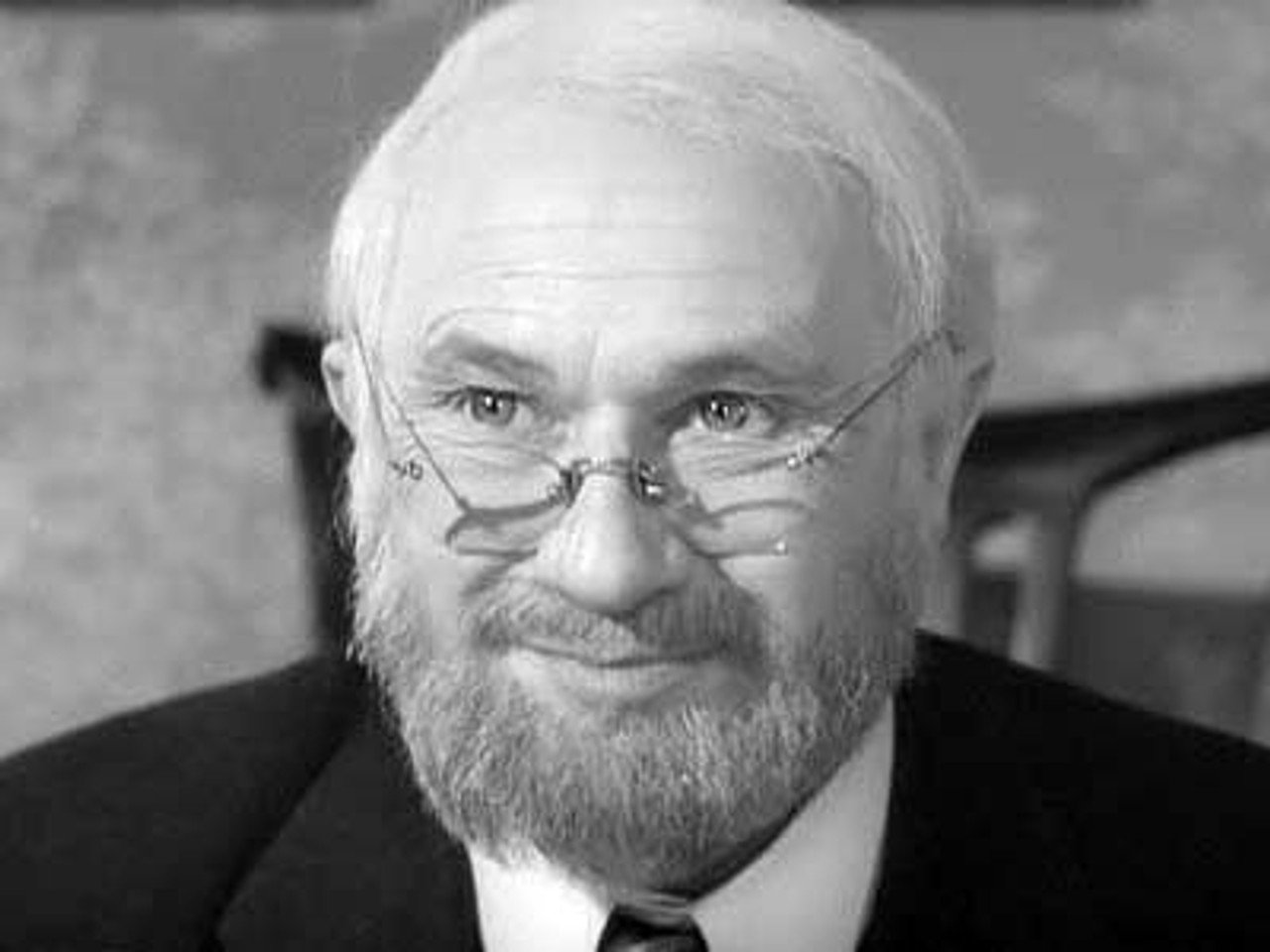
Donald Pleasence was 42. Makeup aged him by at least thirty years, and the A.V. Club's Zack Handlen called the result "subtle, and completely convincing." Watch his early scenes, where he shows you a whole lifetime of habit and pride before the plot even starts, and that groundwork is why the sentimental parts work.
Serling went to Antioch College, and the episode leans on its motto, carved on a statue of Horace Mann on Fowler's campus: "Be ashamed to die until you have won some victory for humanity." Fowler takes it as an accusation.
The boys who came back
The students in Fowler's classroom are dead, and several of them died doing something brave. One won the Medal of Honor posthumously at Iwo Jima, another died at Pearl Harbor after saving twelve men, and a third died of leukemia from X-ray exposure while doing cancer research. They tell Fowler how he inspired them, and some quote poems back at him: Donne's "No man is an island," Howard Arnold Walter's "My Creed." They've come to say they were grateful.
The bell rings again and they're gone. Fowler goes home, accepts his retirement, and hears the current boys caroling outside. Serling's closing narration describes him as a teacher who "discovered rather belatedly something of his own value." The ghosts only want what's best for the living, as Handlen put it, and the Horace Mann line that drove Fowler to the statue turns out to have been answered long ago, by his own boys, in places he never saw.
Behind the scenes
- Producer Buck Houghton said casting Pleasence was the casting director's idea: "I'd never heard of him." Pleasence, who had been acting in England since 1939, was brought over for the part. Director Robert Ellis Miller helped him build confidence in the part.
- Horace Mann first spoke the statue's line in his address to Antioch's first graduates. Serling, an Antioch graduate, accepted a teaching post there after finishing the script and taught there in 1962–63.
- Fowler recites A.E. Housman's "When I Was One-and-Twenty," from A Shropshire Lad, from memory.
- It was the last episode of the third season, with no guarantee the show would return. It came back as a midseason replacement with hour-long episodes, and Houghton and other longtime crew had moved on by then.
- Pleasence went on to The Great Escape the following year, Blofeld in You Only Live Twice and Dr. Loomis in Halloween.
The thread
Old teachers, Christmas ghosts and lives measured after the fact.
Came before
Shares DNA with
DNA strand
Memory & Identity
Fowler judges himself by what he remembers, a stack of yearbooks and faces. The ghosts give him the memories he couldn't have had, of what his students did with what he taught them. His sense of who he's been changes in one evening, and nothing about his past has changed at all.
Every great sci-fi story is built from a handful of strands like this one. Each strand page explains how it works and traces it across shows, books and films.
If this one stayed with you
Where to go next, and why.
Watch · Film
It's a Wonderful Life (1946)
If the classroom of ghosts got to you, this is the long version: one man on one Christmas Eve, shown the whole town he didn't know he'd held together.
Read · Novella
Goodbye, Mr. Chips — James Hilton
Another old schoolmaster counting up the boys who passed through his room. Short, gentle and every bit as sentimental, in the best way.
Read · Poems
A Shropshire Lad — A.E. Housman
The book Fowler carries in his head. Read "When I Was One-and-Twenty" and you'll hear Pleasence saying it.
Sources
- “The Changing of the Guard (The Twilight Zone),” Wikipedia
- Zack Handlen, “The Twilight Zone: "The Changing of the Guard",” The A.V. Club, 2013
- Mitchell D. Hadley, “Donald Pleasence delivers in "The Changing of the Guard",” It's About TV, 2022
- Peter Martin, “Exploring The Twilight Zone, Episode #102: "The Changing of the Guard",” ScreenAnarchy, 2011
- “The Twilight Zone episode guide,” epguides.com