More from the episode
The story in 5 beats
- The star arrives
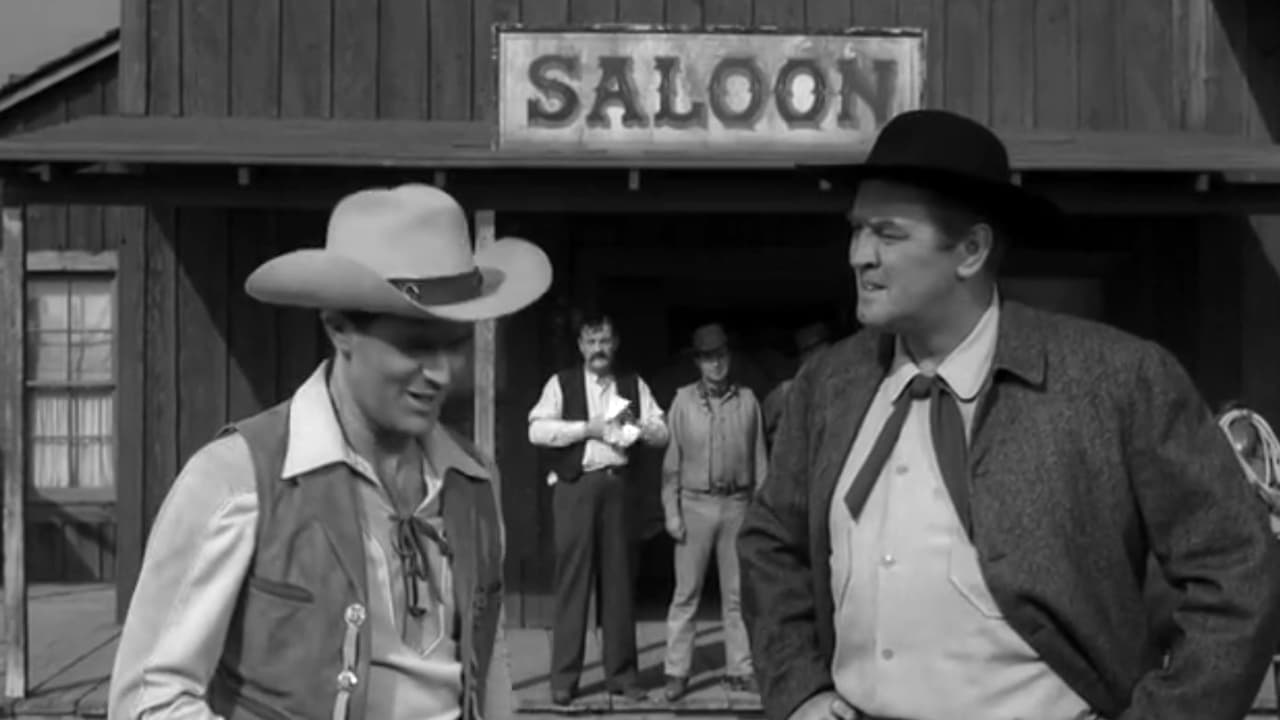
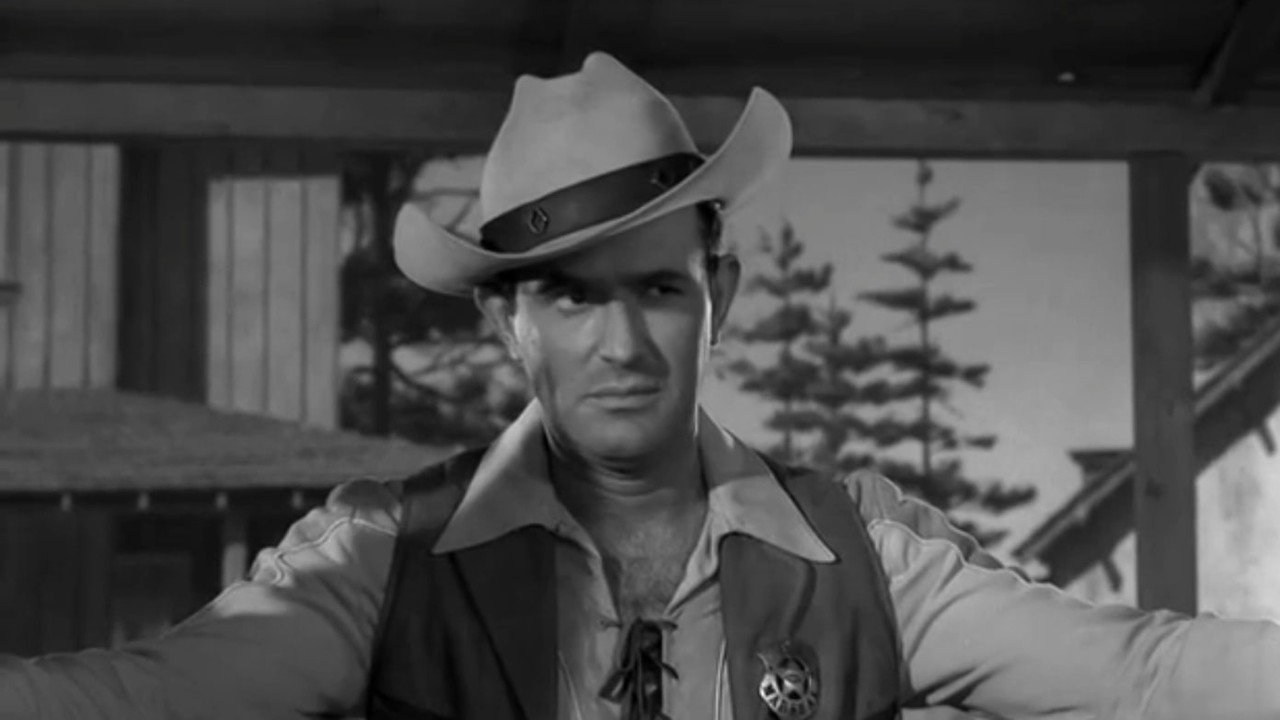
Rance McGrew rolls in late to the set of his Western, where today, as every week, he's due to outdraw Jesse James.
- A real saloon
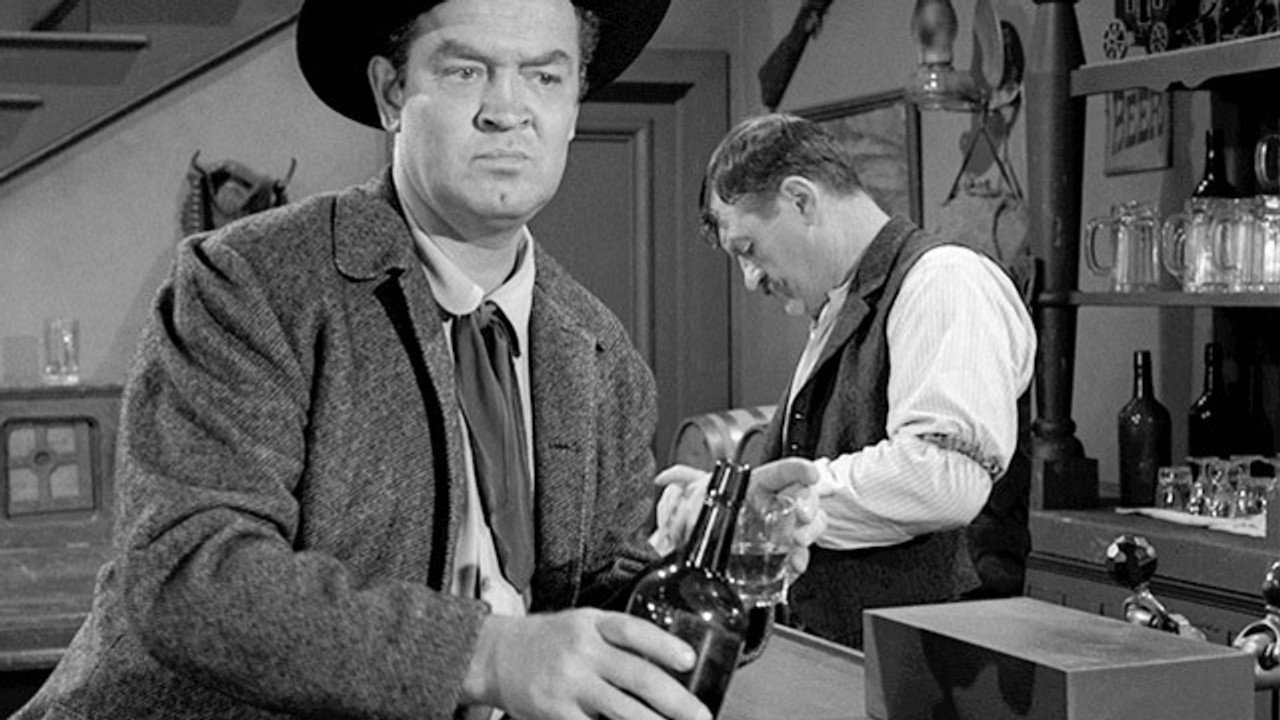
He steps through the swinging doors and the set is gone. The bartender and the dust are real, and so is the outlaw at the bar.
- Jesse James
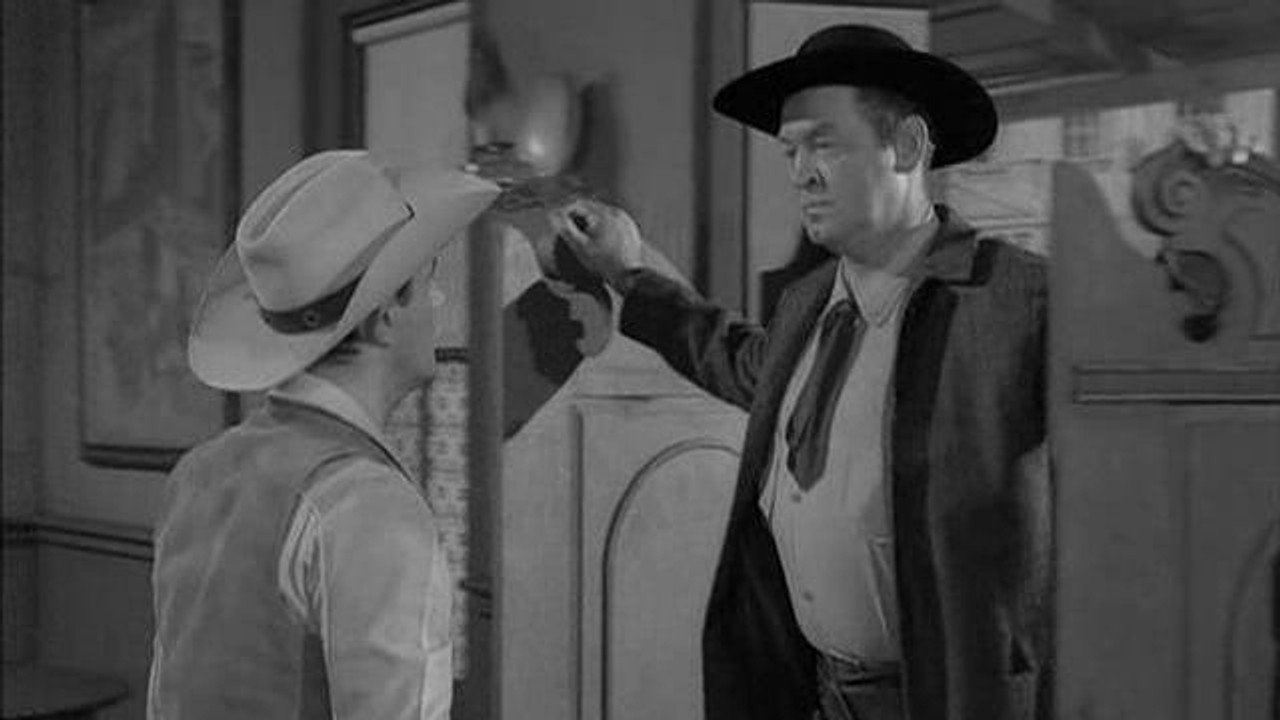
The real Jesse James has some complaints about how TV has been treating him and his friends, and he'd like to settle them with guns.
The drawSpoiler · tap to reveal
Rance fumbles his gun and begs for his life. "You're killing an American institution!" Jesse lets him go, on conditions.
The new agentSpoiler · tap to reveal
Back on set, Rance's agent turns up in a Hawaiian shirt with notes on the script. He looks very familiar.
Why it still matters
By the early 1960s television was full of cowboys. In two seasons running, the three highest-rated shows in America were Westerns, and several Twilight Zone writers paid their rent writing for them. Serling had seen real combat in the Pacific, and the movie-star version of toughness got under his skin. John Wayne, as he put it, had fought most of America's wars "on the backlot of Warner Brothers."
This is his answer, played as a comedy. Rance McGrew is a vain, overpaid TV marshal who beats Jesse James every week, and the episode asks what happens when the real Jesse James gets a vote. It's broad and it runs out of steam, and The A.V. Club gave it a C. But Larry Blyden is very funny as a man whose courage was always in the script, and the satire of Hollywood rewriting history still has teeth.
Who rewrites the ending
Jesse James spares Rance once he has promised to do anything to stay alive. Back on the set, Rance's agent arrives, and it's Jesse, wearing a Hawaiian shirt. He wants the scene rewritten so Jesse escapes, and he has plans for future episodes too: Rance will meet Jesse's friends from the afterlife, and the shows will end the way those gunmen would really have ended them, which means the hero loses.
It's Serling's gripe with Hollywood in one gag. TV took real, violent, complicated men and turned them into weekly villains for a pretty-boy marshal to beat. Here history gets to talk back, and it turns out history has an agent.
Behind the scenes
- Serling wrote the teleplay from an idea by Frederic Louis Fox, who had written for Westerns such as Black Saddle, Johnny Ringo and Man Without a Gun.
- In The Twilight Zone Companion, Serling said he used to think about John Wayne, "who had fought most of our major wars," and wonder what his reaction would be if he ever had to lift up an M-1.
- Director Christian Nyby had been nominated for an Oscar as the editor of Howard Hawks' Red River, directed The Thing From Another World, and had directed episodes of Gunsmoke, Rawhide, Wagon Train and Bonanza.
- Larry Blyden had already played the lead in Serling's "A Nice Place to Visit" in season 1. He later hosted the syndicated What's My Line? in the 1970s.
- Arch Johnson, who plays Jesse James, stood 6 foot 4. This was his second Twilight Zone, after "Static."
- Westerns peaked in 1959, when 26 of them aired in prime time. After The Twilight Zone ended, Serling made his own, The Loner, which ran for 26 episodes.
The thread
Television's cowboy boom, Serling's needle, and the satires that came after.
Came before
Shares DNA with
Where Serling went next
DNA strand
Sci-Fi Played for Laughs
The time slip is a joke delivery system. Serling drops a TV cowboy into the real West so the gap between the legend and the man can do the comedy, and Blyden plays the panic straight enough that it lands.
Every great sci-fi story is built from a handful of strands like this one. Each strand page explains how it works and traces it across shows, books and films.
If this one stayed with you
Where to go next, and why.
Watch · Film
Galaxy Quest (1999)
If you liked watching a TV hero meet the real thing, this is the whole idea at feature length, with spaceships and a lot more heart.
Watch · The Twilight Zone
"A Nice Place to Visit"
Larry Blyden two seasons earlier, as a small-time crook who finds himself somewhere very comfortable. Same swagger, darker joke.
Read · Novel
Little Big Man — Thomas Berger
A tall tale that keeps knocking famous Western figures off their pedestals. It's what Jesse James would have wanted on the air.
Watch · Film
Blazing Saddles (1974)
Mel Brooks takes the Hollywood Western apart, and eventually knocks down the studio wall to do it.
Sources
- “Showdown with Rance McGrew,” Wikipedia
- Josh Weiss, “Why Rod Serling Wanted To Satirize Hollywood Westerns in This Classic Twilight Zone Episode,” SYFY WIRE, 2026
- William Bibbiani, “This Episode Of The Twilight Zone Was A Harsh Critique Of Hollywood Westerns,” SlashFilm, 2023
- Peter Martin, “Exploring The Twilight Zone, Episode #85: "Showdown with Rance McGrew",” ScreenAnarchy, 2011
- Emily St. James, “The Twilight Zone: "The Hunt"/"Showdown With Rance McGrew",” The A.V. Club, 2013