More from the episode
The story in 5 beats
- Two men and a rocket
Marcusson and Conrad are about to launch the first Mars mission. Marcusson is sure people are alike all over. Conrad is afraid of what they will find.
- A hard landing
The rocket lands badly and Marcusson is badly hurt. He begs Conrad to open the hatch so he can see Mars. Conrad, too frightened, refuses.
- A knock on the hull
Alone, Conrad hears a rhythmic sound on the hull. He opens up and finds human-looking, mind-reading Martians, led by the kind Teenya.
- A home from home
The Martians lead him to a house furnished like a middle-class American one. Conrad relaxes and asks if he will see Teenya again.
No windows, no doorsSpoiler · tap to reveal
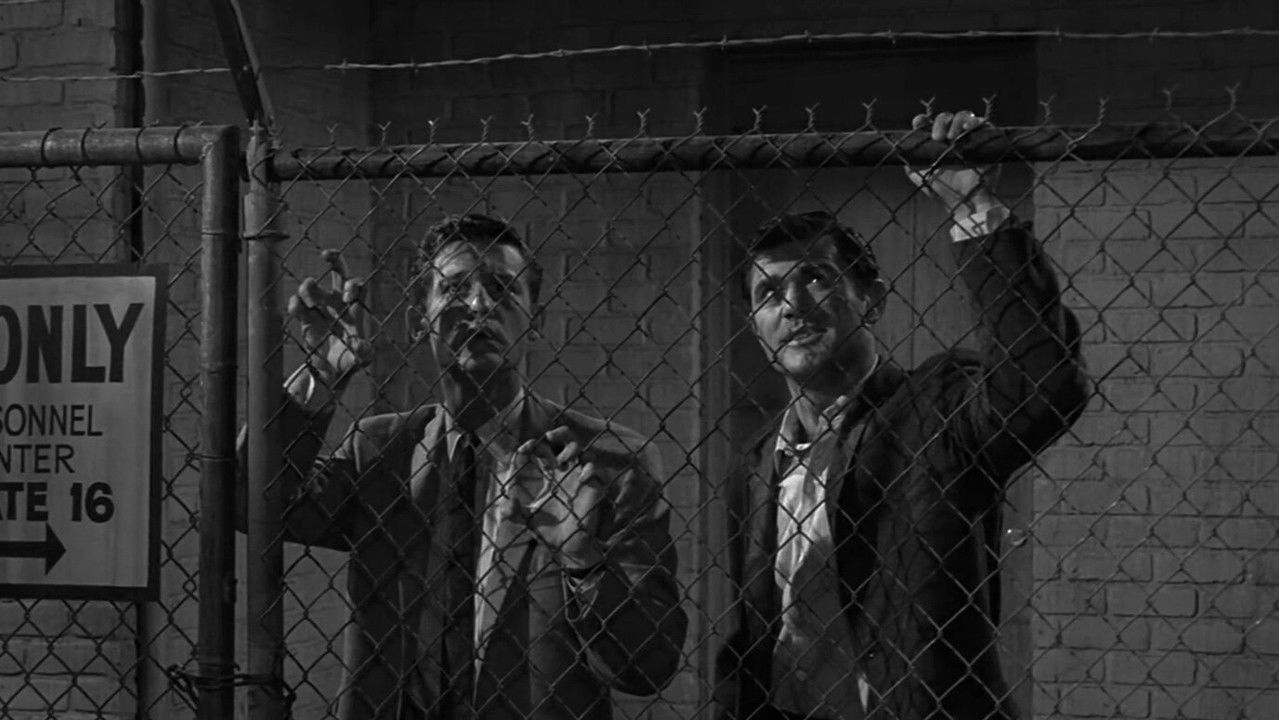
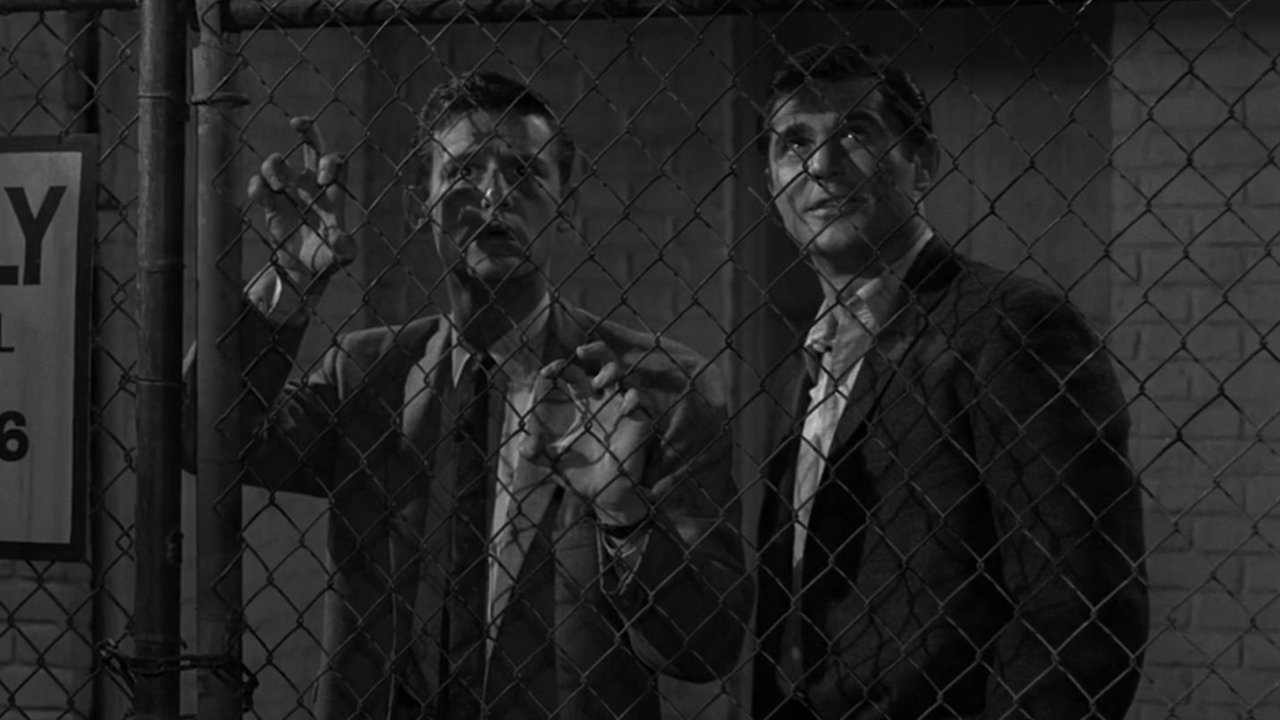
Conrad finds no windows and doors that won't open. Then a wall slides away on a crowd behind bars and a sign calling him an Earth creature.
Why it still matters
This one is remembered for its twist, which is both its strength and its limit. Rod Serling's script sends two astronauts, Warren Marcusson and Sam Conrad, on humanity's first trip to Mars. Marcusson is a positive thinker who is sure people are alike all over, even on the Red Planet. Conrad is the nervous one, and he would rather not find out.
Serling adapted a 1952 pulp story by Paul W. Fairman and rearranged it, putting the anxious Conrad at the center and letting the plot test his fears. Roddy McDowall, a former child star, plays Conrad as likeable and a little naive. Mitchell Leisen, who also directed "Escape Clause" and "The Sixteen-Millimeter Shrine" this season, keeps the half hour close and quiet.
Watch how carefully the welcome on Mars is arranged. Most of the episode's menace sits in the hospitality, and it's fun to notice how much effort goes into it.
Earth creature in his native habitat
The Martians are kind, telepathic and well-mannered, and none of it is for Conrad's benefit. The house is an enclosure, and the wall that slides open shows a gathering of Martians watching him from the other side of the bars. He finds a sign reading "EARTH CREATURE IN HIS NATIVE HABITAT" and throws it to the floor. Teenya leaves distraught, but she doesn't free him.
Conrad grips the bars and shouts that Marcusson was right: people are alike everywhere. Both men were right in different ways. Marcusson believed strangers would be like us and Conrad feared they would be, and the Martians treat a visitor from another world the way humans treat animals. Serling's closing narration reads like the Martian zoo label for the species, with a note about the running water, electricity and central heat that will keep him there for life.
Serling's changes to Fairman's story are what sharpen it. He made Conrad the lead, let his fears ease, and then confirmed them.
Behind the scenes
- The episode is based on Paul W. Fairman's "Brothers Beyond the Void," first published in the March 1952 issue of Fantastic Adventures and included in August Derleth's 1953 anthology Worlds of Tomorrow.
- In Fairman's story, Marcusson is the one who goes to Mars, alone, while Sam Conrad stays behind on Earth. Serling reworked the pair for the teleplay.
- The Martian exteriors use the painted background dioramas from Forbidden Planet (1956). The four lights on the wall inside the ship are the Krell power gauges from the same film.
- Making the Martians a human-looking race also cut the money that costumes and makeup would have cost.
- Mitchell Leisen also directed two other first-season episodes, "Escape Clause" and "The Sixteen-Millimeter Shrine."
- In 1960, the year of this episode, Roddy McDowall won a Tony for The Fighting Cock, and he later won an Emmy for the Sunday Showcase drama "Not Without Honor." Paul Comi appeared in two other Twilight Zone episodes, "The Odyssey of Flight 33" and "The Parallel."
The thread
A pulp story, a borrowed Mars and a habit of friendly surfaces that go sour.
Came before
Shares DNA with
Remade and revisited
DNA strand
The Cruel Twist
Serling spends most of the half hour making Conrad's fear look silly and the Martians look generous. That makes the last minute hit harder, because the proof of Marcusson's line comes from the very kindness that persuaded Conrad. The twist carries a built-in argument about how people treat what they don't understand.
Every great sci-fi story is built from a handful of strands like this one. Each strand page explains how it works and traces it across shows, books and films.
If this one stayed with you
Where to go next, and why.
Watch · Star Trek
"The Menagerie"
If you want to see Roddenberry's first Star Trek pilot reworked into a two-parter, start here. Wikipedia says the pilot includes plot points similar to this episode's, particularly humans put on display.
Watch · Twilight Zone S3
"To Serve Man"
If a friendly welcome from visitors had you suspicious by the end, this is another episode built on trust, and it is best seen cold.
Read · Short story
"Brothers Beyond the Void" — Paul W. Fairman
If you want to see what Serling changed, read the original, where Marcusson goes to Mars alone.
Sources
- “People Are Alike All Over,” Wikipedia
- “List of The Twilight Zone episodes,” Wikipedia
- “The Twilight Zone Vortex: "People Are Alike All Over",” The Twilight Zone Vortex, 2012
- “The Twilight Zone: S1E25 - People are Alike All Over (1960) - Cast & Crew,” The Movie Database (TMDB)
- “The Twilight Zone (1959) (a Titles & Air Dates Guide),” epguides.com
- “People Are Alike All Over - Wikidata,” Wikidata
- “The Twilight Zone season 1,” Wikipedia
- “The Menagerie (Star Trek: The Original Series),” Wikipedia
- “To Serve Man (The Twilight Zone),” Wikipedia
- “The Monsters Are Due on Maple Street,” Wikipedia
- “Roddy McDowall,” Wikipedia
- “The Twilight Zone: People Are Alike All Over (TV),” The Paley Center for Media