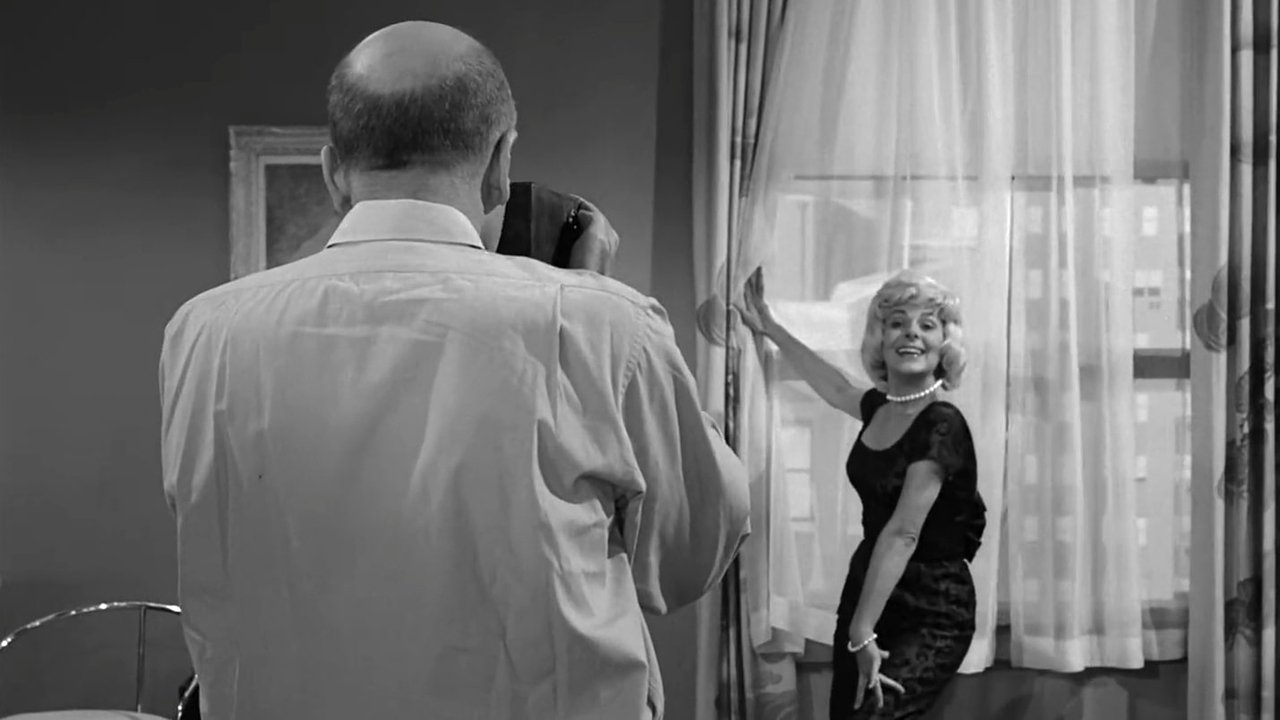
More from the episode
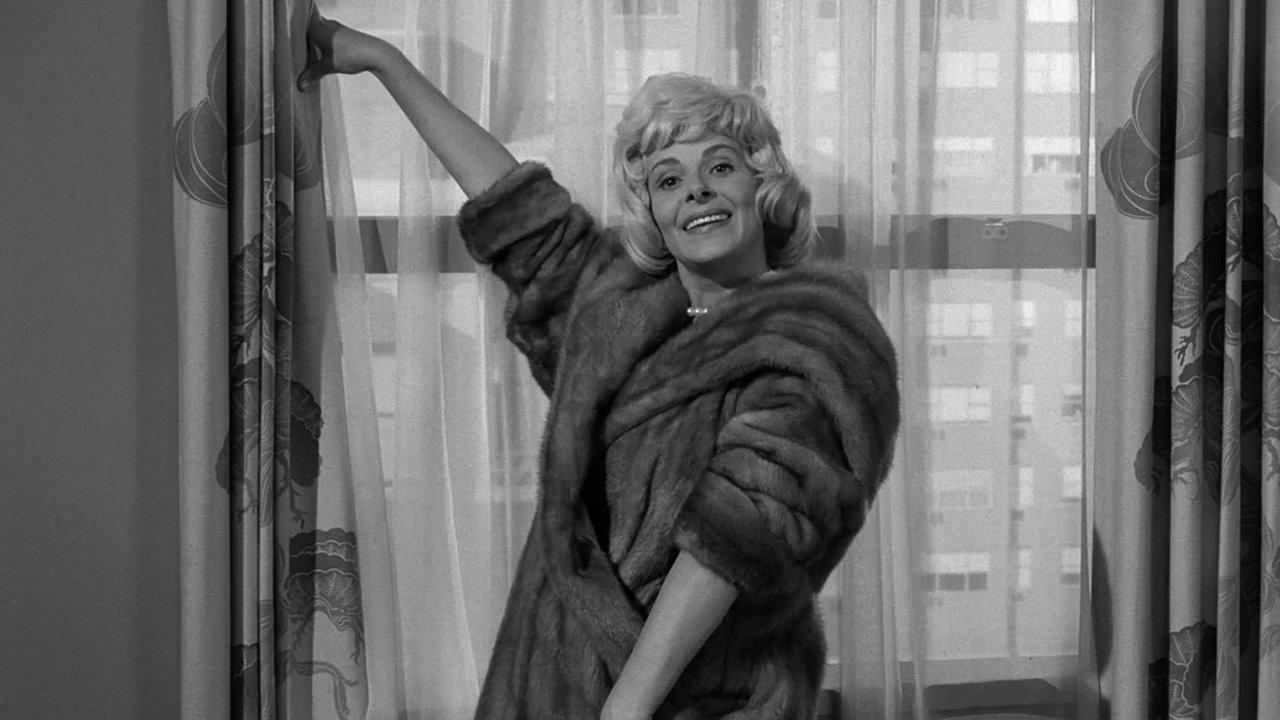
The story in 5 beats
- The worthless haul
Chester and Paula hole up in a hotel suite after robbing a curio shop. The loot is mostly fakes, except for one odd camera.
- The test shot
Chester takes a test photo and works out that the camera shows what happens five minutes from now.
- A day at the races
Paula's brother Woodward turns up on cue. The trio take the camera to the track and photograph the results board before each race.
Ten to an ownerSpoiler · tap to reveal
A hotel waiter translates the writing on the camera: ten photos per owner. The last few photos start a fight.
Count the bodiesSpoiler · tap to reveal
The last photos show bodies in the courtyard below, and the count keeps coming out wrong. Everyone in the room ends up out the window.
Why it still matters
Plenty of Twilight Zone objects come with a lesson attached. This one comes with instructions in a language nobody in the room reads. It's a cheap-looking camera with foreign writing on the front, the one oddity in a haul of fake junk that Chester and Paula Diedrich took from a curio shop.
It's a minor entry, and the A.V. Club's reviewer called it passable for most of its length. The case for watching rests on the cast. Fred Clark and Jean Carson play off each other well, and Adam Williams, a thug in North by Northwest, arrives as Paula's brother to keep things moving. It's also a tidy half hour of what happens when ordinary greed gets a five-minute head start.
Watch the ending with one more fact in mind: it isn't the one Serling wrote. CBS's Standards and Practices department made him change it, and you can feel the seams. More on that after the spoiler marker.
Four bodies and a window
The waiter reads the inscription as "ten to an owner," and a fight breaks out over the pictures that are left. Chester and Woodward struggle and fall out the hotel window. A new photo shows the bodies in the courtyard, and the waiter drifts in, sees the cash and gloats.
Then he counts the bodies in the photograph and finds more than two. Paula rushes to the window to look, trips over a cord and goes out after them. The waiter drops the camera and we hear him yell as he follows. The photo had four bodies in it, and the four people in the room supplied them. The camera was never wrong; each of them walked into the picture.
The scramble at the end has a reason. According to Nicholas Parisi's Serling biography, as relayed by SYFY Wire, Serling wanted Paula to see a photo of her own body and die of a heart attack, paying off her earlier complaints about palpitations. CBS thought that would upset viewers with heart conditions and asked him to hold back, and also wanted the waiter punished for his greed. The window finish is the result of those notes, and the A.V. Club's reviewer thought it undid much of the goodwill the episode had built. I can't decide whether it's a neat joke on all four of them or a patched-up ending that happens to rhyme.
Behind the scenes
- The episode was produced for the first season but delayed to the second.
- Serling's original ending had Paula take a photo showing her own body and die of a heart attack, tying back to her earlier palpitations. CBS Standards and Practices asked him to "restrain from the coronary histrionics," according to Nicholas Parisi's biography Rod Serling: His Life, Work, and Imagination.
- The network also wanted the waiter to face consequences for his avarice, which is how he ends up falling out the window too.
- Adam Williams, who plays Woodward, is described by the A.V. Club as a thug from North by Northwest.
- It aired on Friday, Dec 16, 1960. The A.V. Club reviewed it together with "The Trouble with Templeton" in one column.
- Marcel Hillaire plays Pierre, the waiter who reads the inscription on the camera.
The thread
Objects that bargain with greedy people have a long history, and the show had already put a prophetic machine on screen a month earlier.
Came before
Shares DNA with
DNA strand
The Cruel Twist
The camera tells the truth, and the trouble is how much of it the characters read. The prophecy is exact, and every fulfilment comes from their own greed and clumsiness. It's played with a dark comic edge that sits oddly well beside Serling's closing narration.
Every great sci-fi story is built from a handful of strands like this one. Each strand page explains how it works and traces it across shows, books and films.
If this one stayed with you
Where to go next, and why.
Watch · The Twilight Zone
"Nick of Time"
If you liked a gadget that seems to know what comes next, this is the show's other 1960 take on it, with a much more sympathetic couple at the center.
Watch · Film
Minority Report (2002)
If the five-minute head start left you wondering what you'd do with it, this film builds a whole world around seeing the future first and what that costs.
Read · Short story
The Monkey's Paw — W. W. Jacobs
If you liked the idea of a magic object that gives you a few uses and then collects, this is the classic version of that bargain.
Read · Short story
The Minority Report — Philip K. Dick
For a bleaker, cleverer look at what happens when the future is already on paper. The film was loosely based on it.
Sources
- “A Most Unusual Camera,” Wikipedia (via Wikiwand mirror)
- “Why This Classic Twilight Zone Episode About a Magic Camera Has a Most Unusual Ending,” SYFY Wire
- “The Twilight Zone: "The Trouble With Templeton"/"A Most Unusual Camera",” The A.V. Club
- “The Twilight Zone - Season 2, Episode 10 - A Most Unusual Camera,” Plex
- “A Most Unusual Camera - The Twilight Zone 2x10,” TVmaze
- “A Most Unusual Camera - The Twilight Zone (Series 2, Episode 10),” Apple TV (UK)
- “The Twilight Zone Vortex: "A Most Unusual Camera",” The Twilight Zone Vortex (blog)
- “The Twilight Zone – Season 2, Episode 10: A Most Unusual Camera,” Rotten Tomatoes
- “Nick of Time (The Twilight Zone),” Wikipedia
- “Minority Report,” Wikipedia
- “Back to the Future Part II (1989),” Filmsite.org